
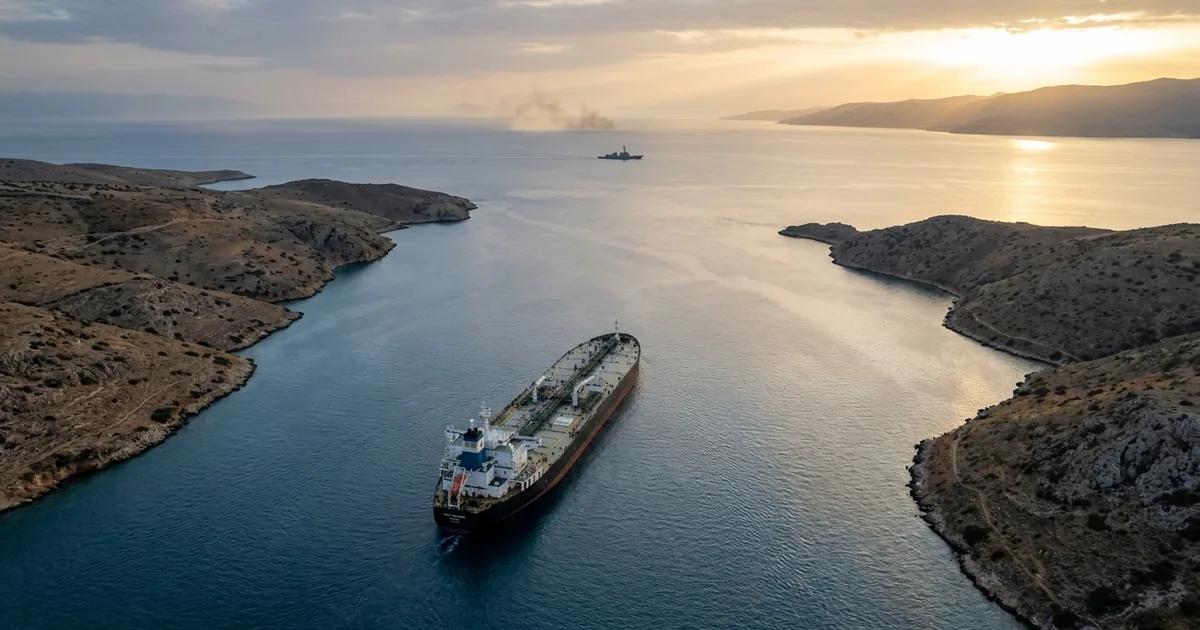
President Donald Trump says a deal to end the war with Iran is “largely negotiated,” with the Strait of Hormuz set to reopen to shipping and the United States lifting its naval blockade of Iranian ports.
Tehran’s response has been notably colder, and that gap between the two accounts is the entire story.
What’s Actually on the Table
The framework Trump has described is concrete enough to move oil markets. According to NPR’s reporting on the proposed deal, the Strait of Hormuz would gradually reopen with no toll charged, in exchange for the U.S. lifting its blockade, with a final agreement still described as 30 to 60 days away. A senior adviser to Supreme Leader Ayatollah Ali Khamenei, Mohsen Rezaei, framed Iran’s management of the waterway as ending “50 years of insecurity in the Persian Gulf,” the kind of language that signals Tehran wants to sell this at home as a win.
Where Tehran and Washington Disagree
Then comes the part that should temper the optimism. Al Jazeera reported that even as Washington called the deal agreed, Tehran accused it of obstruction, insisting no final agreement exists. Iranian officials dispute that they have promised to surrender their highly enriched uranium, and maintain that the nuclear question was not part of the preliminary understanding at all. Secretary of State Marco Rubio has spoken of “significant progress,” which is the language of negotiators who do not yet have a signature.
So the two sides are describing different documents. One side has a “largely negotiated” deal that reopens the world’s most important oil chokepoint. The other has a partial framework with the hardest issue, the nuclear program, explicitly carved out. Both of those things cannot be the deal, and the distance between them is exactly where talks like this tend to die.
A Reversal From the Ceasefire That Collapsed
The whiplash here is real. This is the same conflict whose ceasefire collapsed just days earlier when Iran rejected a Tuesday deadline over the Strait of Hormuz. Going from a rejected ultimatum to a “largely negotiated” peace in under a week is either a genuine breakthrough or a sign that “largely negotiated” is doing an enormous amount of rhetorical work. Given the track record of this particular standoff, skepticism is not cynicism. It is pattern recognition.
Why the Strait of Hormuz Is the Whole Game
Roughly a fifth of the world’s oil moves through the Strait of Hormuz, which is why a framework to reopen it can ripple straight into American gas prices and household budgets. That is also why both governments have an incentive to announce progress before it is locked down. Washington wants the political credit and the market relief, and Tehran wants sanctions and blockade pressure eased. Announcing a deal can itself move prices, which means the announcement carries value even if the deal does not hold.
The risk is that markets and the public price in a peace that has not actually been signed, and then absorb the shock if it unravels. That is a familiar move in this conflict, where each side has repeatedly tested whether saying a thing is true can make it true.
What Comes Next
The next 30 to 60 days will reveal which version is real, the largely negotiated deal or the partial framework with the nuclear core left out. Watch the uranium question specifically. If Iran genuinely will not put its enriched stockpile on the table, then the most consequential part of any agreement does not exist yet, no matter how the Strait of Hormuz language is dressed up. A reopened waterway would be a meaningful de-escalation. It would not be the end of the standoff that actually matters.