
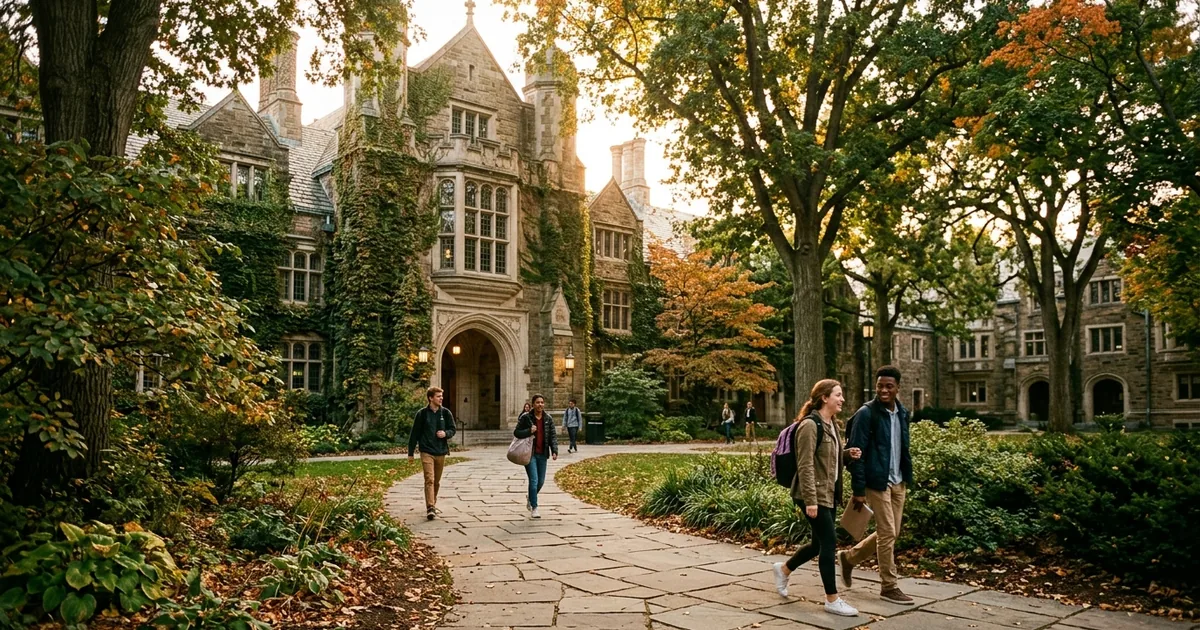
Swarthmore College announced on Tuesday that it will cover full tuition for American students whose families earn $200,000 or less a year, a move that pulls one of the country’s most selective liberal arts colleges into a fast-growing competition over who gets to call elite education affordable.
The new Swarthmore Tuition Guarantee takes effect for the 2027-28 academic year, and it will reshape the math for a huge slice of middle and upper-middle-income families who have long assumed a school like Swarthmore was out of reach.
What the Guarantee Actually Covers
The headline number is generous, but the fine print matters. The guarantee applies to families earning $200,000 or less with what the college calls typical assets, and it covers tuition only. Room, board, and other costs are not included, which means the sticker shock does not vanish entirely for families who still have to fund living expenses on a campus near Philadelphia.
As Inside Higher Ed reported, the program provides financial aid that meets or exceeds the cost of tuition for qualifying students, and it is available to American students only. International students remain eligible for need-based aid that can reach the full cost of attendance, but they are outside this specific guarantee. The distinction is worth flagging, because the marketing language around these programs tends to blur it.
Why $200,000 Is a Bigger Cap Than It Sounds
A $200,000 income threshold might read as a break for the wealthy, and that reaction misses how income actually distributes in the United States. Nationally, only about 12 percent of households earn more than $200,000 a year, which means the new cap covers the overwhelming majority of American families. For a college whose tuition runs in the range that makes parents flinch, that is a substantial promise.
CBS Philadelphia noted that the guarantee places Swarthmore among a widening group of selective schools redrawing their affordability lines. Bryn Mawr announced free tuition for families earning $175,000 or less, and the University of Pennsylvania raised its full-tuition threshold to $200,000 in 2024. What looked like a bold outlier a few years ago is becoming a baseline expectation among elite institutions that compete for the same applicants.
The Endowment Tax Twist
The funding story behind the announcement is the part that connects this to national politics in a way the press release downplays. Swarthmore said it could afford the new cap in part because it no longer has to pay a 1.4 percent federal excise tax on its endowment earnings. That tax, aimed at wealthy private colleges, was the kind of policy designed to extract money from large endowments on the theory that schools sitting on enormous reserves should pay something back.
The result here is a neat irony. A tax meant to pressure rich colleges, once lifted, freed up exactly the kind of money a rich college can turn into student aid. Whether that counts as a win depends on your view of what endowments are for, and there is a real debate buried in this announcement about whether tax policy or institutional choice does more to make college affordable. For families filling out aid forms, the policy mechanics matter less than the outcome, but the mechanics are why the outcome is possible. The broader question of how schools support students who arrive with very different levels of preparation, the kind explored in coverage of strategies for student success, does not get solved by a tuition cap, and Swarthmore’s announcement does not pretend it does.
What Families Should Watch For
If you have a high schooler eyeing selective colleges, the practical takeaways are concrete. The guarantee starts with the 2027-28 academic year, so current applicants timing their decisions should factor in the start date. The $200,000 line is keyed to income and typical assets, which means families with unusual asset profiles, such as a small business or significant investment holdings, may land outside the simple income test even if their salary fits. And because the guarantee covers tuition only, families still need a plan for room, board, and the rest of the cost of attendance.
There is also a competitive ripple to watch. When one elite school moves its affordability line, peer institutions tend to follow, because no admissions office wants to look more expensive than its rivals to the same pool of applicants. Swarthmore is not the first to make this kind of promise, and it will not be the last. The trend line points toward a future where the published sticker price of an elite college and the price a typical family actually pays drift further apart than ever.
The Question Underneath the Headline
Free tuition for families under $200,000 is a genuinely good deal, and it deserves to be reported as one. It is also a reminder of how distorted the economics of elite higher education have become, where the list price is so high that capping it for most families counts as a major act of generosity. The schools making these moves are the ones that can afford to, which leaves the colleges without billion-dollar endowments watching from the sidelines. Swarthmore just made itself more affordable for almost everyone who gets in. The harder problem, which no single college can solve, is everyone who does not.