
Kate Moss has spent thirty years being painted, photographed, and mythologized, so it takes a certain nerve to make a film about one of the most famous sittings of her life and then hand the role of Moss to someone else.
Moss & Freud, the true-life drama opening in UK cinemas on Friday with a US video-on-demand release, takes that nerve and runs with it. The supermodel is an executive producer on the project, and she gave its leading lady her blessing in the most public way possible.
The Painting at the Center of the Story
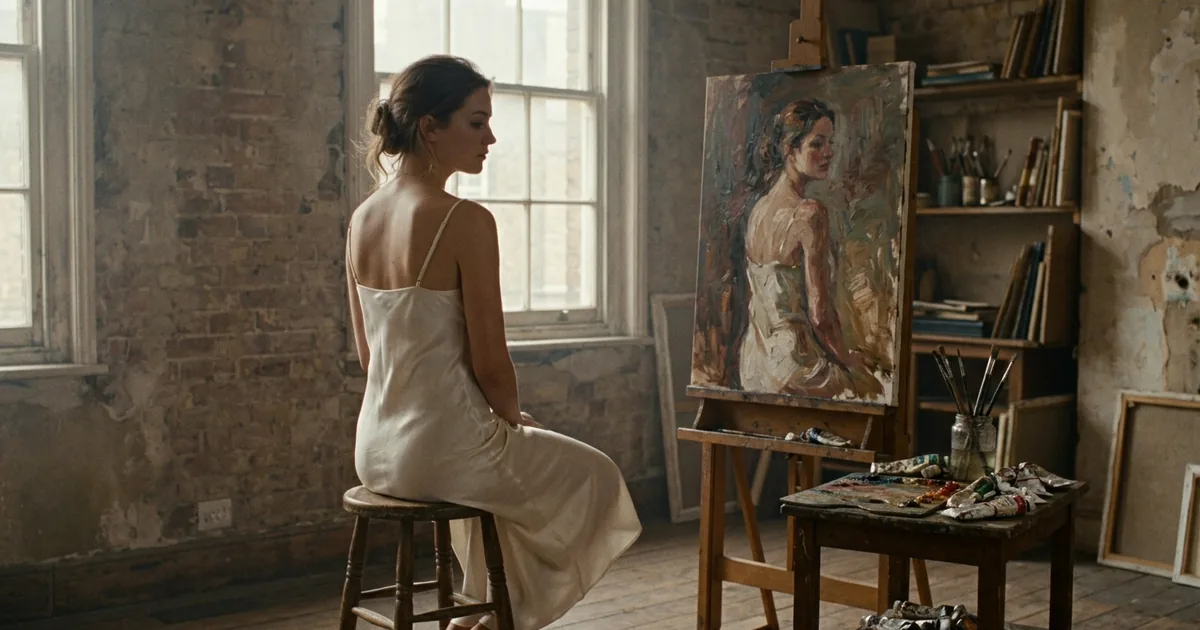
The film, written and directed by James Lucas, dramatizes the months in 2002 when Moss agreed to pose for the aging painter Lucian Freud in London. Ellie Bamber plays Moss, and Derek Jacobi plays Freud, and the heart of the story is the strange intimacy of the sittings themselves, the slow accumulation of hours that turns a model and an artist into something harder to define.
The portrait that came out of those sessions was not a footnote. It sold at auction in 2005 for nearly 3.93 million pounds, a number that tells you how much weight the art world placed on the meeting of these two figures. Freud was one of the most important painters of the twentieth century, famous for portraits that refused to flatter. Moss was the face that defined an era of fashion. Putting them in a room together for months was always going to be a story, and the film is betting that audiences want to see how it played out.
Ellie Bamber’s Tightrope
Playing a living icon is its own kind of pressure, and Bamber has been candid about feeling it. In a conversation with The Hollywood Reporter, she described being terrified at the prospect of stepping into Moss, which is the right instinct. Impersonation reads as cheap. The harder job is suggesting a person without doing an impression of her, capturing the quality that made Moss magnetic rather than just the haircut and the cheekbones.
The terror is understandable when you consider who was watching. Moss is not a distant subject who can be reinvented at will. She is alive, she is an executive producer, and she was always going to have an opinion about how she was portrayed. That arrangement could have boxed Bamber in. Instead it seems to have produced the kind of collaboration where the subject’s involvement raised the stakes rather than flattening them.
The Seal of Approval
The verdict that mattered most came at the premiere. As W Magazine reported, Moss gave Bamber her seal of approval at the London event, the kind of public endorsement that does more for a film than any review. When the person you are playing shows up and signals that you got it right, the anxiety of the whole project resolves into something like vindication.
That moment also does quiet marketing work. A biopic of a living legend always carries the risk that the subject will distance herself from it, and that distance can sink a film before anyone buys a ticket. Moss did the opposite. By backing the project as a producer and Bamber as her on-screen self, she turned a potential liability into the film’s strongest selling point. The supermodel approves, so you are allowed to be curious.
Why This One Stands Out
There is no shortage of films about famous people, and most of them follow the same arc from rise to fall to redemption. Moss & Freud is built on something smaller and more interesting: a single relationship, a single painting, a confined stretch of time. That focus is a gamble, because it trades the sweep of a full life story for the intensity of one episode, but it is also what could make the film linger. The best portraits, the kind Freud actually painted, find a whole person in a single pose.
The film already premiered on the festival circuit, and the cinema and on-demand release this week is the moment it reaches a wider audience. For viewers who like their dramas built on craft and character rather than spectacle, the pairing of Bamber and Jacobi under Lucas’s direction is the draw. Anyone who has followed how seriously the medium treats the meeting of art and celebrity, a thread that runs through stories like the legacy of independent film’s quiet architects, will recognize what Moss & Freud is reaching for.
The Takeaway
A model, a painter, a room, and a few months that produced a multimillion-pound portrait and now a film. Moss & Freud is a small story told with serious actors and the blessing of its own subject, which is a rarer combination than the crowded biopic genre would suggest. Whether it becomes a word-of-mouth favorite or a quiet release depends on what audiences make of its narrow focus. The early signs, including the approving nod from the woman it is about, suggest the gamble might pay off.