
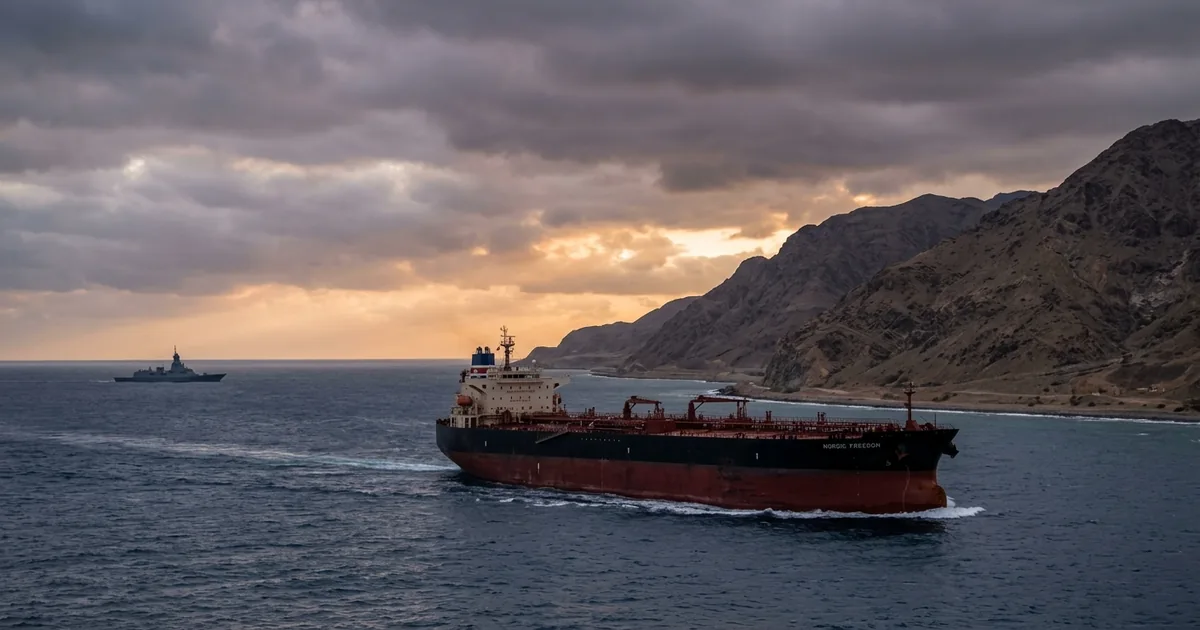
Iran’s negotiators told the United States on Monday that they are done talking, suspending the nuclear talks and threatening to shut the Strait of Hormuz, the chokepoint that moves close to a fifth of the world’s oil.
The walkout arrived only days after President Trump assured the public the agreement was all but finished, and the oil market repriced the distance between that promise and reality within hours.
The Iranian negotiating team said it would halt “talks and exchanges of texts through mediators” for as long as Israel keeps striking Lebanon, Iranian state media said Monday. Tehran did not stop at a pause. It warned it was ready to “completely” close the Strait of Hormuz and to open other fronts, turning a diplomatic breakdown into an energy threat pointed straight at the global economy.
The Deal That Was “Largely Negotiated”
Six days ago, this war was supposed to be winding down. Trump spent the back half of May telling Americans that a framework to end the fighting and reopen the Strait of Hormuz had been largely negotiated, with little left but the fine print. Then on May 29 he walked out of a White House Situation Room meeting without the “final determination” his own aides had promised, as NBC News reported that Tehran was accusing him of stalling with excessive demands. By Monday the framework was not being signed. It was being walked away from.
That arc is becoming the tell of this administration’s Iran policy. The public gets the announcement, confident and early, that a deal is close. The substance arrives late, contested, or not at all. A foreign policy narrated in real time on Truth Social keeps colliding with a negotiation that does not move on a president’s posting schedule, and the collision is now a recurring event rather than a one-off.
Israel Is the Variable Washington Cannot Control
Iran did not walk over centrifuges on Monday. It walked over Lebanon. Tehran’s stated condition for staying at the table was a halt to Israeli operations in Gaza and Lebanon and an Israeli withdrawal from Lebanese territory, and Israel’s continued strikes handed Iran both a grievance and an exit.
This is the structural weakness in Trump’s approach that no amount of dealmaking energy can paper over. Washington is brokering a ceasefire whose terms depend on the conduct of a third party it will not openly restrain. The United States can pressure Iran directly, but it cannot, or will not, deliver Israel, which means it cannot guarantee the one precondition Tehran has placed at the center of the talks. Every Israeli strike on Lebanon hands Iran a fresh reason to leave, and Iran has shown it will take that reason whenever it strengthens its hand.
Oil Is the Real Weapon
The market understood the message immediately. West Texas Intermediate climbed 7.8% to $94.20 a barrel and Brent rose 6.7% to $97.23 on Monday, erasing weeks of declines that had followed earlier optimism about a ceasefire. The Strait of Hormuz carries roughly 20% of the world’s seaborne oil, and a credible threat to close it is worth more to Tehran than any clause in a draft agreement.
That is the part of this story that reaches American kitchens. Jorge Leon, head of geopolitical analysis at Rystad Energy, warned that crude could run as high as $180 a barrel by August if the talks fully collapse, a move that would land on US households as higher pump prices and another leg of inflation heading into the midterm campaign. Iran has learned it can move the price of oil 8% in an afternoon with a single sentence from a state news agency. That capability, not its stockpile of enriched uranium, is the pressure point it actually controls, and Monday was a demonstration of it.
The Enrichment Knot
Strip away the Lebanon framing and the core dispute sits exactly where it was, and close to unsolvable on the current terms. The United States wants Iran to give up enrichment, ship out its stockpile, and shut its hardened underground sites. Iran insists that enrichment stays on Iranian soil and has refused to send its full stockpile abroad, including the roughly 970 pounds it has enriched to near weapons grade. Washington floated a regional consortium to enrich uranium for civilian use; Tehran signaled it could accept one only if it sat inside Iran’s borders.
The politics on each side have hardened into identity. Ayatollah Ali Khamenei has called abandoning enrichment “100%” against Iran’s interests and cast it as a matter of sovereignty rather than a bargaining chip, though he has stopped short of rejecting the idea of a deal entirely. Trump, for his part, has framed anything short of full dismantlement as surrender and has threatened to bomb Iran at a “much higher level” if it refuses to sign. Two leaders who have each told their domestic audiences that compromise is defeat now have to find a compromise.
What Happens the Next Time Tehran Wants $100 Oil
The off-ramp Iran took on Monday is also an on-ramp it can use again whenever it wants to remind the world what it can do to the price of a barrel. Until Washington can either rein in the Israeli strikes that keep detonating its diplomacy or convince Tehran that enrichment is negotiable, every confident announcement that a deal is close will sit one state-media bulletin away from collapse. The question is no longer whether the talks resume. It is how many times the oil market has to be taken hostage before the promises coming out of Washington start matching what the other side is actually willing to sign.