
Kane Parsons was 16 when he uploaded the YouTube video that started everything.
Now he is 20, and his feature directorial debut “Backrooms” just opened to $81 million at the North American box office, shattering every record A24 has ever set. Parsons is the youngest director in history to have the No. 1 film in the country, breaking a benchmark previously held by Josh Trank, who was 27 when “Chronicle” debuted in 2012.
The Numbers Tell a Story Hollywood Was Not Expecting
The $81 million opening weekend is not just impressive for A24. It is the largest debut ever for an original horror film, the best opening for a first-time filmmaker on a non-franchise property, and it crushed A24’s previous record by more than three times. Alex Garland’s “Civil War” had held the studio’s opening weekend record at $25.5 million since 2024.
The film grossed more on its opening weekend than most horror franchises manage across their entire theatrical runs. And it did it without a recognizable IP in the traditional studio sense, without a star-driven cast, and without the kind of marketing budget that major studios deploy for tentpole releases.
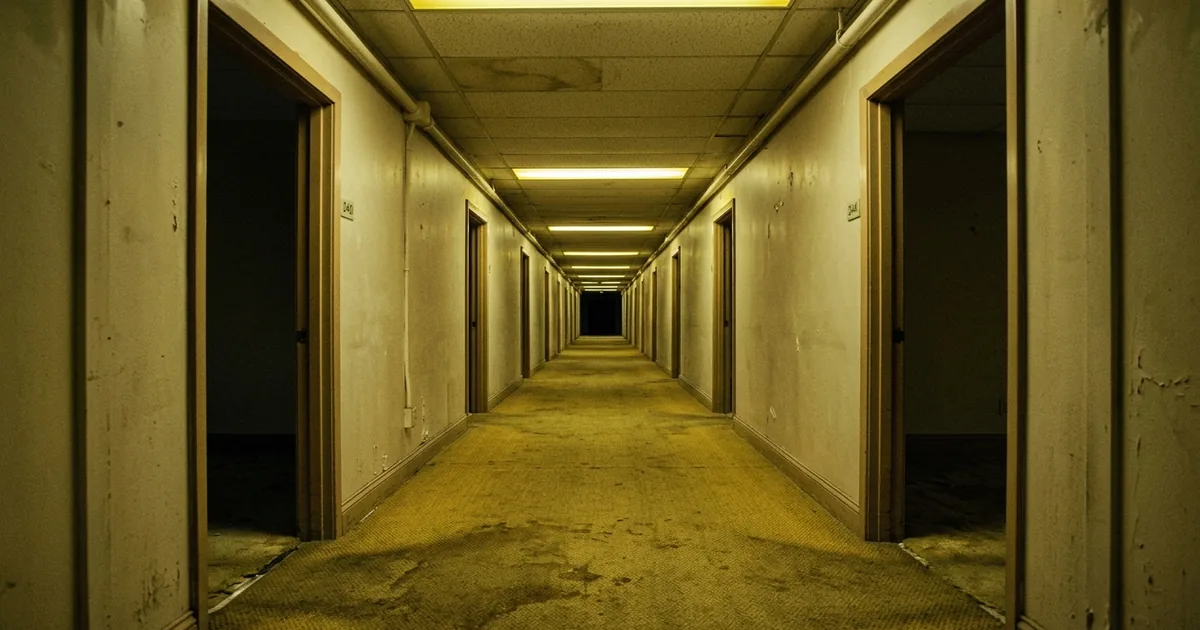
What “Backrooms” had instead was something more valuable: a built-in audience of millions who had been watching Parsons develop the concept on YouTube for four years. The film’s source material is an internet creepypasta about endless, liminal spaces of yellow-lit empty rooms, and Parsons’ original YouTube series translating that concept into found-footage horror has accumulated hundreds of millions of views.
The YouTube-to-Hollywood Pipeline Is Real Now
“Backrooms” is not an isolated case. It opened alongside “Obsession,” another horror film directed by a young YouTuber, and CBC News reported that both films drew Gen Z audiences to theaters in numbers that traditional marketing has struggled to reach for years.
The pattern is significant because it represents a fundamental shift in how Hollywood discovers and develops talent. The traditional pipeline ran through film schools, short film festivals, and agent-managed career ladders. The new pipeline runs through YouTube, TikTok, and community-driven fandom. Parsons did not get discovered. He built an audience, proved the concept worked, and then brought that audience with him to the multiplex.
For A24, which has built its brand on identifying distinctive voices and giving them resources to execute their vision, the partnership was a natural fit. But the implications extend well beyond one studio. Every major studio is now looking at the creator economy’s content ecosystem and asking the same question: which internet-native creators have audiences large enough and loyal enough to translate into opening weekends?
Why Horror Is Leading the Shift
It is not a coincidence that the YouTube-to-box-office breakthrough is happening in horror. The genre has always been the most democratic corner of Hollywood, the place where small budgets, unknown casts, and unconventional visions can connect with audiences in ways that polished studio productions cannot.
Horror also maps naturally onto the internet’s aesthetics. Creepypasta, analog horror, found-footage viral content, and internet-native horror fiction have created a generation of viewers whose relationship with the genre was forged online before they ever set foot in a theater. Parsons is not translating a YouTube series into a film. He is translating a digital-native horror sensibility into a theatrical experience, and the audience recognizes the difference.
The result is a film that feels native to the audience in a way that most studio horror does not. It is not an adaptation in the way Hollywood typically understands that term. It is a continuation, with higher production values, of something that already existed in the audience’s cultural vocabulary.
What This Means for the Box Office
The “Backrooms” opening arrives during a summer that has been testing Hollywood’s assumptions about what drives theatrical attendance. The Hollywood Reporter noted that “Scary Movie VI” and “Masters of the Universe” are both competing for the same screens, representing the traditional franchise-sequel and nostalgia-IP playbooks that studios have relied on for the past decade.
Parsons’ film did not need either playbook. It is not a sequel, not a reboot, not an adaptation of a known property in the traditional sense. It is a piece of internet culture that grew into a theatrical event, and it outperformed expectations by a factor of three.
The lesson is not that every YouTuber can make an $81 million movie. The lesson is that the audience-development model has changed, and the creators who understand how to build communities before they build films have an advantage that traditional Hollywood development cannot replicate. Kane Parsons spent four years proving that before anyone handed him a camera that cost more than a webcam.
He is 20 years old. Hollywood’s development executives are considerably older, and considerably more worried than they were a week ago.