
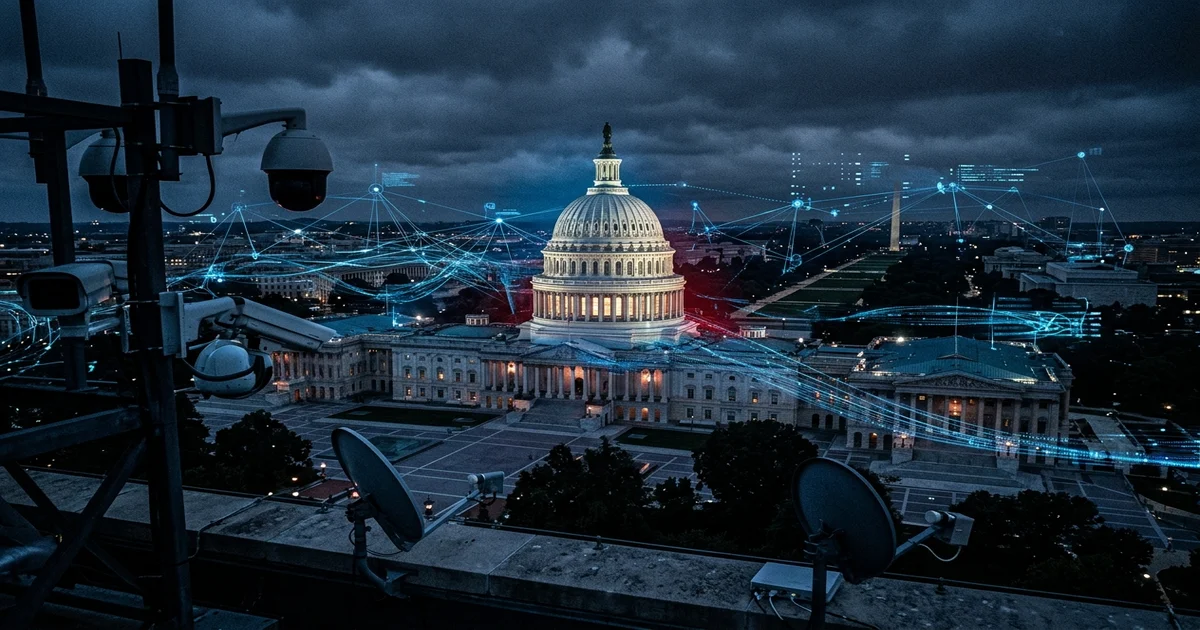
Section 702 of the Foreign Intelligence Surveillance Act, the surveillance authority that feeds more than half of the president’s daily intelligence briefing, officially lapsed Friday after the House failed to pass even a temporary extension.
The bipartisan implosion was triggered not by a substantive debate over privacy rights but by a political standoff over President Trump’s decision to install Bill Pulte as acting director of national intelligence.
How a Personnel Fight Killed a National Security Program
The mechanics of this failure are almost comically dysfunctional. House leadership brought a short-term extension to the floor Thursday that would have kept Section 702 alive through July 2 while Congress negotiated a longer-term deal. It needed a two-thirds majority to pass under the expedited rules being used.
Democrats refused to vote for it. Their objection was not about surveillance reform, privacy protections, or the program itself. They blocked the extension because they want Trump to reverse his appointment of Pulte, a real estate executive and social media personality with no intelligence community experience, as acting DNI. As Axios reported, Democrats see the extension vote as their strongest pressure point to force a staffing change they consider dangerous to national security.
Meanwhile, a bloc of conservative Republicans also voted no, but for the opposite reason: they want deeper reforms to prevent the FBI from using Section 702 data to search Americans’ communications without a warrant. The result was a bipartisan coalition of opposition that killed the bill from both flanks.
What Section 702 Actually Does
Section 702 allows the NSA to collect communications of foreign targets located outside the United States, including when those targets are communicating with Americans. The program has been credited with disrupting terrorist plots, tracking foreign cyber operations, and providing intelligence on adversary governments.
The controversy centers on what happens to American data that gets swept up in these foreign-targeted collections. The FBI has acknowledged conducting hundreds of thousands of searches of Section 702 databases using US person identifiers, a practice civil liberties groups have called a warrantless backdoor search that violates Fourth Amendment protections.
CNBC reported that intelligence officials warned Congress that even a brief lapse could create collection gaps, particularly in monitoring threats related to the ongoing Iran conflict and the FIFA World Cup, which opened this week with millions of international visitors now on US soil.
The Pulte Problem Is Bigger Than FISA
The Pulte appointment has become a proxy fight for a larger question: whether the intelligence community can function when its leadership is chosen for political loyalty rather than expertise. Democrats argue that an acting DNI who lacks security clearance experience and intelligence community background cannot responsibly oversee the 18 agencies that make up the US intelligence apparatus, especially during an active military conflict.
Republicans counter that the president has the legal authority to appoint acting officials and that Democrats are manufacturing a crisis to score political points. Speaker Johnson has signaled he will try to bring a standalone Section 702 vote back to the floor next week, potentially with enough Republican votes to pass it without Democratic support.
The Privacy Hawks Have a Point, Too
Lost in the Pulte drama is the fact that the conservative holdouts who voted against the extension are making a substantive argument that has been gaining bipartisan support for years. Civil liberties organizations on both the left and right have documented how Section 702 collections, which are supposed to target foreigners abroad, routinely sweep up American communications that the FBI then searches without a warrant.
A 2023 FISA court opinion revealed that the FBI had conducted over 278,000 queries of Section 702 data using US person identifiers in a single year. Reforms passed in 2024 imposed new restrictions on those searches, but critics say the changes did not go far enough. The conservative members who voted no Thursday want a full warrant requirement before any US person query, a position that privacy advocates at the ACLU and the Brennan Center have also endorsed.
The tragedy of this week’s vote is that a legitimate debate about surveillance reform has been completely overshadowed by a personnel fight that has nothing to do with the substance of the program. The privacy concerns will still be there when Congress eventually reauthorizes Section 702. Whether anyone will care enough to address them is another question entirely.
What Happens During the Lapse
Intelligence officials say existing surveillance operations under previously approved certifications can continue for now. The immediate impact is on new collection targets: the government cannot begin surveilling new foreign targets under Section 702 authority until Congress reauthorizes the program.
The practical question is how long the lapse lasts. If it stretches beyond a few days, the intelligence community will face real operational constraints at a moment when the Iran war, World Cup security, and an active election cycle all demand maximum collection capacity. Congress has let Section 702 lapse before, briefly, in 2018, and the sky did not fall. But the world was also considerably less on fire.