
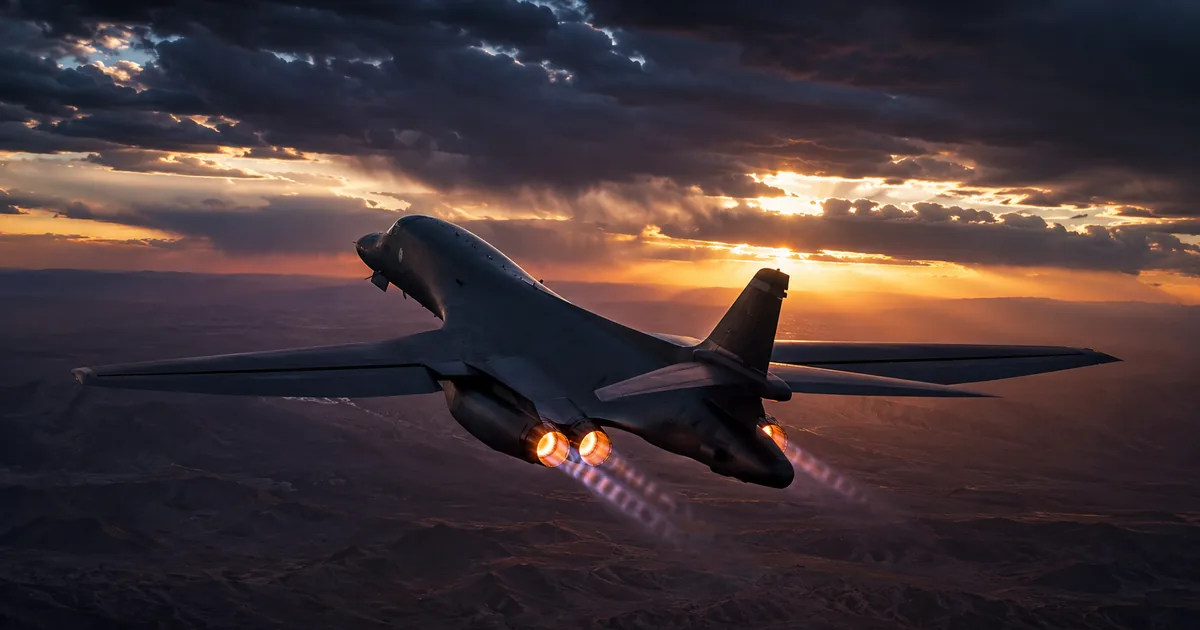
The United States flew a B-1 Lancer bomber against Islamic Revolutionary Guard Corps targets inside Iran on Tuesday, the first B-1 mission since fighting resumed twelve days ago.
That is not a routine sortie. It is a deliberate signal, delivered mid-negotiation, that Washington is prepared to widen this war faster than diplomats can end it.
Why One Bomber Changes the Math
The B-1 is not just another aircraft in the rotation. It carries the largest conventional bomb load of any bomber in the American fleet, two dozen 2,000-pound bombs or dozens of cruise missiles in a single run, and it can do it at supersonic speed at low altitude. Iran International reported that the strike, first revealed by Axios, launched from a base in the United Kingdom, a detail that matters more than it first appears.
Flying strategic bombers out of the UK rather than from bases in the Gulf tells you two things. First, the regional basing picture has gotten complicated: Iran’s earlier strikes on Al Udeid Air Base in Qatar put every American installation within missile range on notice, and the Pentagon has been visibly rebalancing since. Second, the US is now drawing on its global strike architecture, not just its regional footprint. That is the infrastructure you activate when you expect a longer war, not a shorter one.
Until Tuesday, the campaign against Iran had leaned on fighters, drones, and naval strike assets. Introducing the B-1 expands both the target set and the message. Hardened facilities, buried infrastructure, and dispersed IRGC sites that were impractical targets last week are practical targets now.
The Timing Is the Tell
Here is the part that deserves more scrutiny than it is getting. The Jerusalem Post reported that the B-1 strike landed while Qatari mediators were actively shuttling between American, Iranian, and Omani officials, trying to broker a deal to reopen the Strait of Hormuz and halt the fighting. A regional source told Axios that Iran’s leadership had not yet accepted the mediators’ latest proposal.
So the sequence reads like this: diplomacy stalls, and within days the heaviest conventional bomber in the US inventory shows up over Iran. You can call that coercive diplomacy, escalating pressure to force a deal. Plenty of administrations have run that play. But it carries a real cost. Every escalation gives Tehran’s hardliners another argument that negotiating under fire is surrender, and it narrows the space for the Qataris and Omanis to deliver anything Iran’s leadership can sell at home.
The pattern is familiar from the last two weeks of this war: talks inch forward, strikes intensify, talks stall, repeat. The White House insists military pressure and diplomacy are complementary tracks. The evidence so far is that they are competing ones.
What This War Is Already Costing
The escalation is not happening in a vacuum. The bill for this conflict is arriving in real time, and it is steep. The Pentagon has already put the cost of the first stretch of the war at $37 billion and asked Congress for tens of billions more, a request we broke down when Defense Secretary Hegseth confirmed the figure this week. Four American service members have come home to Dover in flag-draped cases. More than a hundred have been injured. Gas prices have pushed toward $4 a gallon as the Strait of Hormuz remains a shooting gallery.
Each new weapons system that enters the fight raises that tab and deepens the commitment. B-1 sorties from the UK are expensive to fly, and they are even more expensive as policy: they signal to allies, adversaries, and markets that the United States is settling in.
That is exactly why Congress should be louder than it is. There has been no new authorization for the use of military force against Iran. The War Powers questions that flared when this conflict reignited have mostly faded into procedural grumbling while the target list grows. A strategic bomber campaign against a country of 90 million people is the kind of decision the Constitution assigns to the legislative branch on purpose. Right now it is being made by default.
Where This Goes From Here
Watch three things in the coming days. First, whether B-1 missions become a rhythm rather than a one-off; a second or third sortie would confirm the campaign has permanently shifted into a heavier phase. Second, whether Qatar and Oman keep mediating at all, because mediators tend to step back when both sides stop pretending to want a deal. Third, how Iran retaliates, and against what. Tehran’s options, from Hormuz escalation to strikes on regional bases to asymmetric attacks, each pull the US deeper in.
The uncomfortable question underneath all of it: what does winning look like? Twelve days into the resumed war, the administration has articulated pressure, deterrence, and resolve, but not an end state. Bombers are very good at destroying targets. They have never once been good at answering that question.