
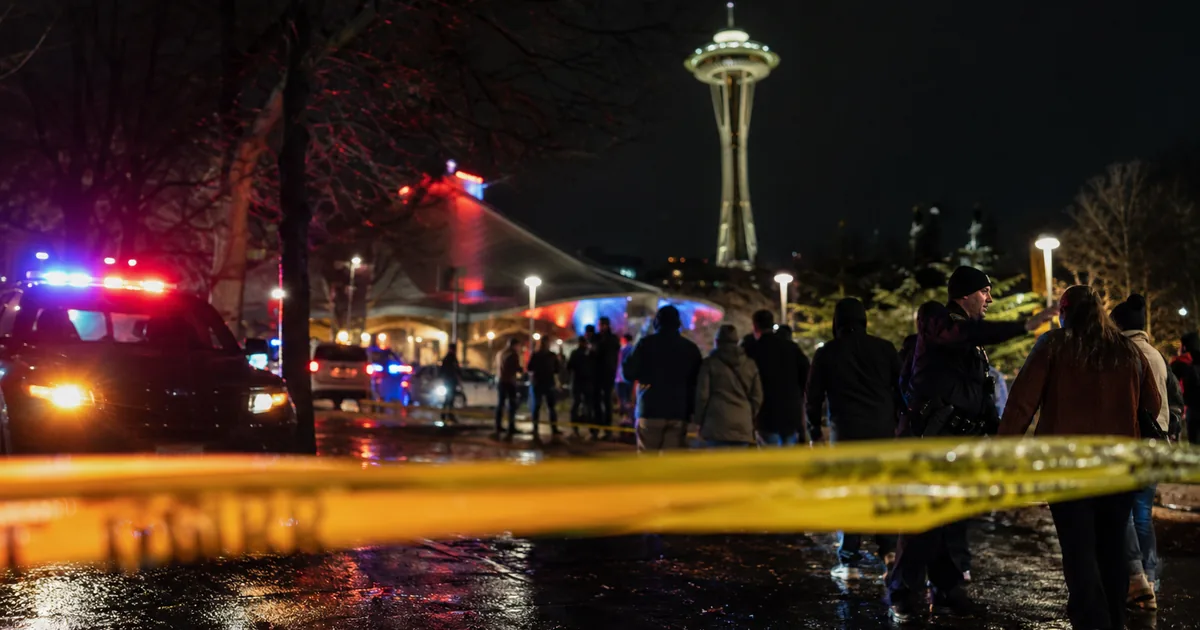
A gunman opened fire inside the Bite of Seattle food festival at Seattle Center on Saturday evening, shooting at least six people, including a child, and sending tens of thousands of attendees fleeing into the streets surrounding the Space Needle.
Seattle police and emergency crews flooded the area around Sue Bird Court and Thomas Street shortly after 6 p.m. local time, and the entire Seattle Center complex was evacuated as officers worked to secure the scene. Harborview Medical Center, the region’s only Level I trauma center, confirmed to CNN that it was receiving patients from the incident.
A Food Festival Turned Into a Mass-Casualty Scene
The Bite of Seattle is one of the Pacific Northwest’s largest annual food events, drawing more than 350,000 visitors across its three-day run. Saturday evening, with crowds packed into the indoor venue space, witnesses described a sudden burst of gunfire that shattered what had been a family-friendly summer gathering.
Two attendees told CNN affiliate KOMO that they heard seven to eight shots ring out inside the venue. People ran “everywhere,” they said. The chaos was immediate: festival-goers scrambled toward exits, parents grabbed children, and vendors abandoned their booths as the sound of sirens closed in from every direction.
The shooting adds Seattle Center to a grim and growing list of American public spaces where mass shootings have turned communal gatherings into crime scenes. The pattern is now so familiar it has its own choreography: the shots, the stampede, the helicopter footage, the press conference, the vigil. What remains absent, as always, is the policy response that would break the cycle.
What We Know So Far
The Seattle Police Department confirmed the shooting but provided limited details in the immediate aftermath. What is established:
- At least six people were struck by gunfire, according to witness accounts reported by NBC News.
- A child appeared to be among the victims, per multiple witnesses.
- Harborview Medical Center is treating the injured. The hospital has not released conditions.
- The suspect or suspects have not been publicly identified. It is unclear whether anyone is in custody.
- Seattle Center was fully evacuated, with police establishing a perimeter around the venue.
The incident unfolded during what should have been peak hours for the festival. Saturday evening draws the largest crowds of the weekend, and the venue was at or near capacity when the shooting began.
The Structural Problem That Never Gets Addressed
America’s relationship with mass shootings at public events has settled into a pattern that would be considered a public health emergency in any other wealthy democracy. The question is no longer whether large gatherings are targets but how cities and event organizers manage the risk without the federal policy infrastructure to reduce it.
Seattle, like most major U.S. cities, has invested heavily in event security protocols since the post-2016 wave of attacks on public gatherings. The Bite of Seattle had security checkpoints and a visible police presence. But the fundamental problem remains unchanged: in a country with more firearms than people, security at the perimeter cannot eliminate the risk of someone bringing a weapon into a crowded space. The perimeter is not the failure point. The policy upstream of the perimeter is.
Washington state has some of the nation’s stronger gun laws, including universal background checks and an assault weapons ban signed into law in 2023. But state-level regulation operates inside a national market where firearms cross state lines as easily as any other consumer product. The structural gap between state-level ambition and federal inaction is where events like Saturday’s shooting live.
What Comes Next
The investigation is in its earliest hours, and critical details, including the number of suspects, the type of weapon used, and the conditions of the victims, remain unknown. Seattle police are expected to hold a press conference later Saturday night or early Sunday.
For the hundreds of thousands of people who attended or planned to attend the Bite of Seattle this weekend, the festival is almost certainly over. For the families of the injured, the next hours will be spent in the waiting rooms of Harborview, a hospital that has become grimly experienced in treating mass-shooting victims.
The question that hangs over every one of these events is the same one that never gets answered: at what point does the frequency of mass shootings at American public gatherings force a structural response rather than another round of thoughts, prayers, and a news cycle that moves on by Tuesday.
This is a developing story.