
Danny Boyle’s Ink premiered Wednesday night in the Sala Grande on the opening evening of the 83rd Venice Film Festival, and the black-tie crowd stood for roughly four minutes.
Almost every review filed since has landed on the same word, which is warning: a warning about tabloids, a warning about what the press became, a warning for now. Not one of them has done anything with the detail that surfaced at the film’s own press conference the following morning, which is that Rupert Murdoch watched the source play twice, sent word through his daughter that he is happy with the man playing him, and has apparently never had a bad thing to say about any of it.
A portrait its subject enjoys is not a warning. It is a legacy film, and it is worth being honest about that before the awards run starts.
What Actually Happened at the Premiere
Ink is adapted by James Graham from his own 2017 stage play, which ran at the Almeida, transferred to the West End and later went to Broadway. It covers 1969, the year Murdoch bought a failing broadsheet called The Sun and handed it to a Yorkshire editor named Larry Lamb with an instruction that amounted to: find out what people actually want and give them more of it than anyone else will. Guy Pearce plays Murdoch. Jack O’Connell plays Lamb. Claire Foy is in it. It is competing for the Golden Lion, and la Biennale confirmed it as the opening film back in the summer.
The reception was strong. The Hollywood Reporter described the ovation as a rollicking start to the festival. It is sitting at 92 percent on Rotten Tomatoes with an 80 on Metacritic. Deadline’s review called it sensational and framed it explicitly as a caution about the present. TIME called it an exhilarating portrait of the beginning of the end of newspapers.
The Quote Everyone Reported and Nobody Followed
At the press conference, Pearce was asked whether Murdoch had weighed in. Variety carried his answer: he had been messaging with Elisabeth Murdoch, and she told him her father was pleased.
“Dad’s very happy that you’re playing him.”
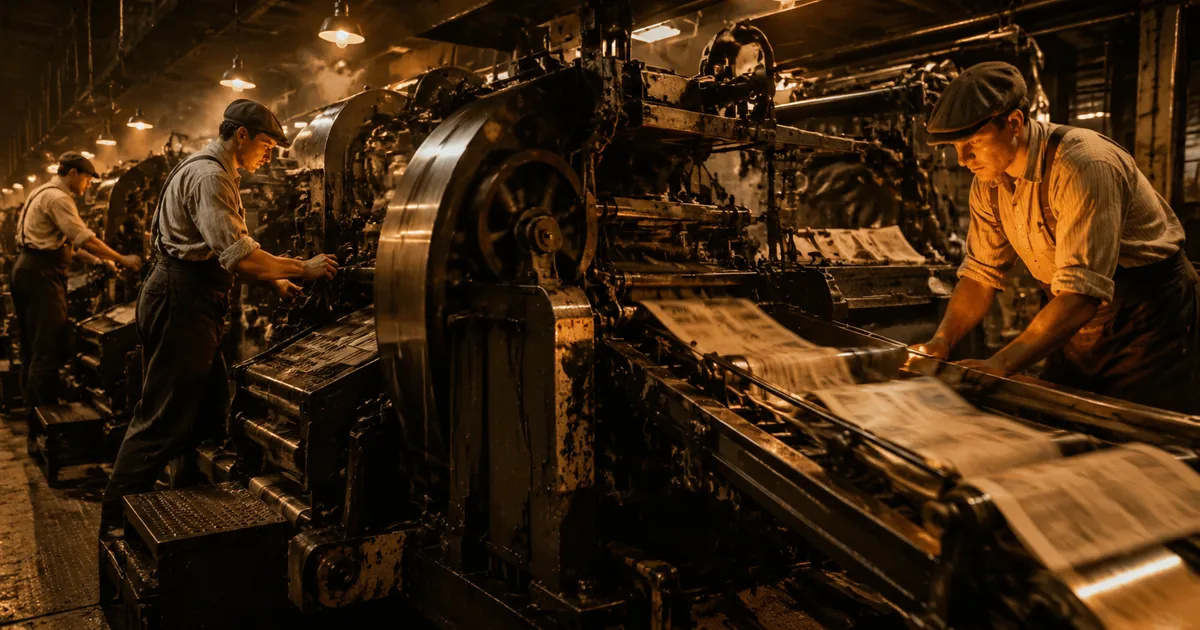
Pearce noted that Murdoch has not seen the finished film. Graham then added the part that actually settles it. Murdoch went to the stage version at least twice. ABC News reported Graham’s recollection that the mogul was hard to read but visibly enjoyed the sequence of the presses running, the dirt and the steam and the filth of getting a paper out every day.
Sit with that for a second. A man in his nineties, with a documented history of using every instrument available to him against people who portray him unfavorably, watched a dramatization of his own career twice and came away nostalgic about the smell of ink. Whatever Ink is doing, it is not doing the thing that would have made him uncomfortable.
Why This Is Not a Nitpick
Here is our read, and it is not a knock on the filmmaking, which by every account is excellent.
The story Ink tells is that Murdoch and Lamb won because they paid attention to what readers wanted while their competitors were busy deciding what readers ought to want. That is a genuinely true account of what happened in 1969. It is also, almost word for word, how Murdoch has described himself for fifty years, most recently while handing the empire to his son. A film can be critical of the consequences of that idea and still hand the man the compliment he has always wanted, which is that he was the only one in the room who understood the public. He will take the consequences. He has always taken the consequences. The compliment is the part he came for.
The reviews calling it a warning are not wrong so much as they are describing the audience’s experience rather than the film’s effect. Everyone leaves feeling appropriately troubled about tabloids. Nothing about that has ever cost Murdoch anything.
There is a smaller irony worth noting. Netflix bought the film for the United States and Latin America, putting it in select theaters on December 11 before it streams on January 8. So the cautionary tale about a company that learned to measure what its audience wanted and serve them more of it is arriving via the company that industrialized exactly that. Nobody at the press conference brought it up.
Go and see it. Boyle is in form, Pearce is reportedly extraordinary, and a well-made film about how the modern press got made is worth two hours of anyone’s evening. Just do not mistake a portrait the sitter approved for an indictment. If Ink were the warning the reviews say it is, the one person on earth best positioned to know would not be sending his compliments through his daughter.