
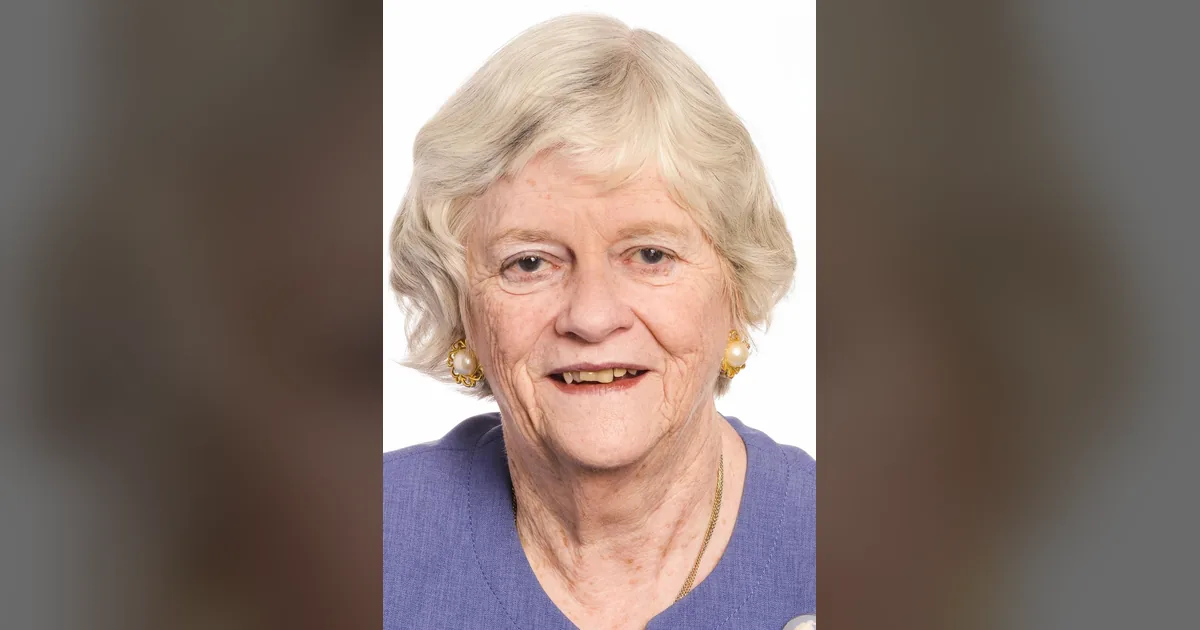
Ann Widdecombe, the former Conservative minister who spent two decades as one of the most recognizable and combative figures in British politics, was found dead with serious injuries at her home on Dartmoor on Thursday, and by Friday police had arrested a 26-year-old man on suspicion of her murder. The killing of a 78-year-old former member of Parliament in her own house, in one of the quietest corners of Devon, has landed on a British political class that has already buried two of its own to violence in the past decade.
What Police Have Confirmed So Far
The confirmed facts are still narrow, and it is worth being precise about them. Devon and Cornwall Police said officers were called to an address at Haytor by the ambulance service at around 11:40am on Thursday, 9 July, where Widdecombe was found dead inside the property having sustained serious injuries. The force’s Major Crime Investigation Team launched a murder investigation, put a cordon around the house, and appealed for CCTV, doorbell and dashcam footage from anyone in the vicinity of Haytor Vale.
On Friday, NBC News reported that a 26-year-old man had been arrested on suspicion of murder. Police described the suspect as a white British national and have not named him. No motive has been given. Detectives said the case is not being treated as terror-related or politically motivated, a point the force made early and deliberately.
Widdecombe lived alone at the house on the edge of Dartmoor National Park, where she had settled after leaving the House of Commons in 2010. Neighbors and colleagues have described the location the way she herself often did: remote by choice, a working retreat for a woman who never stopped writing, broadcasting and campaigning.
From Prisons Minister to Prime-Time Fixture
Widdecombe’s career had two acts, and both of them made her famous. The first was Westminster. Elected as the Conservative MP for Maidstone in 1987, she served 23 years in the Commons, including a stint as prisons minister under John Major, and built a reputation as one of the most unbendable social conservatives of her generation. She opposed abortion, resisted the expansion of LGBTQ rights, and left the Church of England for Rome over the ordination of women. Colleagues found her exasperating and constituents kept re-electing her, which tells you something about the gap between Westminster opinion and the voters Westminster serves.
The second act made her a household name well beyond politics. After standing down in 2010 she became a fixture of British television, stomping her way through Strictly Come Dancing with a cheerful absence of rhythm that audiences adored, and later appearing on Celebrity Big Brother. The reinvention was not a softening. She joined Nigel Farage’s Brexit Party in 2019, won a seat in the European Parliament at 71, and in recent years served as a spokeswoman for Reform UK, a party now navigating turmoil of its own after Farage resigned his Clacton seat over a funding scandal earlier this month.
Agree with her politics or despise them, and plenty of Britons did each, Widdecombe was that increasingly rare thing: a politician who said exactly what she believed, on camera, for forty years, and never once pretended to be anyone else.
Why Police Ruled Out a Political Motive So Quickly
The speed with which detectives declared the case free of political or terror motivation is itself the story of the last decade of British politics. When CNN reported the arrest on Friday, the network noted the police statement on motive high in its coverage, because every newsroom in Britain was asking the same first question. Jo Cox, a sitting Labour MP, was murdered by a far-right extremist in 2016. Sir David Amess, a sitting Conservative MP, was stabbed to death at a constituency surgery by an Islamist attacker in 2021. The default assumption when a parliamentarian, current or former, dies violently is no longer that it must be something else.
That assumption has costs, and the police clearly understand them. An early, explicit statement that the killing is not being treated as political is an attempt to stop a speculation cycle before it metastasizes into conspiracy, especially around a figure as ideologically charged as Widdecombe. It will not fully work. It never does. But it matters that the institution tried, and it matters that the question even needed answering, because it measures how much the physical security of British public figures has deteriorated as an assumption of civic life. Parliament has spent years and millions hardening protection for sitting MPs. Former members, who keep the public profile but lose the security apparatus the day they leave office, are a gap nobody has seriously addressed.
Widdecombe, characteristically, would have waved all of that away. She lived alone on a moor, gave out her opinions freely, and regarded fear as an indulgence. That fearlessness was the brand, and until Thursday it had never cost her anything.
What Happens Next
The suspect can be held while detectives seek charging authority from the Crown Prosecution Service, and a charging decision is likely to come quickly in a case of this profile. Forensic teams remain at the Haytor Vale property, and police are still appealing for witnesses and footage from the surrounding roads.
The larger reckoning will take longer. Tributes are already arriving from every corner of a political spectrum Widdecombe spent her life quarrelling with, which is its own kind of testament. The harder question, the one that will outlast the news cycle, is what Britain owes the people it asks to live public lives after the cameras move on. Widdecombe gave her country four decades of unfiltered conviction. The least the country can do now is insist on unfiltered answers about how she died.