
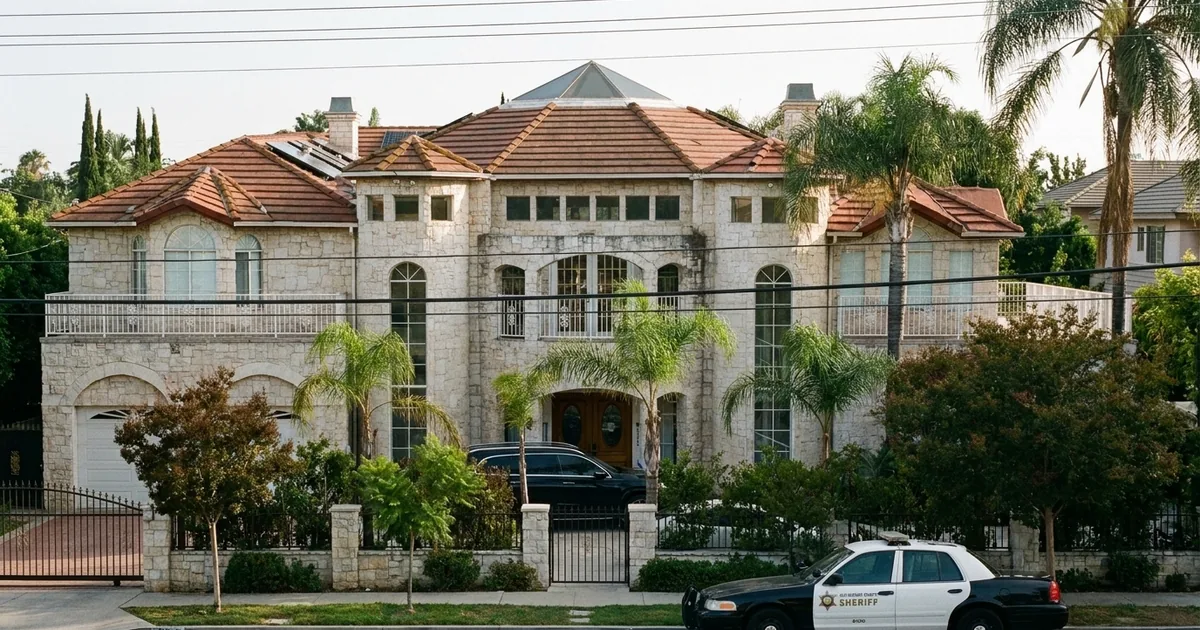
Los Angeles County prosecutors charged Guojun Xuan and Silvia Zhang on Tuesday with conspiracy to commit child abuse, more than a year after 21 children, most born to surrogates, were taken from their Arcadia home. District Attorney Nathan Hochman called it “a house of horrors.” Both pleaded not guilty. Bail is $20 million each.
Lawmakers have already written a bill about this case. It misses. H.R. 7040, the SAFE KIDS Act, cites “recent events in Arcadia, California” in its findings. Then it regulates passports. It voids surrogacy contracts with citizens or permanent residents of China, Russia, Iran and North Korea, and it exempts any married couple in which one spouse is a US citizen or green-card holder. None of the charging coverage we reviewed states the couple’s immigration status. Under the bill, that one fact decides whether it would touch them at all.
What the bill checks
The intended parents’ nationality. Brokers who knowingly or recklessly arrange a banned contract face up to a year in prison. Nothing asks who the parents are or how many children they already have.
What happened in Arcadia
The couple ran their own surrogacy agencies. After the state took 21 children, at least five more babies were born to the couple’s surrogates in Virginia, Pennsylvania and Georgia.
That second column is the story. Those pregnancies were already underway when Los Angeles County removed the children, and no law flagged a single one. The surrogates had to work it out themselves; two in Virginia cut off contact with the couple in the weeks before giving birth last fall, and each baby ended up in state custody one state at a time. They had been recruited on Facebook through agencies registered to the couple’s own properties. “My client was led to believe that this was a couple who had one child and wanted to have one more,” said Pamela DeCamp, a Virginia legal aid attorney for one of the surrogates.
Read the bill again with that in mind. Its penalty lands on brokers. In Arcadia, the brokers were the parents.
Screen the Parents, Not the Passports
There is no federal regulation of surrogacy. California requires lawyers on both sides and a notarized contract. It does not license the businesses that match surrogates with parents, and it sets no limit on how many children one family can commission. Each state writes its own rules, the same patchwork that left three states issuing conflicting orders over one baby this summer.
Adoption works differently. In every state, prospective adoptive parents go through a home study that includes checks of criminal and child-abuse records. A couple can commission two dozen births through surrogates without any law requiring either check.
The defense blames the help. “My client is innocent. It is the nanny’s wrongdoing who went on the run,” attorney Mitchell Krems said. A $105,000 warrant is out for that nanny. A jury will sort out who did what inside the house.
What no court will sort out is how this was possible. We think Congress wrote a national-security bill about a child-welfare failure. A nationality filter may not reach this couple at all, and it would do nothing about an American couple running the same play. The fix that touches Arcadia is the one adoption already has: a background check and a home study for intended parents, plus a record that follows them across state lines. California, among the most surrogacy-friendly states in the country, does not need to wait for Washington to write it.