
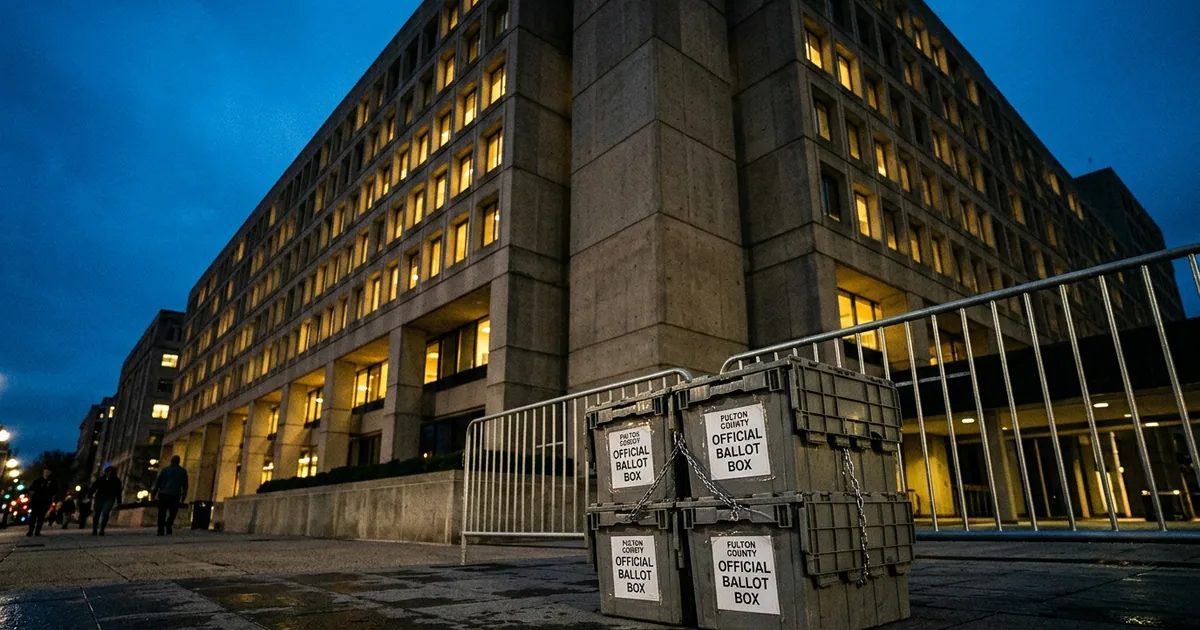
The FBI has ordered every field office in the country to immediately contribute intelligence analysts to the bureau’s sprawling investigation of the 2020 election in Fulton County, Georgia, according to an unclassified memo first reported by NBC News. The directive, issued by the FBI’s Directorate of Intelligence and Criminal Division, calls the Atlanta-based probe a “priority investigation” and conscripts 260 intelligence officials from offices nationwide, with each analyst expected to complete 708 records checks by July 17.
That is not a routine allocation of resources. It is the largest known domestic mobilization of FBI analytical capacity since the January 6 investigations, and it is aimed squarely at relitigating an election that every prior review, including Republican-led audits in Georgia, found was conducted lawfully.
The Scale Says Everything About the Mission
FBI Director Kash Patel is not just authorizing the surge; he is ordering it, with overtime on weekends and holidays approved across every participating field office. The numbers alone tell a story: 260 analysts running 708 checks apiece amounts to roughly 184,000 individual records reviews in two weeks. The FBI is treating a six-year-old county election like an active national security threat.
This escalation follows the January 28 raid on the Fulton County elections office in Union City, where agents seized more than 600 boxes of records: physical ballots, ballot images, voter rolls, and tabulation materials from the 2020 cycle. The criminal probe had opened just 23 days earlier, on January 5, a pace that former FBI deputy director Andrew McCabe told CNN was without precedent in his 21-year career.
Built on Already-Debunked Claims
When the search warrant affidavit was unsealed in February, it relied almost entirely on fraud allegations that had already been investigated and rejected. NPR reported that the core claims mirrored conspiracy theories previously debunked by multiple audits, including those conducted under Republican oversight in Georgia. The Washington Post’s analysis of the affidavit reached the same conclusion: the evidentiary basis was recycled from years-old, already-discredited allegations.
That the FBI is now deploying hundreds of additional analysts to comb through this same material does not strengthen the evidentiary foundation. It multiplies the manpower directed at claims that have already been adjudicated. The why here is structural: this is not an investigation calibrated to evidence. It is an investigation calibrated to a political outcome, one that serves a president who has never stopped insisting he won Georgia in 2020.
The Real Target May Not Be 2020
Legal experts have warned for months that the Fulton County probe is less about what happened six years ago and more about what happens this November. Democracy Docket reported that the investigation’s timeline and scope raise serious concerns about election interference in 2026: seizing voter rolls and tabulation infrastructure creates a chilling effect on election administrators across the country, signaling that running a lawful election in a way that produces results unfavorable to the current administration can trigger a federal criminal probe.
Senators Sheldon Whitehouse and Richard Blumenthal have formally requested that the Justice Department’s Inspector General investigate the seizure, citing what they called an unprecedented use of federal law enforcement resources to pursue debunked voter fraud claims.
What 260 Analysts Cannot Find
The fundamental problem with surging 260 analysts into this probe is not logistical. It is epistemic. The claims at the center of the investigation have been reviewed by Georgia’s own Republican Secretary of State, by multiple courts, by a bipartisan Senate investigation, and by the FBI itself under previous leadership. None found evidence of the systematic fraud alleged by Trump and his allies.
Deploying more analysts does not create evidence that does not exist. What it does create is an institutional apparatus that can generate process crimes, referrals, and prosecutorial pressure against election workers who were doing their jobs. It transforms the investigative machinery of the federal government into an instrument of political pressure at scale.
MSNBC reported that the memo’s guidance did not include numbers for FBI agents, dozens of whom are also working on the investigation, meaning the total human footprint of this probe is significantly larger than even the 260-analyst figure suggests.
The Clock Is the Tell
The July 17 deadline for completing the records checks is not arbitrary. It falls in the window when 2026 midterm campaign operations are ramping up, when election administration decisions are being finalized, and when the political utility of announcing criminal referrals or charges would be maximized. Every aspect of this investigation, from the speed of the initial warrant to the scale of the current surge, has been calibrated to a political calendar, not an evidentiary one.
The question is no longer whether the FBI has the resources to investigate Fulton County. It is whether the country’s premier law enforcement agency is being wielded as a political tool to intimidate election workers, suppress voter confidence, and manufacture a predicate for challenging results that have already been certified.