
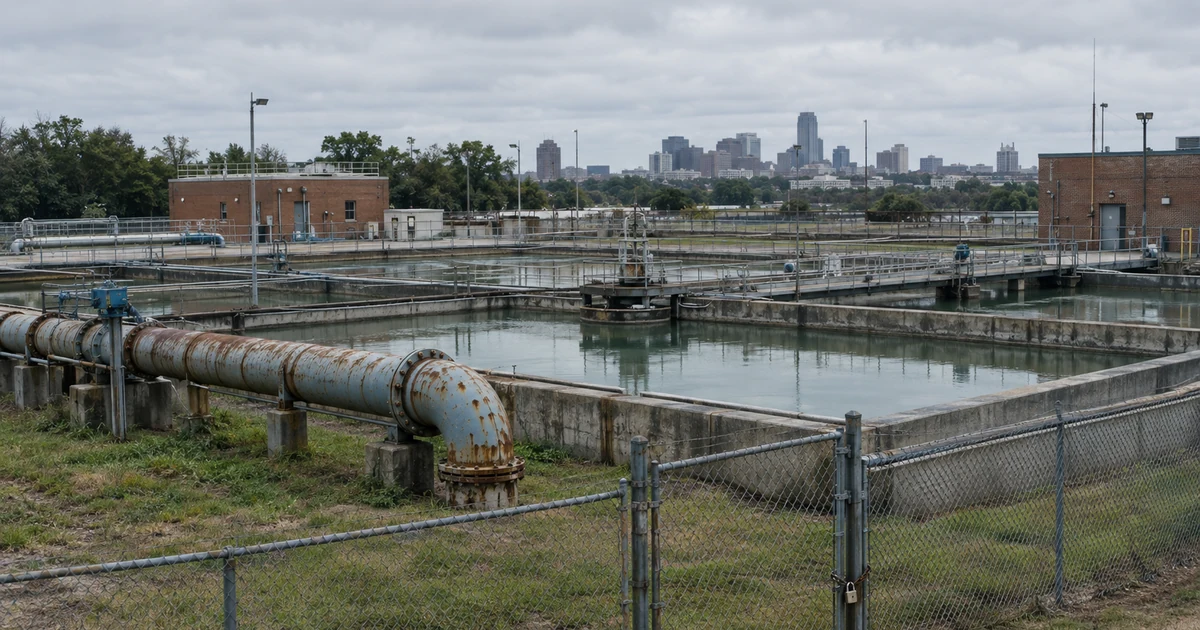
When the full Fifth Circuit threw out a lawsuit brought by four Jackson residents who say the city let lead into their drinking water and then assured them it was safe, it offered them a consolation prize: go elect representatives who will manage the public water system better. That advice landed in a city whose water system has been out of municipal hands since November 2022, when a federal judge handed the utility to an outside manager, and it landed five days before that same manager told Jackson it should sell the system off entirely.
Nearly every account of the ruling has led with the headline finding, that there is no constitutional right to clean drinking water. Almost none has checked whether the alternative the court pointed to is available to the people it was pointing at. It is not, and that changes what the decision actually did.
What the Court Held, and How Far It Went
The decision in Sterling v. City of Jackson came down on September 4. Sitting en banc, the appeals court voted 10 to 5 to affirm the dismissal of a case that Priscilla Sterling, Raine Becker, Shawn Miller and John Bennett filed in March 2022, alleging the city knew lead was reaching residents and misrepresented the water as safe. Judge Kurt Engelhardt wrote for the majority.
This was not the narrow off-ramp courts usually take. A judge who wants to end a case like this can say the right was not “clearly established” and grant the officials qualified immunity, which decides nothing about whether the right exists. The Fifth Circuit went further and reached the merits. As the legal scholar Jonathan Adler noted in his write-up of the en banc decision, the court held there is no Fourteenth Amendment right to be free from officially contaminated water and no right to accurate information from officials about what is in the tap.
The majority’s reasoning rested on history. It was “reluctant to weaken the right by applying it to conduct that would not have violated the Constitution when the Fourteenth Amendment was adopted.” The Jackson NBC affiliate WLBT, reporting from the courthouse, captured the line that will follow this ruling around: we will not expand the Fourteenth Amendment. The claims, the court said, were not constitutionally cognizable.
The Remedy the Court Recommended Is Not Available
Having closed the constitutional door, the majority listed what Jackson residents should do instead. Pursue tort claims in state court. Elect representatives who will better manage the public water system. Petition those representatives for other remedies.
The middle one is the problem. Jackson’s water has not been a question for Jackson’s elected officials in almost four years. On November 29, 2022, US District Judge Henry Wingate placed the system under an interim third-party manager after the Justice Department and the EPA brought a Safe Drinking Water Act complaint against the city. Ted Henifin, a utility executive brought in from Virginia, has run it since under the banner of JXN Water. Rates, repairs, capital plans and compliance run through him and through Wingate’s courtroom, not through the city council.
The timing sharpens the point. On September 9, one business day after the ruling told residents to vote their way to safer water, Henifin said publicly that Jackson should sell the system outright, a position local station WJTV also reported. The Mississippi Legislature, meanwhile, passed a plan this session to move the water and sewer systems under a regional authority. Wingate halted that law in June. Henifin’s own transition proposal is due at the end of September, and JXN Water projects its interim control running into 2027.
So the ballot-box remedy points at an office that does not set water policy, in a dispute currently being settled among a federal judge, a court-appointed manager and a state legislature, with a possible sale to a private buyer on the table. A Jackson voter could replace every elected official in the city tomorrow and change none of it.
Our View: This Was a Dismissal Dressed as a Referral
We think the Fifth Circuit is entitled to hold that the Fourteenth Amendment does not reach lead in a municipal pipe. Reasonable judges disagree about how far substantive due process stretches, and five of them on this court did.
What is not defensible is the paragraph telling lead-exposed residents to go vote for better water management. A court that had just spent an opinion on the history of the Fourteenth Amendment did not spend a sentence checking who currently controls the utility, in a receivership created by a federal court in the same circuit. That is not a remedy. It is a rhetorical softener, and it made a total dismissal read as a redirection.
It matters because of what the redirection obscures. Jackson is a majority-Black city whose water system collapsed under decades of disinvestment, and the residents who sued are the ones who drank the water. Telling them the answer is at the polls, when the polls do not reach the water, is the kind of line that sounds like humility about judicial power and functions as an exit. Federal courts have been narrowing the routes into federal court for exactly these plaintiffs for a while now, from the Supreme Court’s Louisiana ruling on the Voting Rights Act to the collapse of the civil rights case against an ICE agent this month. If the courthouse door is closing, the honest thing is to say so and stop.
The Bodily Integrity Problem the Majority Left Open
The majority acknowledged bodily integrity as an important right and then declined to fit contaminated water inside it, pointing to the conduct the doctrine has historically covered: forced surgery, involuntary medication, forced stomach pumping, sexual assault by an officer. The court said it was skeptical that lead in the water belongs on that list.
Read that list again. Every item describes the state putting something into a body, or taking something out of it, without consent. The plaintiffs allege the city put lead into water it knew people would drink and then told them to drink it. Distinguishing those things is possible, but it takes an argument about state action and directness that the opinion gestures at more than it makes.
Judge Catharina Haynes, joined by four colleagues, would not have ended it here. The allegations were plausible enough, she wrote, that the plaintiffs should at least have been entitled to discovery. Among those allegations: several of Sterling’s children were diagnosed with lead poisoning.
What survives is thinner than what was lost. The court dismissed the state-law claims without prejudice, so Jackson residents can refile in Mississippi state court, where they will face the state’s own immunity rules and caps. That is the remedy that actually exists. The one the Fifth Circuit put in writing does not.