
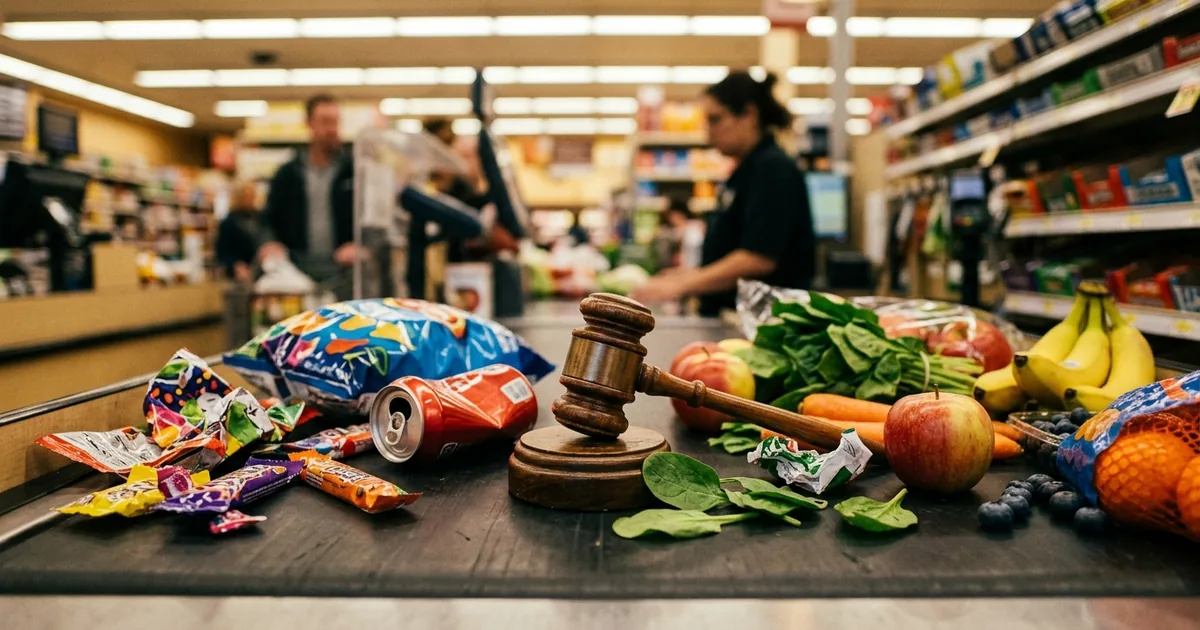
A federal judge struck down the Trump administration’s restrictions on what Americans can purchase with food stamps on Sunday, ruling that the government overstepped its authority when it approved waivers allowing 22 states to ban SNAP benefits from being used on soda, candy, and other items deemed low in nutritional value. The decision is a significant legal defeat for the “Make America Healthy Again” agenda and a reminder that even popular-sounding public health initiatives run into constitutional guardrails when the implementation skips the rulemaking process.
What the Administration Tried to Do
Earlier this year, the USDA began approving state-level waivers that would restrict SNAP purchases to exclude sugary drinks, energy drinks, candy, and prepared desserts. Twenty-two states received approval, and several had begun enforcing the restrictions at checkout. The policy was championed by MAHA allies in the administration who framed it as a common-sense measure to reduce diet-related chronic disease among the roughly 42 million Americans who rely on the Supplemental Nutrition Assistance Program.
The USDA’s Food and Nutrition Administration published the approved waiver framework on its website, laying out which product categories states could restrict. The approach sidestepped the formal federal rulemaking process by using existing waiver authority, a shortcut that ultimately became the legal vulnerability.
Why the Judge Said No
The court found that the waiver approach effectively created a new federal policy without going through the notice-and-comment rulemaking required by the Administrative Procedure Act. In other words, you cannot use a waiver designed for state-level flexibility to impose a uniform national restriction on what 42 million people eat. The distinction matters. Waivers are meant to let states experiment within existing law. They are not a backdoor for rewriting the law itself.
SNAP recipients had filed suit arguing that the restrictions were both unlawful and harmful, particularly for families in food deserts where the cheapest available calories are often the ones being restricted, as Newsweek reported when the lawsuit was first filed. The plaintiffs did not dispute that better nutrition outcomes are desirable. They argued that the government chose the wrong legal tool to get there.
The Policy Tension Is Real
This is where the story gets complicated, and where honest analysis requires holding two ideas simultaneously. The public health case for discouraging soda and candy purchases with taxpayer-funded benefits is not frivolous. Diet-related disease is the leading driver of healthcare costs in the United States, and SNAP participants experience disproportionately high rates of diabetes, heart disease, and obesity. The data on that is not in dispute.
But the implementation method matters as much as the goal. Restricting what people can buy with benefits carries real paternalism costs, and doing it through executive shortcuts rather than legislation means the policy lacks democratic legitimacy. Congress has repeatedly declined to pass SNAP purchase restrictions when given the chance. The administration tried to get the same result without the vote, and the court said that is not how it works.
The ruling also has a practical dimension that the healthcare policy debate often glosses over: enforcement at checkout is a logistics nightmare. Cashiers and point-of-sale systems would need real-time product-level categorization to distinguish between restricted and permitted items, a technical burden that falls heaviest on small retailers who already operate on razor-thin margins.
What Happens Next
The administration will almost certainly appeal. MAHA-aligned officials have signaled that nutrition policy reform remains a priority, and the political appeal of “no junk food on the government’s dime” is strong enough to survive a single district court loss. The question is whether the administration pivots to pursuing the same goal through proper legislative channels or doubles down on the executive approach.
For now, SNAP benefits remain unrestricted. The 42 million Americans who depend on the program can continue buying whatever food items are available at participating retailers. Whether that is the right policy outcome or just the legally required one is a question the political system will keep arguing about long after this ruling fades from the news cycle.