
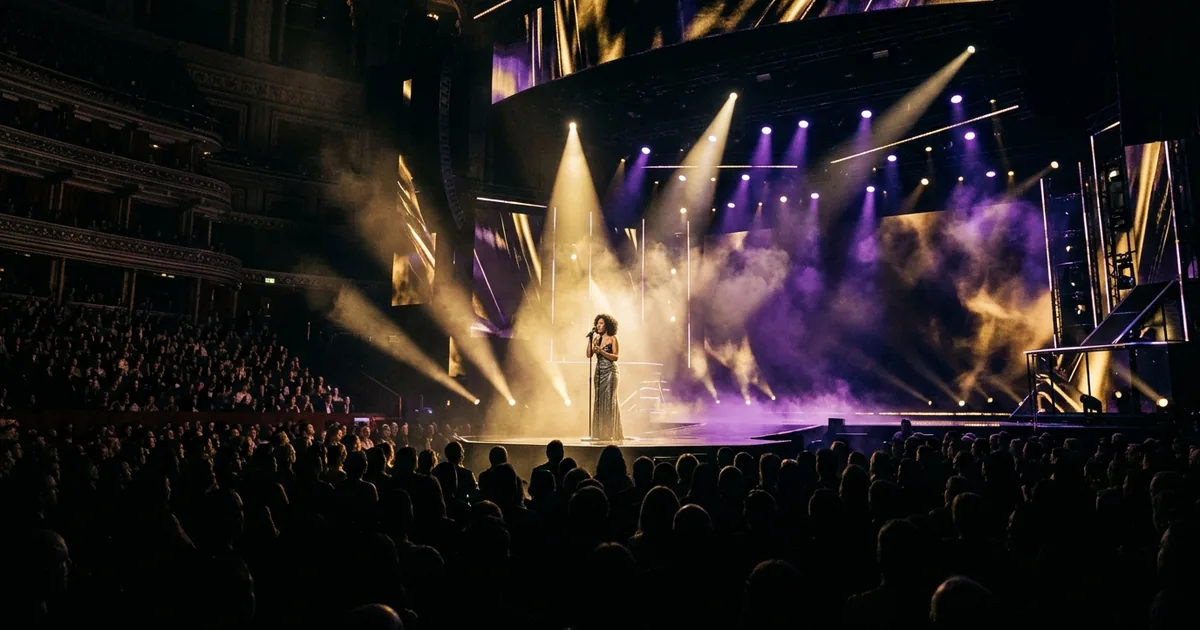
The 2026 BET Awards gave Lauryn Hill the inaugural Living Legend Icon Award on Sunday night, and the tribute that preceded it was a case study in just how far her influence reaches.
When Doechii, SZA, Doja Cat, Nas, Lizzo, Queen Latifah, and Common are all performing your catalog on the same stage, that is not nostalgia. That is a living, breathing artistic legacy whose reach across genres and generations remains unmatched in hip-hop.
The Tribute Was a Timeline of Black Music
The performance opened with The War and Treaty channeling Sister Act 2 on “Joyful, Joyful,” the song that introduced Hill as a performer to millions of moviegoers before The Fugees ever charted. From there the set list read like a guided tour through three decades of influence: Doechii and SZA took on “Ready or Not,” Tems and Tierra Whack handled “Fu-Gee-La,” Doja Cat delivered “Superstar,” and Nas showed up for their classic collaboration “If I Ruled the World.”
The family presence gave the tribute its emotional anchor. Hill’s daughter Selah Marley performed a track from The Miseducation of Lauryn Hill, her son YG Marley covered “Turn Your Lights Down Low,” and Zion Marley, the son whose birth inspired the song named for him, performed his own rendition of that track. Billboard reported that Hill herself then surprised the audience by performing “Ex-Factor” before accepting the award, and closed the entire ceremony with “Everything Is Everything” as credits rolled.
What Hill Actually Said
Her acceptance speech was pointed and political in ways the audience clearly felt. “I have always cared about the expression and the representation of the dignity of our people,” Hill said. “So we put ourselves sometimes as artists, we put ourselves in situations to say things that aren’t always comfortable, but we understand that people will understand later.”
She also delivered a direct call for solidarity: “If nobody else shows us respect, let’s respect each other. If nobody else loves us, let’s love on each other.” In a year when anti-DEI campaigns and political attacks on Black cultural institutions are accelerating, the message landed differently than it might have in a less charged environment.
The Bigger Picture for the BET Awards
The Lauryn Hill tribute headlined a night that distributed awards broadly. Variety reported that Clipse won three competitive awards including album of the year for Let God Sort ‘Em Out and best collaboration for “Chains & Whips” with Kendrick Lamar. Teyana Taylor took home three awards of her own (best actress, video director of the year, fashion vanguard) plus the Icon of the Year honor, presented by Janet Jackson in a surprise appearance that left Taylor in tears. Lamar won best male hip-hop artist for a record ninth time. Cardi B won best female hip-hop artist.
The broader recap of the ceremony’s winners and Druski’s hosting debut captured the night’s competitive results. But the Lauryn Hill segment was something else entirely: a reminder that The Miseducation of Lauryn Hill was the first hip-hop album to win the Grammy for album of the year, that Hill was the first woman to win five Grammys in a single night, and that the cultural infrastructure she built has been load-bearing for every artist who performed her songs on that stage.
Why the Award Matters Now
BET created the Living Legend Icon Award specifically for this moment, and the timing says something about where the culture is. Hill has been a complicated figure for decades, dogged by concert cancellations, tax problems, and a retreat from public life that frustrated fans who wanted more music. The industry’s relationship with her has been uneven.
But giving her this award in 2026, when Black cultural institutions are facing defunding pressures and political hostility, is a statement about who gets honored while they are still here to hear it. Hill, at 51, accepted the award not as a farewell but as a challenge: “I want people to know what we can do.” That is a forward-looking sentence from an artist the industry spent two decades treating as a relic.
The question the tribute raises is whether the industry will match the rhetoric. Hill’s catalog is sampled, covered, and streamed at scale, but the structural economics of how legacy Black artists are compensated remain largely unchanged. Honoring the legend is the easy part. The harder part is whether the institutions doing the honoring are willing to change the conditions that made Hill retreat from them in the first place.