
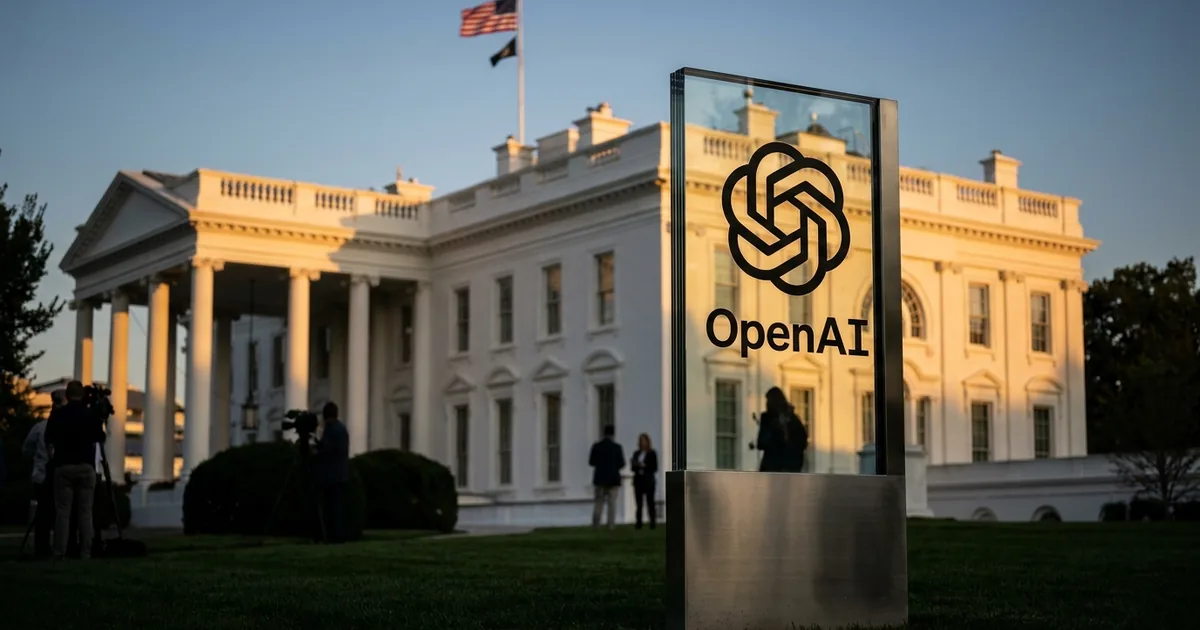
OpenAI has proposed handing the United States government a 5% stake in the company, a holding worth roughly $42.6 billion at its most recent $852 billion valuation, in what the Financial Times describes as an effort to defuse mounting political pressure in Washington. Strip away the language about sharing AI’s upside with the public and what remains is simpler and more corrosive: the most valuable startup in history offering the White House equity to make its political problems go away.
The Offer on the Table
Sam Altman floated the 5% figure himself in early discussions with the Trump administration, CNBC reported Thursday, citing the Financial Times. The shares would be donated rather than sold, seeding what OpenAI branded a “Public Wealth Fund” in a policy proposal the company published back in April. The pitch goes well beyond OpenAI’s own cap table: the envisioned arrangement would have every leading American AI developer, including Google, Meta, and Anthropic, ceding a similar slice to a government investment vehicle.
Whether any of them would go along is another matter. CNN notes that neither the companies nor the White House have confirmed their positions, and Anthropic has said it is not in talks with the administration about providing equity. The legal mechanism for transferring private company shares to the federal government remains unclear, and the whole arrangement may never materialize. But the direction of travel is unmistakable. These conversations have been running for over a year, and Trump signed an executive order in February calling for the creation of a federal sovereign wealth fund, the vehicle a donation like this would presumably feed.
The Pressure OpenAI Is Paying to Relieve
The timing is not mysterious. Washington’s posture toward the big American AI labs has hardened over the past year on two fronts at once. The administration has grown publicly wary of cybersecurity vulnerabilities in frontier models and of the competitive squeeze from Chinese open-source systems that undercut American labs on price. At the same time, officials have been asking AI companies a much blunter question: whether they intend to share their profits with the government that is clearing their path on energy, land, chips, and regulation.
That second question is the one this proposal answers. TechCrunch reported in June that the administration was already weighing an equity stake in OpenAI, and Trump himself has mused openly about the government taking positions in AI firms. Altman did not wait to be squeezed. He showed up with the number.
That is the genuinely new move here. The companies that came before OpenAI in this administration’s equity ledger were, at least publicly, on the receiving end. OpenAI is volunteering, and wrapping the payment in the language of public benefit. It is a savvy read of how this White House does business, which is precisely what makes it alarming.
Equity as the Price of Peace Is Now the Business Model
OpenAI is not improvising. It is following a well-worn path. The administration has taken direct equity stakes in at least ten companies during Trump’s second term, a portfolio that includes a 10% position in Intel acquired through an $8.9 billion investment last August, along with IBM, quantum computing firms, and critical minerals producers. Nvidia and AMD, in a separate arrangement, agreed to hand the government a cut of their China chip revenue in exchange for export licenses.
Each of those deals followed the same choreography: regulatory or political pressure applied, relief priced in equity or revenue, transaction framed as industrial strategy. The pattern has a name in less polite contexts. When the government’s approval is for sale and companies pay in shares, the line between industrial policy and a protection racket gets thin enough to read through.
What makes the AI version more consequential than chips or minerals is scale and reach. A 5% stake in OpenAI alone would be worth more than the government’s entire Intel position four times over. Extend the model across Google, Meta, and the rest of the frontier labs and Washington would hold financial positions in the companies building the most consequential technology of the decade, positions whose value depends directly on those companies winning.
When the Referee Owns the Team
Here is the structural problem, and it does not go away even if you believe Altman’s public-benefit framing entirely. A government that owns 5% of OpenAI has a $42 billion reason to want OpenAI to succeed. That same government runs the antitrust enforcers who might one day examine OpenAI’s market position, the safety agencies that might constrain its model releases, the procurement offices that decide which AI systems federal agencies buy, and the trade apparatus that controls its competitors’ access to chips. Every one of those functions now carries a conflict of interest denominated in the tens of billions.
The arrangement is also a moat. An equity toll payable to the White House is a cost the incumbents can absorb and a startup cannot. If a 5% donation becomes the de facto license to operate a frontier lab in America, the policy locks in exactly the handful of companies currently at the top, with the government as their motivated business partner. Consumers and workers, the people this fund is nominally for, end up on the other side of that table: the state’s incentive shifts from protecting them against AI firms to protecting AI firms’ valuations.
And none of this has passed through Congress. There is no statute authorizing a federal sovereign wealth fund, no appropriations process behind it, and no clear answer on who would govern shares held in a White-House-controlled vehicle. The Intel stake at least involved the government putting money in. This proposal involves a private company putting equity into an entity the executive branch invented by executive order, in exchange for an easing of pressure the executive branch itself applied. That is not public ownership in any meaningful democratic sense. It is a private arrangement between one company and one administration, at a scale that would embarrass most actual sovereign wealth funds.
The Question Nobody in the Room Is Asking
The jury that tossed Elon Musk’s lawsuit against OpenAI in May effectively blessed the company’s long march away from its nonprofit origins, and this proposal completes the arc: an organization founded to keep artificial intelligence from being captured by concentrated power now proposes to hand a piece of itself to the most concentrated power there is. Altman would say the public gets the upside. The harder question is what happens to the downside, because a government that profits when AI wins is a government structurally disinclined to ask whether AI should be slowed, constrained, or broken up. Watch whether Google and Meta follow, and watch whether Congress asserts any role at all. If the answer to both is what it has been all year, the American AI industry will have acquired a silent partner that also happens to write its rules.