
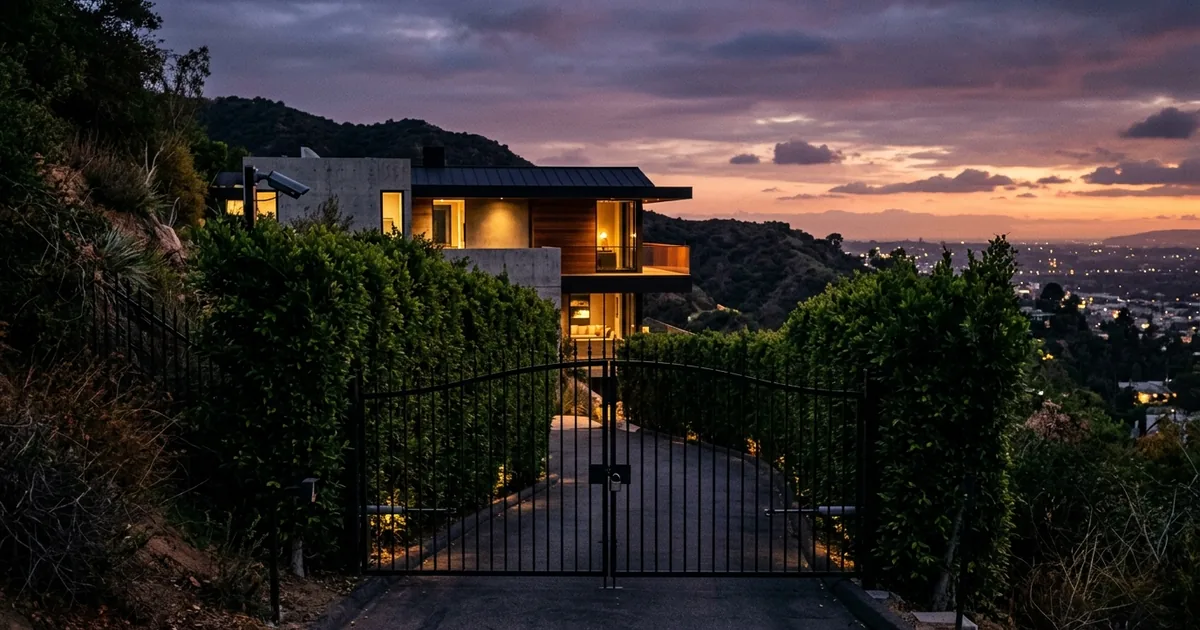
Sabrina Carpenter is one of the biggest pop stars on the planet right now, and she just had to go to court to keep a man from showing up at her house.
A Los Angeles County judge granted the singer a temporary restraining order on June 1 against a 31-year-old man named William Applegate, who she says has been stalking her since late April and escalated to physically trying to break into her Hollywood Hills home.
What Happened on May 23
The incident that triggered the legal action was not subtle. According to court filings reported by NBC News, Applegate walked up to Carpenter’s front door on May 23 and attempted to forcibly open it. When a security guard confronted him, Applegate struck the guard. He was removed from the property, but that was not the end of it.
Less than 24 hours later, Applegate returned and allegedly spent two hours loitering in Carpenter’s driveway. That kind of pattern is not random. It is targeted, persistent, and exactly the type of escalating behavior that stalking experts flag as a precursor to something worse.
‘I Am in Fear of What He May Do’
In her court declaration, Carpenter did not hedge. “His pattern of stalking, trespassing, and surveillance has caused me severe and ongoing emotional distress, and I am in fear [of] what he may do if he is not restrained by this Court,” she wrote. The restraining order, as Rolling Stone detailed, prohibits Applegate from coming within 100 yards of Carpenter, her sister Sarah Carpenter, and Sarah’s partner, who all live in the same residence.
A hearing to determine whether the temporary order becomes permanent is scheduled for June 18.
The Broader Pattern Nobody Wants to Talk About
What happened to Carpenter is not an outlier. It is the norm. Female performers at her level of visibility deal with stalking, harassment, and intrusion at rates that would constitute a public safety crisis if the victims were not famous. Taylor Swift has documented her stalker encounters. Billie Eilish has spoken publicly about the terror of having strangers show up at her home. Ariana Grande obtained a restraining order against a man who threatened to kill her.
The entertainment industry treats this as an individual security problem, something each artist manages privately with bodyguards and gated compounds. But when the behavior is this predictable and this common, the framing should shift. This is a systemic failure of how public-facing women are protected by the institutions that profit from their visibility.
What the Law Actually Does Here
A temporary restraining order is not a force field. It is a piece of paper that creates legal consequences if violated. Applegate now faces arrest if he comes within 100 yards of Carpenter or her family members, which is meaningful. But enforcement depends on him being caught violating the order, and celebrity stalkers have a well-documented history of testing boundaries.
The June 18 hearing will matter. If the judge converts the temporary order into a permanent one, it gives law enforcement broader authority to act preemptively. In the meantime, Carpenter is doing what millions of dollars in ticket sales should make unnecessary: spending her energy in court proving that she has a right to feel safe in her own home.
Carpenter’s “Short n’ Sweet” tour continues this summer across North America, and if there is a bitter irony to this story, it is that the woman who spent the last year becoming one of pop’s most joyful, irreverent voices now has to stand in front of a judge and explain that she is afraid. That should not be the price of being good at your job.