
President Trump will gather his Cabinet at Camp David on Wednesday to push for an agreement ending the war with Iran, a war his administration said only days ago was nearly settled. The setting is the tell: presidents do not summon their entire national security team to a presidential retreat for a deal that is actually finished.
A Deal Announced, Then Unannounced
The pattern by now is hard to miss. The White House declares an Iran settlement essentially complete, the markets and the cable chyrons absorb the news, and then the agreement recedes back into a phase officials describe as still in flux. Days after Trump said the terms had been largely negotiated, Secretary of State Marco Rubio was telling reporters that talks on reopening the Strait of Hormuz and extending the ceasefire would take several more days.
That gap, between the announcement and the reality, is the story worth watching. A Camp David Cabinet meeting is a show of command. It is also an admission that the thing the president keeps describing as nearly done requires the full weight of his administration to drag across a line it has not yet crossed. As NPR reported, the gathering comes at a precarious moment for negotiations, not a triumphant one.
It helps to remember how the two sides arrived here. The highest-level direct contact between Washington and Tehran since the 1979 revolution came in April, when Vice President JD Vance met Iranian parliament speaker Mohammad Bagher Ghalibaf in Islamabad. Those talks collapsed without an agreement, and Trump responded by ordering the Navy to blockade the Strait of Hormuz. The diplomacy that is now supposedly days from completion grew directly out of a failure that the president answered with force, which is worth keeping in mind every time the finish line is declared close.
Iran Calls the Latest Strikes a Sign of Bad Faith
The diplomacy is not happening in a quiet room. Over the weekend, the U.S. military struck targets in southern Iran that it identified as missile launch sites and minelaying boats, and it framed the operation as restraint given an eight-week-old ceasefire. Tehran saw it differently. Iran’s foreign ministry condemned the strikes as a sign of “bad faith and unreliability,” called them a ceasefire violation, and warned that Washington would bear responsibility for all consequences, language Fortune reported as the negotiations pressed on.
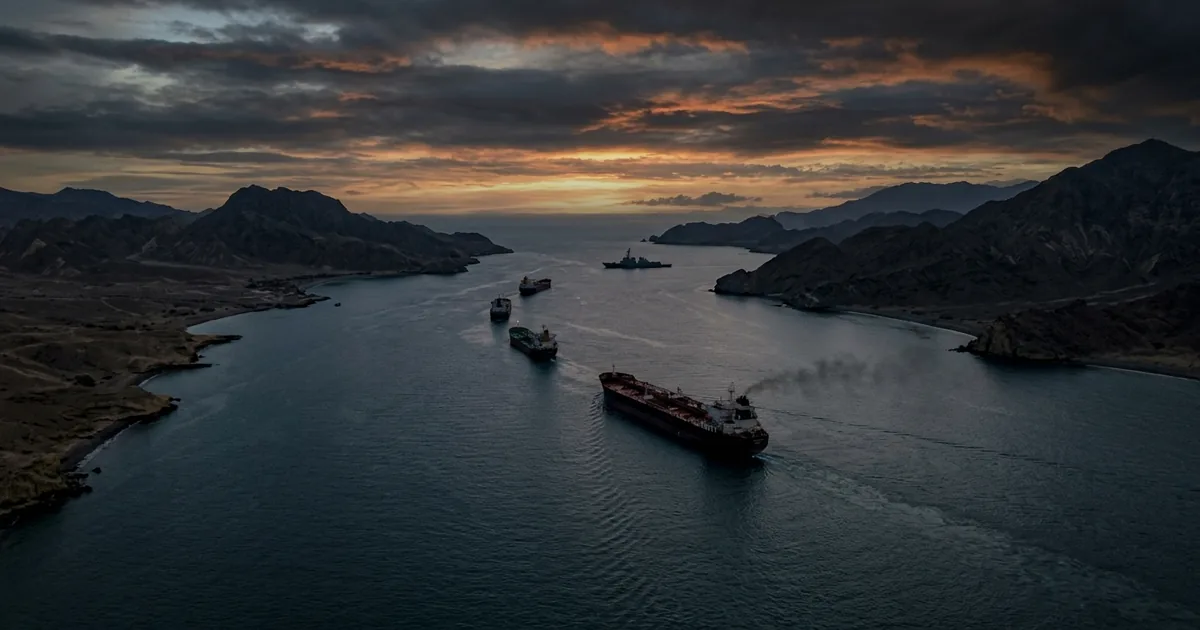
This is the contradiction at the center of the entire effort. The administration is bombing the country it says it is days from signing a peace deal with, and it is asking that country to reopen the Strait of Hormuz, the waterway that carried roughly a fifth of the world’s crude oil before the war, while the strikes continue. A ceasefire in its eighth week that still produces airstrikes is not a ceasefire in any meaningful sense. It is a pause that both sides keep testing.
The cost of that testing does not stay in the Persian Gulf. With the strait still effectively closed, the energy premium has flowed straight into American households through two months of elevated gas prices and the broader inflation drag that comes with a war risk priced into every barrel. Every week the deal slips is another week families absorb the difference, which is the part of this story that rarely makes it into the announcements from the podium.
The Sticking Points Nobody Has Solved
Underneath the optics sit the unresolved questions that have stalled this deal for weeks. Negotiators are still fighting over the language governing Iran’s nuclear program and the sequencing of sanctions relief. A separate dispute concerns whether any ceasefire will also cover Israel’s operations against Hezbollah in Lebanon, with Tehran insisting that Lebanon be folded into the agreement and Washington resisting.
There is also dissent inside Trump’s own coalition. Reporting around the Cabinet meeting has noted that some of the president’s own backers worry the emerging deal could embolden Iran rather than contain it, a critique that lands awkwardly for an administration that promised a quick and decisive resolution. When the hawks who supported the war start questioning the terms of the peace, the Camp David gathering reads less like a victory lap and more like an attempt to hold the room together.
What the Ninth Week Looks Like
A Cabinet photo at Camp David does not reopen the strait, lower the gas prices that have squeezed American households through two months of conflict, or resolve the nuclear language that has stalled the talks since the spring. It signals urgency, and urgency is its own kind of confession.
The question now is not whether Trump will announce a deal. He has effectively done that more than once. It is whether the next announcement will survive contact with Tehran, the markets, and his own party longer than the last one did.