
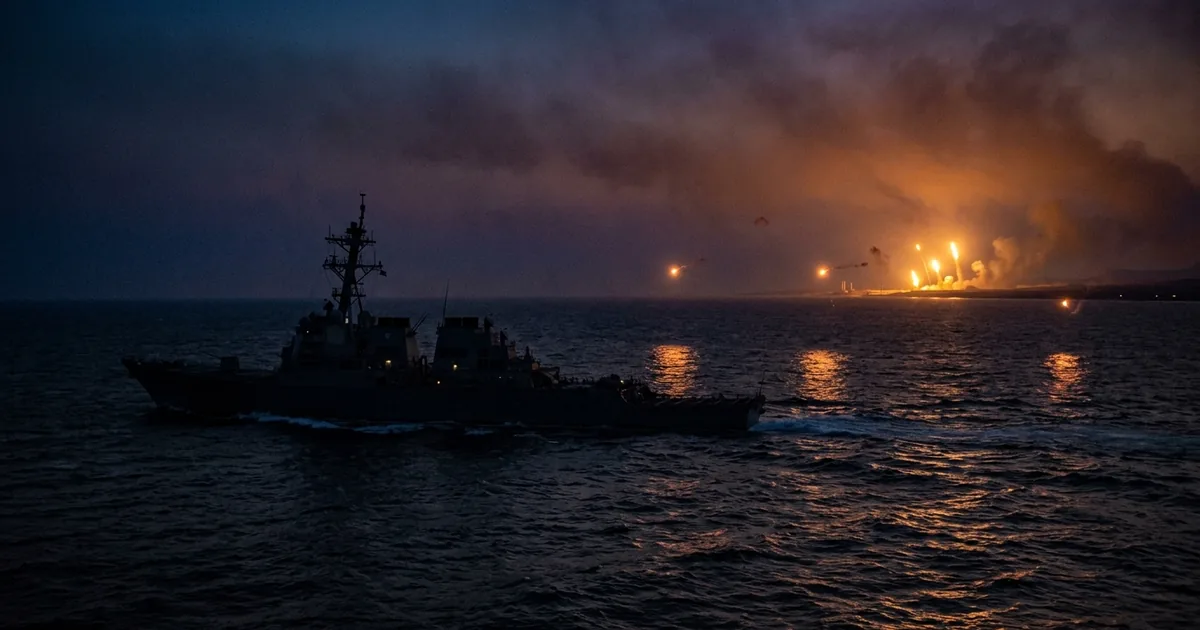
US Central Command bombed missile sites and naval targets in southern Iran late Monday, only hours after Iranian negotiators sat down with Qatari mediators in Doha to settle the terms of an agreement both governments keep insisting is nearly done. Washington is calling the strike self-defense and Tehran is calling it a betrayal, and the gap between those two descriptions is the whole story.
A Ceasefire Both Sides Keep Shooting Through
The official line from CENTCOM was almost bureaucratic in its calm. The command said it had hit “missile launch sites and Iranian boats attempting to emplace mines,” and its spokesman, Navy Captain Tim Hawkins, framed the operation as routine force protection, telling reporters the US “continues to defend our forces while using restraint during the ongoing ceasefire.” Several members of Iran’s Islamic Revolutionary Guard Corps were killed, according to Al Jazeera’s account of the strikes, which also reported that the IRGC had targeted a vessel at sea before the American bombs fell.
Hold the phrase “ongoing ceasefire” up to the light for a second. The truce has technically been in effect since April 8, after a war that began on February 28 when the US and Israel struck Iran. A ceasefire that both armies keep firing through is not a ceasefire in any sense a normal person would recognize. It is a managed state of low-grade war that each side narrates as peace whenever it suits them, and as aggression whenever it doesn’t.
The One Thing Trump Cannot Bomb His Way To
Here is the part the strikes cannot fix. The deal on the table is, by the administration’s own description, mostly about logistics and oil: a 60-day extension of the ceasefire, the reopening of the Strait of Hormuz, and a return of Iranian crude to world markets, with the hardest question pushed to later. That question is the bomb. Trump conceded the point himself, saying most issues were settled but, in his words, “the only point that really mattered, nuclear, was not,” and describing Iran as “unyielding.”
He is right that it is the only point that matters, and he is part of the reason it cannot be solved on his timeline. Iran has every incentive to defer nuclear talks until after a formal end to hostilities, because its program is the only bargaining chip it has left, and you do not hand your last chip to a counterparty who bombs you mid-negotiation. As NPR has tracked across the talks, the US wants enrichment on the table now and Tehran wants it last. Monday’s strike did not move that dynamic an inch. If anything, it hardened it.
What “Self-Defense” Is Doing in This Sentence
The phrase “self-defense” is carrying an enormous amount of political weight here, and it deserves scrutiny rather than stenography. Calling a strike defensive lets the administration claim it never breached the truce it is asking Iran to extend, which is convenient when you are simultaneously the party demanding the other side hold its fire. It is the diplomatic equivalent of throwing a punch and insisting it was a flinch.
This is the structural flaw in negotiating at gunpoint. Trump has signaled he wants either a “Great Deal” or a return to escalation, with little patience for anything between, and the strikes serve as a reminder of the second option while his envoys pursue the first. Coercion and trust-building are pulling in opposite directions at the same table. You cannot credibly promise sanctions relief and freedom to sell oil on Tuesday while killing IRGC officers on Monday and expect the other side to sign away its nuclear program on Wednesday. The same Hormuz brinkmanship that defined last week’s rejected ceasefire deadline is still running the show, with the clock simply reset.
Americans Are Paying for the Stalemate
There is a domestic cost to all of this that rarely makes the front of the briefing. Every week the Strait of Hormuz stays contested is a week of risk premium baked into oil, and that premium lands on American households as higher pump prices and stickier inflation. The administration frames the deal as a path to cheaper energy, which is true only if it actually closes, and Monday’s strike is evidence of how easily it might not.
Secretary of State Marco Rubio has said an agreement could be finalized within days, with negotiators haggling over the specific language of an initial document. Iran’s foreign ministry spokesman, Esmaeil Baghaei, was far more cautious, allowing that progress had been made but warning that “to say that this means an agreement is on the verge of being signed is not something anyone can claim.” When the two sides cannot even agree on how close they are, the honest read is that they are not close on the thing that counts.
A deal that reopens a shipping lane while leaving the centrifuges spinning is not an end to this war. It is an intermission. And the longer the United States keeps bombing during the talks it says are almost finished, the more obvious it becomes that the hard part was never the oil. What happens to Iran’s enrichment program when the 60 days run out, and no one has been willing to put it on paper?