
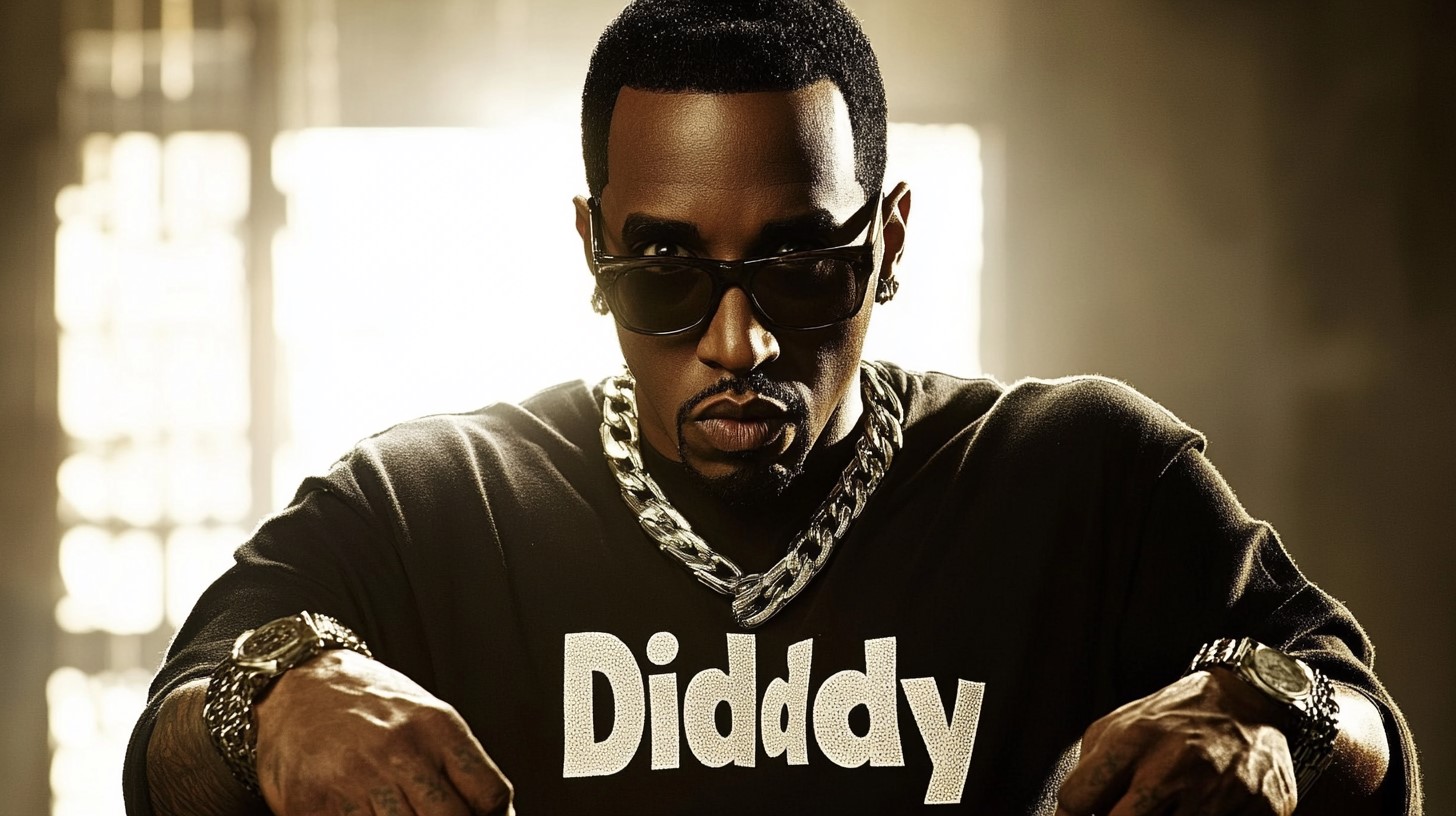
For two decades, the 50 Cent vs. Diddy beef sat in the culture like background radiation—omnipresent, poorly understood, and mostly treated as a running joke on social media.
Then came the sex‑crime trial, the conviction, and now an explosive Netflix docuseries, Sean Combs: The Reckoning, executive‑produced by 50 Cent. Suddenly, “background radiation” looks more like a controlled detonation.
In the middle of that, Curtis “50 Cent” Jackson did something he’d avoided for years: he finally spelled out, on Good Morning America, what his “pre‑existing beef” with Sean “Diddy” Combs actually is. And that clarification matters—not just for rap‑nerd score‑settling, but for what it says about power, masculinity, and who gets to narrate abuse in American culture.
The Moment 50 Cent Finally Spelled It Out
On GMA, sitting next to director Alexandria Stapleton to promote Sean Combs: The Reckoning, 50 Cent was asked why he’s been at odds with Diddy for roughly 20 years—and why he’s the one producing the definitive doc on Combs.
His answer was disarmingly small-bore and very human: he says it started with a “shopping” invite.
He described what everyone now calls the “shopping story”: Diddy allegedly suggested he would take 50 Cent shopping early in 50’s career. Jackson says the offer made him deeply uncomfortable, and he read it as a sexual test balloon:
“What they consider a pre‑existing beef, right? For 20 years, right? It’s me being uncomfortable with [Sean Combs] suggesting that he takes me shopping… I looked at it as like, it was a tester, like, ‘maybe you’ll come play with me’ type of thing. It’s not personal.”
He’s told versions of this before, including calling it “the weirdest s*** in the world” in a 2024 interview, but never framed it as the origin of the feud so bluntly, in front of a mainstream morning audience, tied to a documentary about Combs’ alleged abuse and coercion.
That’s the shift: what used to be treated as a quirky, maybe‑homophobic anecdote now lands inside a larger conversation about consent, boundaries, and what behavior men in power think they’re entitled to test out on other people.
From Petty Rap Beef to Moral Narrative
The friction between 50 and Diddy has long been overdetermined:
- 50’s 2006 track “The Bomb” implied Diddy bore some responsibility for the 1997 murder of The Notorious B.I.G., a claim Combs has always denied.
- They’ve traded social‑media shots for years.
- 50 has turned Diddy into a kind of running gag about industry predation and “weird energy.”
What’s different now is the frame. Sean Combs: The Reckoning is not about rap egos—it’s about long‑running allegations of violence, coercion and sexual exploitation surrounding Combs and his business empire.
The four‑part series traces Combs’ rise from Harlem hustler to Bad Boy Records kingmaker, then to all‑purpose mogul, while layering in allegations ranging from early‑’90s sexual assault claims to the infamous 2016 hotel video of him physically attacking then‑girlfriend Cassie Ventura. It includes new hotel‑room footage from six days before his 2024 arrest—footage shot by Combs’ own team as he strategizes with lawyers and PR advisers and mutters, “We’re losing,” about the looming federal case.
Combs is now serving a 50‑month federal sentence after being convicted on two counts of transportation to engage in prostitution under the Mann Act; he was acquitted on the more serious racketeering and sex‑trafficking charges and is appealing his conviction and sentence. He denies the many civil allegations of sexual abuse and assault still pending against him.
Against that backdrop, 50’s clarification of the feud becomes less about “two divas who don’t like each other” and more about how men in hip‑hop negotiated (or refused) the power and sexual expectations of a mogul who, according to multiple accusers, routinely crossed lines.
Is 50 Cent A Truth‑Teller Or An Opportunist? Yes.
Combs’ camp is furious about the documentary, and not shy about saying it. Through spokesperson Juda Engelmayer, he’s branded The Reckoning a “shameful hit piece,” accusing Netflix of using “stolen footage” that was “never authorized for release” and insisting that the private hotel‑room material was shot for Combs’ own never‑finished documentary.
Netflix and the filmmakers flatly deny that, saying the material was obtained legally and that they have the rights to use it. Netflix has emphasized that 50 Cent is an executive producer but “does not have creative control” and that no one was paid to participate.
So what is 50 Cent doing here?
On TV, he insists the project isn’t revenge, it’s responsibility. If he stayed quiet, he argued, the takeaway would be that hip‑hop is “fine with [Combs’] behaviors,” and that “there’s no one else being vocal.”
That’s partially true. The music industry—especially the hip‑hop establishment—was remarkably silent for years as stories and lawsuits mounted around Combs. It took Cassie Ventura’s 2023 lawsuit and settlement, plus the federal indictment, to fully crack the public narrative. A lot of powerful people had every incentive not to look too hard.
But it’s also true that 50 Cent is a master marketer who has turned trolling, especially of fallen rivals, into a secondary business model. He’s now wrapped that instinct in the language of #MeToo and institutional accountability. The docuseries puts survivors and former employees at the center, but it also cements his decades‑long vendetta into the official historical record.
Both things can be true: the series can be a necessary reckoning and a rival‑produced narrative. Critical early reviews call it “grimly necessary” and “thorough,” even as Combs’ lawyers move to get it pulled from Netflix.
Masculinity, Boundaries, And Who’s Allowed To Say “No”
The most revealing part of 50’s explanation is how small the initial inciting incident sounds compared with the horrors laid out in the doc. A shopping invite? Compared to allegations of rape, forced sex‑party “freak‑offs,” and years of domestic abuse, it’s nothing—until you think about what it signals.
In Jackson’s telling, that moment was about two things:
- Power asymmetry – A then‑up‑and‑coming artist being “tested” by a far more powerful gatekeeper.
- Unclear boundaries – An offer framed as generosity that, in his view, carried a subtext he wanted no part of.
We don’t have Diddy’s version of that interaction. We do have a long track record, described by former artists and staffers, of Combs blurring lines between work, sex, and loyalty—where contracts, careers, and intimacy were braided together under one man’s control.
From a progressive lens, what stands out is how late in the story straight, powerful men in hip‑hop are publicly articulating discomfort and boundaries. Women like Cassie Ventura and Aubrey O’Day were paying the price for speaking or even thinking about those boundaries years ago; the professional cost for them was enormous.
Now 50 Cent, a man with his own history of misogynistic lyrics and trolling, is stepping forward as one of the loudest voices insisting that “hip‑hop is not okay with this.” It’s complicated, it’s imperfect, and it’s also a measure of how far the Overton window on accountability has shifted.
The Institutions That Failed, And The Ones Catching Up
This story is not just about two men beefing; it’s about the institutions around them:
- The legal system: A federal jury convicted Combs on prostitution‑related counts but acquitted him on sex‑trafficking and racketeering, with jurors later admitting they found the Cassie Ventura relationship “very, very complicated” and hard to fit neatly into the statutes they were given.
- The music industry: Labels, managers, TV networks, and collaborators who were happy to profit off the Bad Boy empire while rumors and lawsuits accumulated.
- The media: For years, major outlets treated the Diddy–50 feud as celebrity gossip, not as a partial smoke signal for deeper dysfunction.
Now, mainstream press—from The Guardian to The New York Times to NBC News—is treating The Reckoning as a serious document of alleged systemic abuse, even as it acknowledges the weirdness of a rival holding the camera.
That’s the larger democratic concern here. When formal institutions—from labels to courts—move slowly or protect power, vacuum-fillers like rival‑produced docs step in to define the narrative. It’s better than silence; it’s not the same as justice.
The Takeaway: A Feud Becomes A Warning
50 Cent’s “clarification” of his 20‑year beef doesn’t redeem him, or settle every question about his motives. But it does lock one thing in: long before the federal charges, before the hotel footage leaked, before Cassie’s lawsuit, at least one major figure in hip‑hop looked at Diddy’s behavior and thought, something here is off—and got as far away as he could.
The tragedy is that the culture, the industry, and the law took another two decades, and a long line of mostly female accusers, to catch up.