
A Warehouse Club Takes on a Presidential Power Grab
Costco doesn’t usually headline constitutional showdowns. It sells rotisserie chickens, bulk diapers, and 10-pound bags of almonds, not separation-of-powers doctrine.
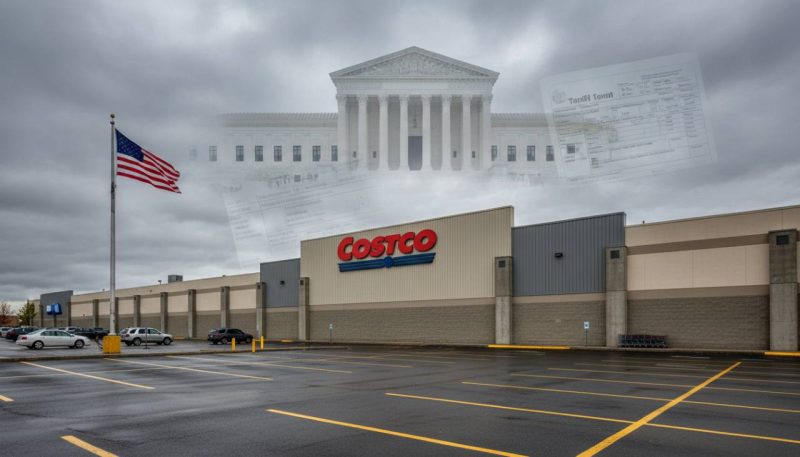
But with its new lawsuit against the Trump administration over hundreds of millions in tariffs, Costco is stepping into the center of a fight about who actually controls U.S. trade policy: Congress, or a president armed with “emergency powers.”
Costco is suing in the U.S. Court of International Trade to secure a full refund of the tariffs it’s paid under Donald Trump’s “reciprocal” and “fentanyl” tariffs — duties Trump imposed unilaterally using the International Emergency Economic Powers Act (IEEPA). Two lower courts have already ruled those tariffs unlawful, and the case is now before the Supreme Court.
The twist: even if the Supreme Court agrees the tariffs were illegal, importers like Costco might not automatically get their money back. So Costco is suing now to lock in its right to refunds before a critical December 15, 2025 deadline under customs law.
What Costco Is Actually Asking For
Protect The Money, Question The Power
Costco’s lawsuit does two main things:
- Demands a Full Refund of Tariffs Paid
Costco wants a court judgment that, if the Supreme Court ultimately says Trump’s IEEPA tariffs are unlawful, the company is entitled to a full refund of all those duties. Costco hasn’t made the exact dollar figure public, but importers in general have paid roughly $90 billion in IEEPA‑related tariffs as of late September, according to U.S. customs data cited in multiple reports. - Asks Judges to Declare the Tariffs Unlawful
Costco’s complaint urges the Court of International Trade to declare that all tariffs imposed under Trump’s IEEPA emergency declarations are unlawful, arguing he exceeded his statutory and constitutional authority by essentially turning an emergency powers law into a one‑man Congress on trade.
This isn’t some symbolic protest suit. It’s a tactical legal move to beat the clock on a Dec. 15 “liquidation” deadline — the point at which customs finalizes the tariff bill on specific imports. Once liquidation happens, many entries can’t be protested, and courts have warned importers may lack the legal right to get those refunds even if the underlying tariffs are later ruled illegal as per CNBC.
Costco’s message is simple: We’re not going to get stuck holding the bag for the government’s legal overreach.
The Legal Stakes: Emergency Powers vs. Congressional Authority
Lower Courts Have Already Called Trump’s Bluff
Two crucial rulings set the stage:
- The U.S. Court of International Trade held that Trump’s IEEPA tariffs were unlawful because he exceeded his authority under the statute.
- The U.S. Court of Appeals for the Federal Circuit, in a 7–4 decision, affirmed that ruling and was unusually blunt: tariffs are a “core Congressional power.” Congress, not the president, is supposed to tax imports.
Now the Supreme Court has taken the case on an expedited basis. At oral arguments in November, a majority of justices — including conservatives — appeared skeptical of the idea that a decades‑old emergency‑powers law silently handed the White House an open‑ended license to rewire the global trading system without Congress.
Costco’s lawsuit is running parallel to that Supreme Court fight. The company isn’t trying to argue the whole constitutional theory itself — that’s already before the justices. What Costco is doing instead is classic risk management: making sure that if the justices agree Trump blew past his limits, Costco can actually claw its money back.
The Trump Administration’s Counter‑Argument
The Trump team is framing this as a matter of national strength and presidential leverage. They argue:
- The International Emergency Economic Powers Act allows the president to impose global tariffs as part of emergency actions, including on grounds like drug trafficking or national security.
- Rolling back the tariffs or forcing large‑scale refunds would kneecap U.S. negotiating leverage and blow a hole in federal revenues already collected.
- White House spokesperson Kush Desai said the “economic consequences of the failure to uphold President Trump’s lawful tariffs are enormous” and framed Costco’s lawsuit as unintentionally highlighting that.
This is the classic Trump-era move: break open a 1970s emergency law, shove an entire trade agenda through it, and then dare the courts to stop you after the cash has already started flowing in.
Why This Fight Matters Beyond Costco’s Balance Sheet
It’s About Who Writes Economic Law in a Democracy
On paper, this is Costco vs. Customs and Border Protection. In reality, it’s about whether:
- A president can repeatedly declare “emergencies,”
- Use that label to sidestep Congress on major economic policy, and
- Then keep the money even if courts later say, “Actually, that was illegal.”
If the Supreme Court sides with Trump, future presidents — of any party — get a massive green light to run trade, sanctions, and possibly other economic tools through the emergency lane. The danger is obvious for anyone who cares about democratic norms and the rule of law:
Congress becomes optional. The emergency statute becomes a standing blank check.
If the Court instead reaffirms that tariffs are a legislative power, Costco’s case becomes part of a broader rollback — a boundary line saying: presidents cannot casually convert emergency statutes into permanent economic war tools. That’s not just an American question; it signals to other democracies wrestling with their own strongman‑curious executives where the line ought to be.
The Quiet Politics of Corporate Resistance
There’s a second layer here: corporate behavior.
Costco isn’t a resistance brand. It doesn’t do splashy ESG press releases. But like dozens of other companies filing similar protective suits, it’s now in the position of arguing, in court, that Trump’s emergency tariffs were illegal and that the administration should be forced to give the money back.
CNBC
That shows you something about how far the Trump team pushed the envelope: companies that generally prefer quiet access and tax breaks are instead paying lawyers to challenge the basic legality of the policy — and doing it in a way that could help lock in a judicial precedent constraining presidential power.
It’s not principled civic heroism; it’s self‑interest weaponized in the right direction. But that’s often how constitutional boundaries get defended in practice.
Global Trade, Populism, and the Supreme Court’s Shadow
This isn’t just about Costco’s import bill. It’s about how populist executives — here and abroad — have learned to use “emergency” as a Swiss Army knife: for immigration, climate, crime, trade, you name it.
If Trump’s theory of IEEPA prevails, it doesn’t just reshape U.S. tariffs. It hands future presidents a legal script to do the same on data flows, tech exports, digital currencies, foreign-owned apps, and more — all while telling Congress, “If you don’t like it, sue me.”
If the Court pushes back, Costco and the other importers will have helped force a reset: emergency powers return to being narrow responses to real crises, not a backdoor for rewiring the economy around one man’s ideology.
The Bottom Line
Costco’s lawsuit is not a random corporate gripe about taxes. It’s a high-stakes move in a larger constitutional and economic fight:
- Over whether emergency law can be stretched into permanent trade policy,
- Over whether Congress retains any meaningful say in economic governance, and
- Over whether companies that were effectively conscripted into a political tariff war will be left holding the bill.
The Supreme Court will decide the big question of presidential power. Costco is making sure that, when that decision drops, democratic accountability has an economic consequence — not just a footnote in a law review article.