
Rob Reiner spent his life arguing with America because he loved it too much to leave it alone.
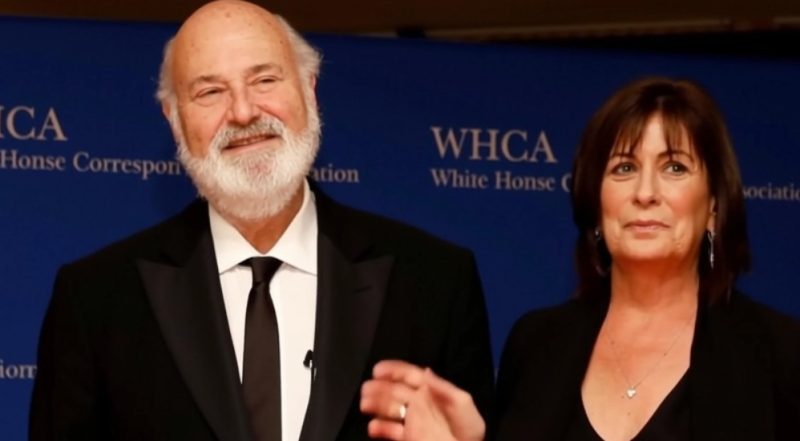
Long before his death, he had become something rare in American culture: a director whose work defined an era twice. First with stories so effortlessly warm they felt like they had always existed. Then with a political voice so blunt and persistent that even people who never saw his films knew where he stood.
It is impossible to talk about Rob Reiner without talking about belief. Belief that stories can shift a country’s emotional weather. Belief that politics is not a spectator sport. Belief that democracy is a contact activity.
The Director Who Drew Our Emotional Map
Most filmmakers are lucky to have one generational touchstone. Reiner had several, each mapping a different piece of American interior life.
“This Is Spinal Tap” was chaos and precision at the same time, capturing the ego and absurdity of rock culture so perfectly that real bands started using “up to eleven” as their private in‑joke. “Stand by Me” locked in what it feels like to be twelve and realizing the world is bigger, scarier, and far lonelier than adults ever admit. “The Princess Bride” became a secular fairy tale that parents quoted to their kids who then grew up and quoted it back to their own.
And then there was “When Harry Met Sally.” With that one, Reiner rewired the vocabulary of relationships. It gave us a new grammar for adult intimacy: the friendship that might be love, the neurosis that might be armor, the way time can be an antagonist all by itself. The movie is so threaded into the culture that people forget a specific person made it, at a specific time, making a specific bet about what audiences were ready to feel.
Reiner’s superpower was tone. He made movies that felt generous without being naive, sentimental without being soft, funny without being cruel. His worlds were recognizably ours, just a little more articulate, a little more emotionally available, a little more honest than we usually manage in real time.
From Comfort Movies To Conscience
The easy version of Rob Reiner’s legacy would end there, in the safe canon of comfort movies. He refused that exit ramp.
In midlife, he yoked his storytelling instincts to an openly partisan, openly moral project: defending democratic norms and calling out the rightward radicalization of American politics. He moved from fictional courts in “A Few Good Men” to the very real court of public opinion.
On social media and in interviews, he did not hedge. He named names. Donald Trump was not just a political opponent to him; he was a stress test on whether truth, law, and basic decency still had binding power in American life. Reiner treated disinformation as a central villain of the era, not a side effect. He understood that if you let lies set the frame, you have already lost the argument.
There was something almost old fashioned about the way he did politics. No focus‑grouped carefulness, no “on the one hand, on the other hand” pundit gymnastics. He spoke the way people talk in private when they think democracy really might be in danger. It made him a hate figure for the MAGA ecosystem, and a kind of loud, comforting uncle for people who felt gaslit by the last decade of American life.
He did not pretend that both sides were equally at fault. He did not call creeping authoritarianism “polarization.” He called it what it was.
The Tragedy And The Temptation To Look Away
Reiner’s death, and the alleged circumstances surrounding it, are almost unbearable to look at straight on. A legendary director and outspoken defender of democratic norms, killed in a way that collapses the distance between the public battles he fought and the private fragilities he carried.
The details feel like something out of prestige television: a famous family, a son in crisis, a home turned crime scene. But the people who loved Rob Reiner are not characters, and what has happened to them is not plot. It is devastation.
There is a way that American media metabolizes this kind of story that is itself a kind of violence. A twist. A headline. A wave of push alerts. A brief, frantic conversation online. Then the grotesque churn of weaponization: his politics used against him by the people he spent years warning us about, his death twisted into yet another content node of the endless culture war.
It would be easy, in self protection, to retreat into abstraction. To talk about “mental health crises” and “polarization” and “online toxicity” in foggy, bloodless terms. Reiner never had much patience for that. He insisted that we look directly at the consequences of the systems we build and tolerate, whether those systems are political, informational, or familial.
The painful truth is that the values he championed in public life, care for the vulnerable, responsibility to each other, honesty about what is broken, are just as necessary inside a single house as they are inside a constitutional system.
What We Lose When We Lose A Voice Like This
Rob Reiner’s career is an argument that culture is not a luxury good. The movies you put on when you are sick, the ones you quote mindlessly with people you love, the ones your kids stumble onto late at night and suddenly feel less alone, that is infrastructure. Emotional, social, political.
He built that infrastructure. And then, when the country started sliding towards something darker, he refused to sit back and rest on royalty checks. He did the one thing an artist with his particular biography could do: he used his voice, relentlessly, sometimes clumsily, often angrily, always clearly.
We lose several things at once with his passing.
We lose a filmmaker who understood that decency could be cinematic, that kindness could carry a plot.
We lose a citizen who refused to let politics be reduced to team sports, who treated lying about elections and undermining the rule of law as emergency‑level events, not just new flavors of partisan spin.
We lose, maybe most quietly, a model of aging in public life that did not retreat into self protection. Reiner kept making work, kept making arguments, kept letting us see him care. There is a kind of courage in not going gentle into the greenroom.
How To Honor Him Without Sanctifying Him
Rob Reiner was not subtle about what he thought citizens owed the country. The question is what we owe him now.
We do not honor him by canonizing him into a soft, apolitical “Hollywood legend” whose films we remember but whose politics we politely pack away. The man who made “A Few Good Men” and then spent years yelling about the very real men who could not handle the truth would have hated that.
We honor him by staying loud where he was loud: about voting, about the rule of law, about the danger of letting bad actors turn democratic confusion into permanent power. We honor him by being sharper with our own language: calling authoritarian impulses what they are, not what the polling memo says will test best.
We also honor him by paying attention to the small, ordinary acts of care that run through his films. Friends biking down the tracks. Lovers arguing in bookstores. A grandson watching his grandfather read a fairy tale and learning, without anyone saying it, what tenderness looks like.
In a country that often treats cruelty as strength and boredom as neutrality, Rob Reiner kept insisting that warmth and clarity were not weaknesses. They were tools. He used them in his stories, in his activism, in his very public, very imperfect, very human life.
He is gone now. The arguments he spent his career making are still very much here. The question is whether we are willing to carry them forward without the comfort of his voice doing it for us.