

Across Europe, summer is less a season than a tempo. Days stretch outward rather than forward, shaped by heat, geography, and habit. Morning swims slip into espresso at the harbour; afternoons dissolve into shade, salt on skin, linen pulled back on. Clothing is chosen not to impress but to endure to hold its place across hours, locations, and moods. Within this rhythm, swimwear occupies a role far more nuanced than a functional garment. It becomes part of daily dress, an anchor around which the rest of summer unfolds.
Along Mediterranean coastlines and island towns, summer bikinis are not reserved for the water’s edge. They appear beneath open shirts at cafés, paired with tailored trousers for late lunches, or worn under lightweight knits as the light begins to soften. This integration reflects a broader European approach to style: one rooted in minimalism, longevity, and restraint rather than novelty. Swimwear is expected to behave like clothing—to transition, to layer, to belong beyond a single setting.

Luxury swimwear, in this context, is defined less by embellishment and more by intention. Clean lines matter because they allow the body to move freely between environments. Fabrication matters because a piece worn for hours must feel resolved rather than temporary.
Italian-made materials, for instance, are prized not only for their feel against the skin but for how they hold colour, resist distortion, and maintain shape over time. These qualities support a wardrobe built for repetition rather than replacement.
What distinguishes a designer bikini in Europe is often invisible at first glance. It is found in proportion to the precise placement of a strap, the balance between coverage and exposure, the way a neckline aligns with the body’s natural lines. It is found in cut, where simplicity is deliberate rather than reductive. A brazil bikini, for example, is less about statement than about confidence in form. Its appeal lies in how it sits effortlessly, requiring no adjustment or explanation, allowing the wearer to move through the day without self-consciousness.
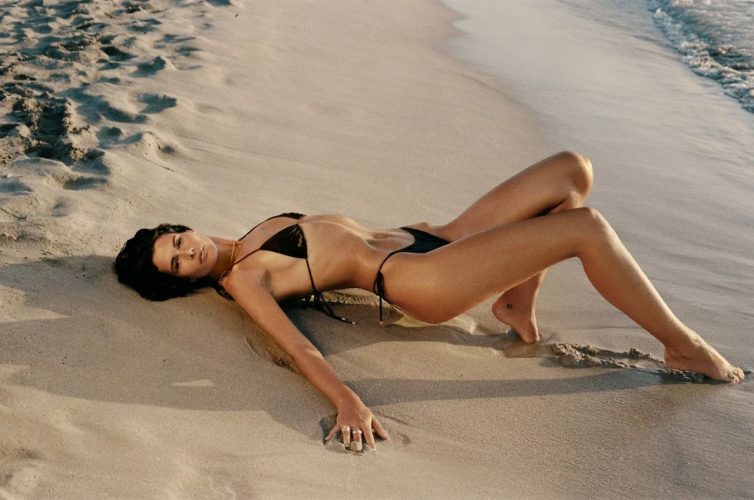
Styling intention plays an equally quiet role. European summers favour pieces that invite interpretation rather than dictate it. Swim silhouettes are designed to be styled up or down without losing their integrity. A bandeau top can read as swimwear at the beach, then feel almost architectural when paired with high-waisted trousers and leather sandals. This adaptability is not accidental; it reflects a design philosophy that considers the full arc of a day, not a single moment.
Resort wear across Europe operates in dialogue with swimwear rather than over it. Sheer dresses, fluid skirts, and soft tailoring are chosen to complement the lines beneath, not obscure them. The goal is continuity, an outfit that evolves as the setting changes, without requiring a full reset. On a terrace overlooking the sea, swimwear remains visible, integrated into the look rather than hidden away. As evening approaches, layers are added sparingly, preserving the simplicity established earlier in the day.
Colour stories play a crucial role in maintaining this cohesion. European summer palettes often draw from the landscape itself: mineral whites, sun-warmed neutrals, deep blues, oxidised reds, and muted greens. These tones allow pieces to be mixed intuitively, reducing the need for rigid outfit planning. In luxury swimwear, colour is rarely seasonal in the traditional sense. Instead, it is chosen for longevity shades that feel resolved against skin, stone, and water, holding their relevance year after year.
Texture adds another layer of quiet complexity. Matte finishes absorb light and lend a sense of understatement, while subtle sheen can suggest warmth without excess. Ribbed fabrics introduce depth without pattern; smooth surfaces emphasise form. When combined thoughtfully, these elements create visual interest that remains restrained. The result is a wardrobe that feels considered rather than constructed, expressive without being loud.
Perhaps most defining of European summer style is the emphasis on personal interpretation over prescribed rules. There is little interest in being told how to dress for the season. Instead, individuals build wardrobes that reflect their own rhythms and destinations. Some lean toward minimal monochrome pairings; others layer colour softly, allowing contrast to emerge through wear rather than design. Luxury swimwear supports this autonomy by offering pieces that adapt rather than instruct.
In recent seasons, conversations around “quiet” or “understated” dressing have gained traction across fashion and culture, particularly as travel resumes its slower, more intentional pace. This shift aligns naturally with European summer sensibilities, where value is placed on pieces that earn their place through use. Swimwear, when designed with this mindset, becomes foundational rather than peripheral, a garment worn often, styled intuitively, and remembered long after the trip ends.
Within this landscape, luxury swimwear exists not as an object of desire but as part of lived experience. It is worn into the evening air, folded into carry-ons, revisited summer after summer. Its success lies in how seamlessly it disappears into daily life while still shaping the way that life feels. In Europe, where summer is a state of mind as much as a season, swimwear earns its place by keeping pace with the day unhurried, considered, and entirely its own.