
Iran is not backing down. Not from the bombs. Not from the rhetoric. And certainly not from Donald Trump.
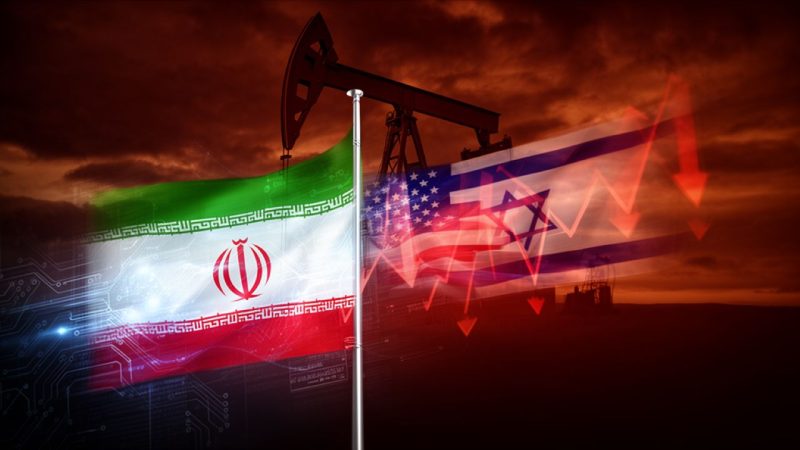
As the U.S.-Israel military campaign against Iran entered its second week on Monday, the war’s trajectory shifted into something grimmer and more economically consequential than even the most pessimistic forecasters had anticipated. WATCH THE BREAKING NEWS LIVE.
Iranian President Masoud Pezeshkian, speaking in a prerecorded address broadcast on state television, made Tehran’s position as clear as it gets: surrender is off the table. Permanently.
“The enemies must take their wish for the surrender of the Iranian people to their graves,” Pezeshkian declared, responding directly to Trump’s Friday demand for Iran’s “unconditional” capitulation. The statement wasn’t a negotiating position. It was a funeral notice for the idea of a quick resolution.
Trump Pushes Harder, Iran Pushes Back
Trump, never one to dial back a confrontation, responded by threatening to expand the target list. He posted on Truth Social that Iran would be hit “very hard,” raising the prospect of strikes on people and areas “not considered for targeting up until this moment in time.” He followed that with a claim that the U.S. had knocked out dozens of Iranian warships in three days, a figure Iranian officials disputed sharply.
Iran’s parliament speaker Mohammad Baqer Qalibaf matched that energy with equal defiance. “Without a doubt our nation and our people will not surrender. They will fight, struggle and will not surrender,” he told the government news service IRNA, adding that Iran would retaliate against any Gulf nation providing bases for U.S. strikes on Tehran.
The IRGC was even more blunt, warning that all U.S. and Israeli military interests in the region would become “primary targets” if the strikes continued. One IRGC general announced that Iran was prepared to fight for an extended period, framing this as a war of national survival rather than a skirmish with an exit ramp.
A New Supreme Leader and a Harder Line
Complicating any path toward a ceasefire: Iran has a new supreme leader. Following the killing of Ayatollah Ali Khamenei in the U.S.-Israeli strikes, two influential Iranian clerics called for the swift selection of a new supreme leader to guide the nation through the crisis. The leading candidate, Mojtaba Khamenei, the slain ayatollah’s son, is widely considered an even harder-line figure than his father, a fact that is already rattling analysts who had hoped the power vacuum might create an opening for diplomacy.
Trump publicly said the U.S. should have a role in selecting Iran’s next leader, a demand Tehran rejected outright. That particular gambit may prove to be a serious miscalculation. Inserting Washington into Iran’s theological succession process is less a peace offer than an accelerant.
Oil Tops $100 and the Economic Pain Is Just Getting Started
Here is where the war stops being a foreign policy story and starts being everyone’s problem.
Crude oil prices surged from roughly $67 per barrel before the war began on February 28 to nearly $97 on Monday, as the conflict snarled production and transport in one of the most energy-rich regions on earth. Oil briefly passed $100 per barrel on Sunday before easing slightly. At its peak, Brent crude spiked to nearly $120 a barrel, a level that could push gas prices above a national average of $4 per gallon.
Across the U.S., drivers were paying an average of $3.48 for a gallon of regular gasoline Monday, compared with $2.98 before the war started. Prices have increased about 17% since the U.S. and Israel attacked Iran. Diesel climbed to $4.65 a gallon, a 23% jump since hostilities began.
This is not just a pump problem. “An immediate spike in gasoline prices strains household budgets and also raises the cost of shipping, airline tickets, and products that rely on oil-based inputs,” one economist told CNBC. Fertilizer prices are rising ahead of spring planting season. Treasury yields are climbing. Mortgage rates jumped to 6.14%, up from 5.99% at the end of February.
The Strait of Hormuz: The Chokepoint That Could Break Everything
About 20 percent of global oil and a significant portion of natural gas pass through the Strait of Hormuz, supplies that are now stranded as traffic through the narrow waterway has ground to a halt. Iran’s IRGC has already threatened that ongoing strikes on Iranian energy infrastructure could send oil above $200 per barrel. That is not a negotiating bluff. It is a description of what happens if the Strait closes.
Oil and gas storage at facilities in the Gulf is rapidly filling, forcing oilfields in Iraq and Kuwait to cut production, with the UAE likely to follow. “At some point soon, everyone will also shut in if vessels do not come,” one source with a state oil company told Reuters.
The White House is reportedly weighing emergency measures to cool prices, including restrictions on U.S. crude exports, intervention in oil futures markets, and temporary waivers of federal fuel taxes. None of those tools are particularly fast-acting. The political window for managing this pain is closing.
Stagflation Fears Return
The timing could not be worse for the domestic economy. The U.S. economy lost jobs in February and the unemployment rate edged up to 4.4%, according to the Bureau of Labor Statistics. In January, the inflation barometer declined to 2.4% annually, still above the Federal Reserve’s 2% target, and that was before oil prices exploded.
Fears of stagflation, the toxic combination of rising inflation and rising unemployment that major oil shocks have historically triggered, are intensifying. Economists pointed to the crises of 1973, 1978, and 2008 as evidence that every significant spike in oil prices has been followed, in some form, by a global recession.
The political math for Trump is deteriorating quickly. A Quinnipiac University poll released Monday found that 53 percent of voters oppose Trump’s military action in Iran, including 60 percent of political independents. The president won reelection in part on a promise to lower costs. Gas at $4 and rising is a daily, visible reminder that things are moving the wrong direction.
What Happens Next
Trump told CBS News on Monday that the war is “very complete, pretty much,” comments that briefly eased oil prices and sparked a modest stock rally. Whether that reflects genuine strategic progress or a president trying to talk markets off the ledge is anyone’s guess. The gap between Trump’s messaging and the situation on the ground has been wide since day one of this conflict.
Iran has shown no signs of buckling. Its new supreme leader selection is moving forward without U.S. input. Its military is still firing. Its parliament speaker is still vowing to fight. And its energy leverage over global markets, through the Strait of Hormuz, remains largely intact.
“The question is how long is it going to go on?” said Simon Johnson, former IMF chief economist. “It’s hard to see Iran backing down now that it’s announced this new leader.”
For American consumers, global supply chains, and emerging markets already squeezed by the cost-of-living crisis, that question has a very expensive answer. The longer this drags on, the more the war stops being about nuclear policy or regime change, and starts being about whether $5 gas is the new normal.