
There is a pattern forming in the fourth week of the Iran war, and it goes something like this: Donald Trump issues a deadline, the deadline approaches, and then Trump extends it while insisting that everything is going well. The question is whether this pattern represents diplomacy in action or a president who started something he does not know how to finish.
On Thursday, Trump announced he was extending the deadline for Iran to reopen the Strait of Hormuz by 10 days, pushing the threat of strikes on Iranian power plants to Monday, April 6, at 8 p.m. Eastern. “Talks are ongoing and, despite erroneous statements to the contrary by the Fake News Media, and others, they are going very well,” he wrote on Truth Social. This is the second time Trump has extended this particular deadline. The original threat gave Iran 48 hours. Then it became five days. Now it is 10 more.
There is a word for deadlines that keep moving: they stop being deadlines.
The War On The Ground
While Trump extends timelines, the actual conflict continues to escalate. Israel launched a fresh wave of airstrikes “in the heart of Tehran” on Thursday, with the IDF warning it would “intensify and expand” operations. More than 200 cities across Iran have been hit since the joint U.S.-Israeli strikes began on February 28, following the killing of Iran’s supreme leader Ali Khamenei.
The civilian toll is staggering and growing. According to the International Organization for Migration, 82,000 civilian buildings have been damaged across 20 Iranian provinces, including the homes of 180,000 people. The Iranian Red Crescent Society reports 5,535 residential units, 1,041 commercial buildings, 14 medical centers, and 65 schools have been targeted. The NGO HRANA has documented 3,114 deaths in Iran, including 1,354 confirmed civilians and 200 children. Iran’s own government puts the figure at 1,255 killed, though independent monitoring suggests the actual number is significantly higher.
These are not abstract statistics. Each number represents a neighborhood flattened, a hospital rendered inoperable, a school reduced to rubble. Nearly every neighborhood in Tehran has sustained damage. This is what a modern air campaign looks like when it is sustained for four consecutive weeks, and the diplomatic language of “precision strikes” cannot disguise the scale of what is happening on the ground.
The 15-Point Peace Proposal That Iran Rejected
U.S. special envoy Steve Witkoff told a Cabinet meeting this week that Washington had presented Iran with a “15-point action list that forms the framework for a peace deal.” The proposal, delivered through Pakistan as an intermediary, offered sanctions relief in exchange for the removal of all enriched uranium and other American demands. Witkoff said there were “strong signs” Iran would recognize it has “no choice” but to accept.
Tehran disagreed. Iranian officials called the conditions “unilateral and unfair,” meeting only the interests of Washington and Israel. Iran countered with five demands of its own, including war reparations and sovereign rights over the Strait of Hormuz. The gap between the two positions is vast, and no mechanism currently exists to bridge it.
Secretary of State Marco Rubio departed for France Thursday to attend a G7 Foreign Ministers’ meeting where he plans to pressure allies into helping reopen the Strait. Rubio criticized NATO for insufficient involvement, arguing the closure affects European and Asian economies even more than America’s. Whether skeptical allies, many of whom opposed the war from its inception, will rally to an administration asking them to clean up a crisis it created remains very much an open question.
The Global Energy Crisis Nobody Can Ignore
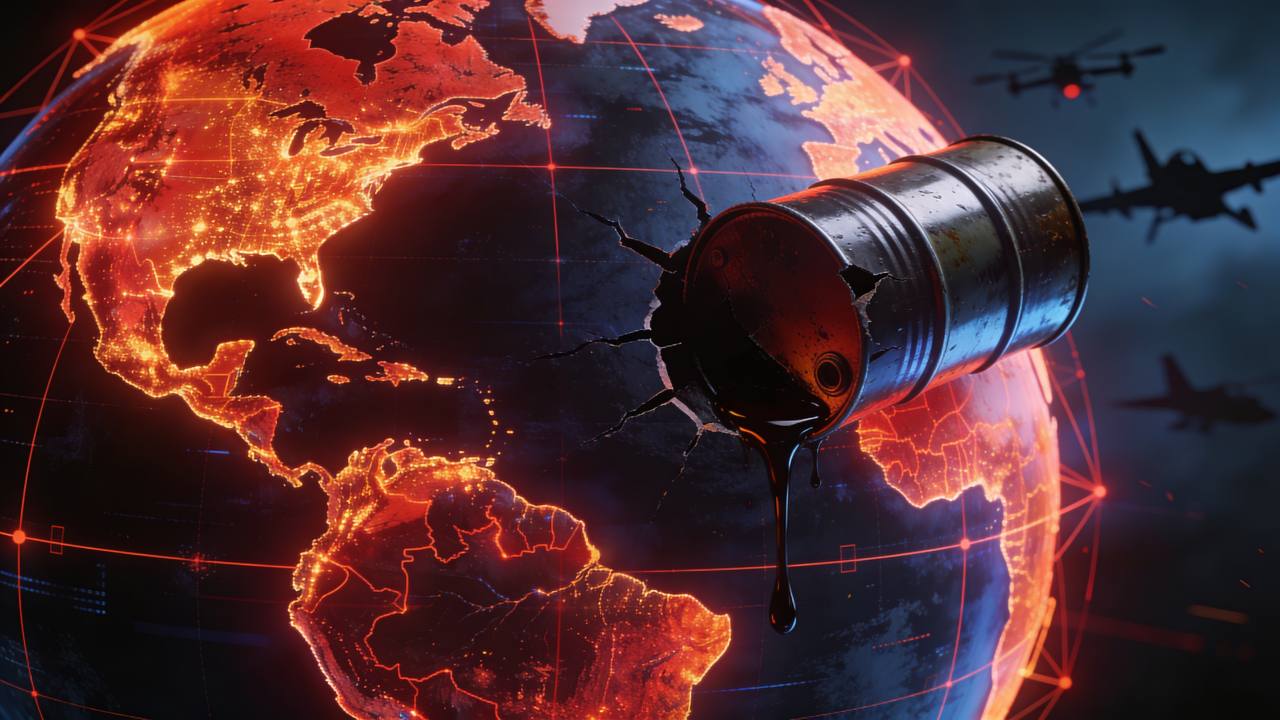
The Strait of Hormuz handles roughly 20 percent of the world’s daily oil supply. Since Iran closed it on March 2, the economic shockwaves have been relentless. Brent crude surged past $100 per barrel on March 8 for the first time in four years and peaked at $126. Nearly 2,000 ships are waiting on both sides of the strait, with approximately 200 non-sanctioned tankers effectively stranded in the Persian Gulf. Twenty thousand sailors are trapped on their vessels. At least seven seafarers have been killed in what the United Nations says were Iranian attacks on commercial shipping.
The downstream effects are cascading through the global economy in real time. South Korea, which channels 68 percent of its crude imports, roughly 1.7 million barrels per day, through the strait, has declared an economic emergency and established a crisis task force. Japan, importing 1.6 million barrels daily through Hormuz, faces a widening trade deficit and the prospect of stagflation. The Philippines has declared a national emergency, warning it has only 40 to 45 days of petroleum reserves remaining.
For Americans, this means gas prices that are climbing with no ceiling in sight and an economic slowdown that the Federal Reserve has limited tools to combat, since the inflation is supply-driven, not demand-driven. You cannot raise interest rates your way out of a war.
The Ukraine Question
Perhaps the most consequential development this week has received the least attention. The Pentagon is now actively considering whether to divert weapons intended for Ukraine to the Middle East theater. The war in Iran has depleted some of the military’s most critical munitions, particularly high-end air defense interceptors for Patriot and THAAD systems. The U.S. has already redirected such missiles from Europe and East Asia to Central Command.
Ukrainian President Volodymyr Zelensky highlighted the scale of consumption, claiming that U.S.-aligned nations in the Middle East fired over 800 Patriot interceptor missiles in just three days, a figure he said exceeds Ukraine’s total stockpile accumulated across four years of war with Russia. A final decision has not been made, but the mere consideration reveals a brutal truth: the United States does not have the industrial capacity to wage two proxy conflicts simultaneously. Something has to give, and Ukraine appears to be what gives.
Where This Goes From Here
Day 28 of the Iran war looks disturbingly like Day 14 and Day 7 before it. The military strikes continue. The diplomatic proposals are rejected. The deadlines extend. The energy crisis worsens. The civilian casualties mount. And the off-ramp, the one that would require both sides to make concessions neither currently appears willing to make, remains invisible.
Trump’s April 6 deadline will arrive in 10 days. If the pattern holds, it will be extended again. The question is how many more buildings, how many more ships, how many more barrels of oil, and how many more lives are consumed in the meantime.
Wars are easy to start. The rest is the part nobody plans for.