
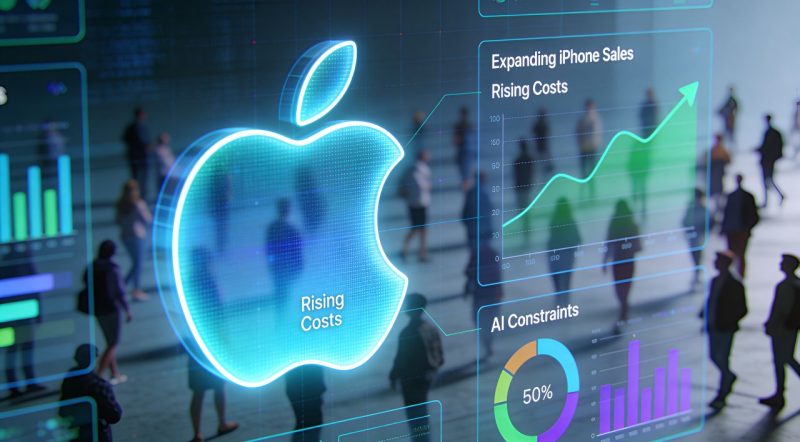
The smartphones, smart devices, and ecosystem services market remains under pressure due to technological limitations and ongoing structural changes at companies such as Apple. Despite a 4% decline in smartphone sales in China during the first two months of 2026, the company managed to increase iPhone sales by 23%, driven by seasonal discounts and subsidies on the base iPhone 17 model.
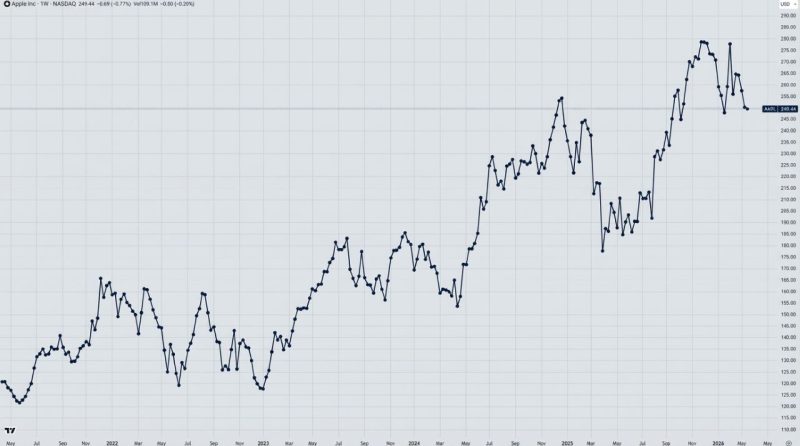
As memory prices rise, Apple is absorbing margin pressure to contain cost increases and expand market share, while Chinese competitors, including Huawei, use local components to maintain their position in the budget and mid-range segments. The market is expected to remain under pressure until June 2026. After that, seasonal discounts may revive sales, but the rising memory prices will continue to weigh on the market.
The situation around Apple itself has a noticeable impact on other major technology companies and financial indexes. Limited memory supply and rising costs are forcing competitors, including smartphone and component manufacturers in the United States and Asia, to rethink pricing and development strategies. News from Apple traditionally affects the shares of Dow Jones index companies such as Microsoft, Intel, and even Cisco, increasing index volatility and adding pressure on investors evaluating the broader technology sector.
At the same time, Apple is facing internal challenges in developing smart home devices. The departure of Brian Lynch, a former senior director of hardware, increases staffing pressures in the division building desktop robots with displays and devices powered by an advanced version of Siri. The development of a voice assistant remains critically important for the implementation of these products, but the current level of AI does not fully support the necessary functionality. A large-scale partnership with Google, including the use of Gemini models for Apple Intelligence training, can accelerate Siri’s progress. However, even successful integration does not guarantee talent retention or the resolution of structural constraints.
The legal burden also puts additional pressure on the company. The U.S. District Court dismissed a lawsuit filed in 2024 by Musi app developers against Apple, confirming the company’s right to remove products from the App Store at its discretion. The trial highlighted the need to document allegations of dishonesty, with failure to do so entailing financial consequences for the plaintiffs. For Apple, this reinforces its ability to maintain control over the ecosystem and protect the profitability of its services segment, reducing the likelihood of unpredictable legal risks in the future.
Together, these trends are shaping a complex investment landscape. On the one hand, Apple is demonstrating its ability to adapt. The growth of iPhone sales, strategic partnerships, and control over the ecosystem make it possible to maintain positions in the smartphone and smart device markets. On the other hand, there are still risks associated with rising component costs, talent turnover, and technological limitations, especially in the AI and home device segments. For investors, this signals a transition from a phase of straightforward growth to a more balanced evaluation, where the potential for expanding market share is accompanied by the need to take into account structural, technological, and legal constraints affecting long-term business sustainability.