
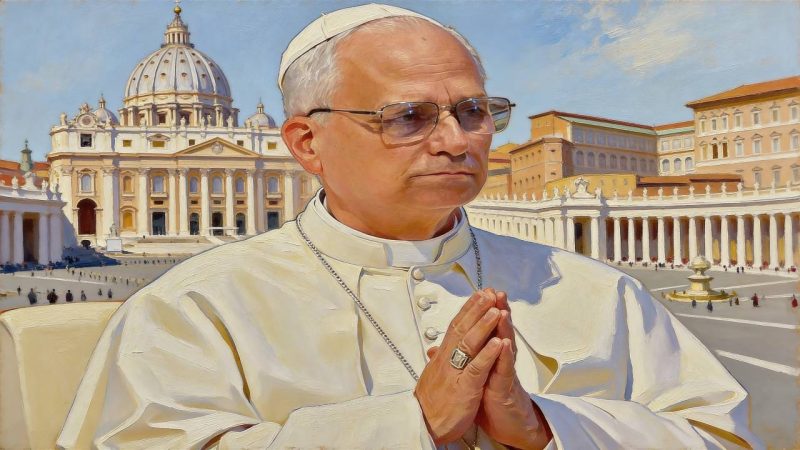
Donald Trump called Pope Leo XIV “weak” and “terrible” after the pontiff publicly condemned the administration’s military escalation against Iran. In a single, blistering post, Trump did what few American politicians have dared in modern times: attack the moral authority of 1.3 billion Catholics worldwide. The Pope responded by doubling down, promising to continue speaking against war regardless of political pressure. What unfolds is not merely a diplomatic spat but a collision between two of the world’s most powerful figures over the moral calculus of military force, and it could reshape how Catholic voters, a crucial swing demographic, view both men and the 2026 midterms.
The Attack and the Response
The confrontation began when Pope Leo XIV issued a formal statement condemning what he called “reckless military adventurism” in the Persian Gulf. The Pope, who has positioned himself as a voice for peace throughout his papacy, specifically cited humanitarian concerns and warned that further escalation risked destabilizing the entire region. His language was pointed but pastoral, the kind of moral clarity that has defined recent popes when they speak to power.
Trump’s response bypassed diplomatic niceties entirely. He called the Pope “weak on terror,” “out of touch,” and suggested that the Vatican was being manipulated by “radical elements” sympathetic to Iran. The personal insults crossed a line that even Trump’s harshest critics thought he might respect. A pope, after all, is not a rival politician or a cable news host. He is a religious leader whose authority rests on spiritual rather than electoral foundations. Attacking him in such crude terms carries symbolic weight that transcends the particular policy disagreement.
The Pope’s response was measured and firm. In a statement released through Vatican media, Leo XIV said he would “continue to speak truth to power, regardless of personal attacks or political consequences.” He did not dignify Trump’s insults with direct response. Instead, he reframed the debate in moral terms: What does it mean for a great power to wage another war in the Middle East? What are the humanitarian costs? Who bears the burden?
Why This Matters More Than You Think
On the surface, this looks like a disagreement over Iran policy. But what makes this confrontation significant is what it reveals about Trump’s relationship with institutional authority and Catholic voters’ shifting allegiances in American politics.
Catholic voters have long been a swing demographic in American elections. They broke decisively for Obama in 2008, shifted toward Romney in 2012, then split for Trump in 2016. In 2020, Biden won them by nine points. The 2026 midterms will likely hinge partly on whether Trump can hold or expand his support among observant Catholics, particularly in Midwestern and Northeastern swing districts. An unprovoked attack on the Pope jeopardizes that coalition.
The Iran war itself is increasingly unpopular. Polling shows that even among Republicans, support for further military action has eroded as the conflict has dragged on and costs have mounted. The Pope is tapping into something real: a growing sense that the administration is doubling down on a failed strategy rather than seeking diplomatic off-ramps. By attacking the Pope personally rather than engaging his actual argument, Trump appears defensive about a policy that is losing public support.
There is also a class dimension here worth noting. The Pope speaks from a position of spiritual authority that cannot be undermined by cable news ratings or social media engagement. When Trump attacks him, he is attacking someone whose legitimacy does not depend on winning elections or securing media approval. This asymmetry is uncomfortable for Trump. He is accustomed to critics who need something from him: votes, access, ratings. The Pope needs nothing. He can afford to be principled in a way that most politicians cannot.
The Ghost of 2016
This confrontation echoes Trump’s antagonistic relationship with Pope Francis in 2016. At that time, Francis had criticized Trump’s immigration rhetoric and his treatment of asylum seekers. Trump responded by attacking the Pope’s credibility and suggesting that the Church was being naive about border security. The dispute rattled some Catholic voters, particularly Latino Catholics who saw it as Trump denigrating a spiritual leader they revered.
Yet Trump won enough Catholic support to carry crucial states. This time, the circumstances are different. Trump is the incumbent presiding over an unpopular war. The Pope is not commenting on immigration or ideology but on the basic ethics of military force. And the institutional stakes feel higher. A protracted conflict between the American presidency and the Catholic Church raises questions about whether this administration respects any moral authority outside itself.
What the Silence Reveals
What has been striking is the muted response from most Catholic political figures. The American bishops’ conference has not issued a strong statement. Catholic members of Congress have largely avoided commenting. This silence is itself revealing. These politicians depend on both Trump and the Church. Siding openly with either risks alienating a crucial constituency. The result is a deafening quiet that suggests deep discomfort within the Catholic political establishment.
But voters are not politicians. They notice when a president attacks a figure they respect. They notice the tone, the dismissiveness, the refusal to engage substantively with moral arguments. For swing voters who are not ideologically committed to Trump, this attack on the Pope may be a pivotal moment that tips them toward supporting Democratic candidates in 2026.
The Larger Pattern
This confrontation is part of a larger pattern: an administration that has shown little patience for institutional constraints or moral authorities it cannot control. Courts, the intelligence community, the military, the press: Trump has attacked them all when they questioned his decisions. Now he has extended that combativeness to the Church itself. It is an instructive moment about what he means by “strength.” For Trump, strength means domination, not persuasion. It means attacking critics rather than answering them.
For the Pope, strength means something different. It means speaking truth even when it brings no political reward, when it brings only personal attack. It means maintaining moral authority precisely by refusing to be drawn into the kind of retaliation that would diminish it.
As the Iran war persists and its costs accumulate, the Pope’s message will likely resonate with more Americans, not fewer. Trump’s personal attacks may energize his base, but they may also remind Catholic voters of something they believed in before 2016: that there are institutions and individuals whose authority transcends electoral politics. The Pope is testing whether that belief still holds power in America. The midterms may answer that question.