
Introduction: The Changing Rhythm of Music PR
In the modern music industry, an independent artist is rarely just a musician. They are their own booking agent, social media manager, tour coordinator, and publicist. In the relentless hustle to get heard above the noise of 100,000 new tracks uploaded to Spotify every single day, the administrative burden of being in a band has never been heavier. To cope with this, countless artists and indie labels have turned to generative artificial intelligence to draft their Electronic Press Kits (EPKs), pitch emails, and Spotify bios. It seems like a brilliant hack: why spend three hours agonizing over a press release when an algorithm can write it in three seconds?
However, this shortcut has birthed a new, insidious problem in music journalism. The soul of rock and roll, the swagger of hip-hop, and the intimate vulnerability of indie folk are being flattened into sterile, corporate-sounding paragraphs. We are living through an epidemic of synthetic music PR, and industry gatekeepers are taking notice. For artists trying to break through, and for the publicists trying to represent them, navigating this automated landscape requires a delicate balance between digital efficiency and raw, human authenticity.
The “Genre-Defying” Epidemic in the Inbox
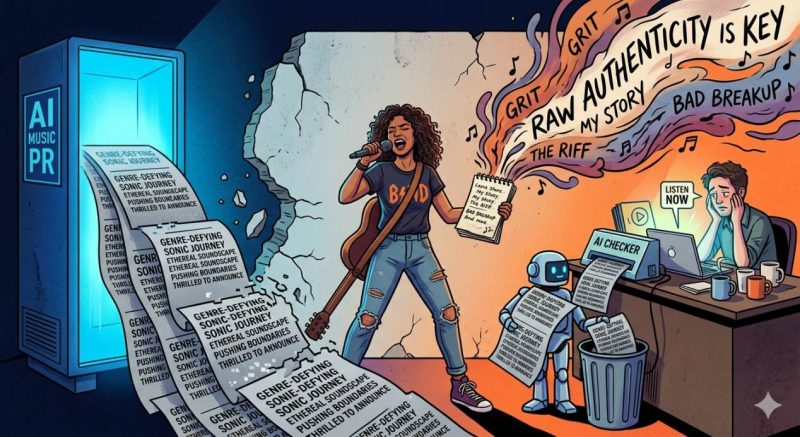
Ask any music blogger, playlist curator, or A&R representative what their inbox looks like right now, and they will tell you it reads like a broken record. Generative language models, when asked to write about music, default to a remarkably predictable set of clichés. Every single band is suddenly “pushing boundaries” and “defying genres.” Every new EP is a “mesmerizing sonic journey” or an “ethereal soundscape.” Every artist is “thrilled to announce” their upcoming tour.
When a music journalist opens a pitch email, they are looking for the story behind the chords. They want to know that the lead singer wrote the lyrics on a napkin in a diner after a bad breakup, or that the drummer recorded the snare track in a damp basement in Detroit. They want grit. They want narrative. When they are instead met with a wall of grammatically perfect, emotionally vacant buzzwords, the immediate assumption is that the artist lacks a genuine identity. If you cannot be bothered to tell your own story with your own voice, why should a critic spend their valuable time listening to your 45-minute album?
How Curators Are Guarding the Gates
The sheer volume of these automated, copy-pasted pitches has fundamentally changed how music media operates. Bloggers and curators simply do not have the time to read through hundreds of soulless paragraphs to find a diamond in the rough. To protect their time and the quality of the music they feature, many top-tier curators and PR agencies have integrated a free reliable AI checker into their daily screening process.
This technology acts as a digital bouncer for their inbox. Before an editor even presses play on a Soundcloud link, they can instantly flag pitches that read like they were churned out by a server farm rather than written by a passionate musician. If a band’s biography triggers the alarms for synthetic generation—displaying that unmistakable lack of human pacing, irregular phrasing, and emotional depth—the email is often dragged straight to the trash. In the fiercely competitive arena of music promotion, getting caught using low-effort, robotic templates is the quickest way to burn a bridge with the press.
The Musician’s Dilemma: Time vs. Tone
It is crucial to acknowledge, however, that the artists using these tools are not malicious; they are simply exhausted. Writing compelling copy is a completely different skill set from writing a catchy hook or mastering a guitar solo. An artist staring at a blank screen at 2:00 AM after a gig just wants to get their newsletter out to their fans so they can go to sleep. AI is a desperately needed lifeline for these burned-out creatives. The question is not whether musicians should use AI to help run their business—they absolutely should. The question is how to use it without sacrificing their artistic persona.
If you are a punk band, your press release shouldn’t sound like it was drafted by a corporate paralegal. If you are a lo-fi bedroom pop artist, your social media captions shouldn’t read like a Fortune 500 marketing brochure. The tone of your written communication must match the sonic aesthetic of your music.
Restoring the Human Groove
This is where the modern PR workflow needs an upgrade. Savvy musicians and boutique PR firms are realizing that the initial AI-generated draft is not the final product; it is merely the underlying rhythm track. You still need to lay down the vocals.
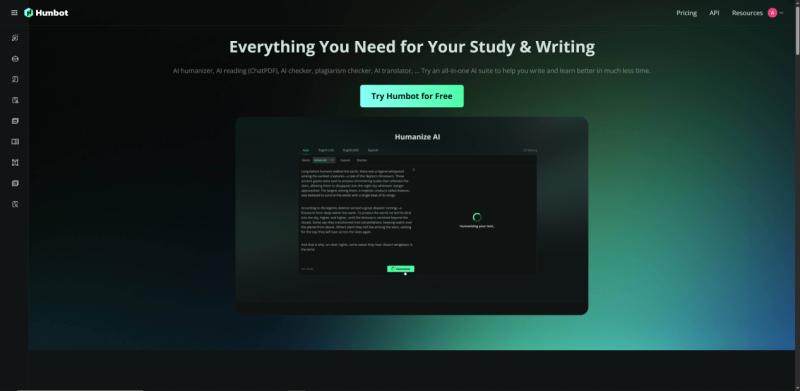
To bridge this gap without spending hours manually rewriting text, forward-thinking industry professionals are utilizing specialized text-refinement tools. Instead of sending out the raw, cringe-inducing draft, they run their promotional copy through a natural-sounding AI humanizer. This specialized step acts like an analog mastering plugin for your text. It takes the rigid, predictable structure of the automated draft and introduces “burstiness”—the irregular, spontaneous flow of actual human speech. It strips out the pretentious adjectives like “mesmerizing” and replaces them with conversational, relatable language. It allows the creator to input their tour dates and album themes, and outputs a bio that actually sounds like a musician talking to a fan at the merch table after a show.
The Parasocial Bond: Why Words Matter to Fans
Beyond the press and the critics, the ultimate consumers of your written words are your fans. The modern music industry is built on the parasocial relationship between the artist and the listener. Fans support indie artists on Patreon, buy their vinyl, and purchase concert tickets because they feel a personal connection to the human being behind the microphone.
When you send a newsletter thanking your fans for a great year, or when you post the backstory of your latest single on Instagram, those words carry emotional weight. If fans detect that those intimate thoughts were synthesized by an algorithm, the spell is broken. The illusion of closeness shatters. Protecting your voice is about protecting the trust of the people who pay your rent. By ensuring your digital footprint remains authentically yours, you foster a fiercely loyal community that will follow you from the local dive bars to the stadium stages.
How to Use Humbot Without Losing Your Academic Soul
Instead of letting the machine do 100% of the work, the most successful students are adopting a hybrid approach:
1.Drafting: Use AI to build the skeleton and research the points.
2.Refinement: Use Humbot to humanize AI drafts, ensuring the writing feels organic and personal.
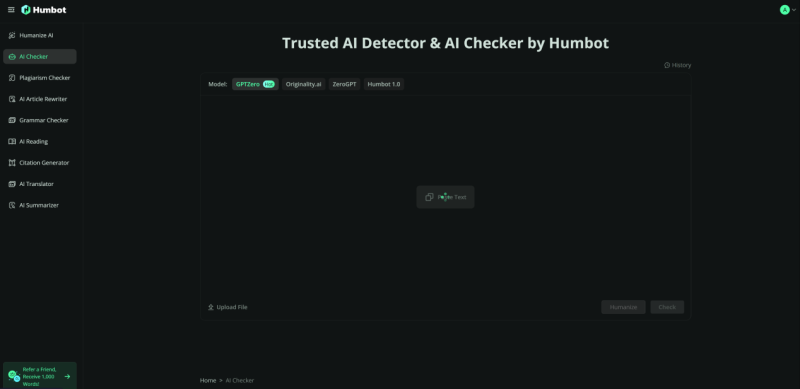
3.Verification: Pass the final version through an AI checker yourself to ensure total peace of mind before submission.
As technology continues to reshape how we create and consume art, the artists who stand out will not be the ones who avoid AI, but the ones who master it while fiercely protecting their humanity. Your story is your most valuable asset. It is the context that makes your music meaningful.
For the modern music professional navigating this complex ecosystem, having a comprehensive toolkit is essential. Whether you are a publicist trying to filter out generic pitches from your inbox, or an artist trying to inject some much-needed swagger back into your EPK, platforms like Humbot offer the ultimate dual-purpose solution. By providing the ability to simultaneously detect robotic noise and elegantly refine text to sound authentically human, it empowers the music industry to embrace the future of efficiency without ever losing its soul. In a world full of synthesized noise, the most rebellious thing an artist can do is sound exactly like themselves