
The ceasefire between the United States and Iran expired Sunday with no extension, no breakthrough, and no realistic path to one.
President Donald Trump, who called Tehran’s latest proposal “garbage” and the broader diplomatic situation “on massive life support,” now faces a decision that will define his second term: resume full-scale military operations against a country that has already cost American consumers billions, or find a way back to a negotiating table that both sides seem determined to flip over.
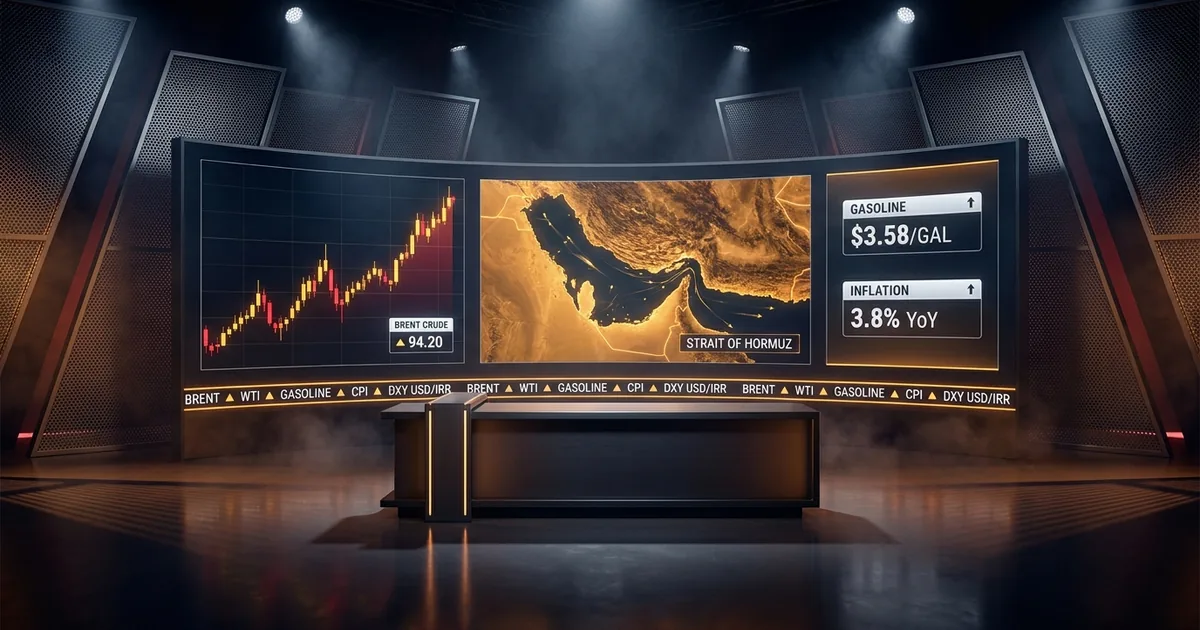
The numbers tell the story the diplomatic cables cannot. Since the war began on February 28, gasoline prices have surged roughly 45 percent. The average American driver is paying about $3.58 per gallon, up from $2.98 before the first strikes. Across the country, that translates to approximately $284 in additional costs per household, and the total consumer burden has already exceeded $24 billion according to researchers at Brown University tracking the war’s economic footprint. April inflation hit 3.8 percent year over year, the highest reading since late 2023, with energy accounting for 40 percent of the increase. Top forecasters now project the second quarter could hit 6 percent.
Why the Ceasefire Collapsed
The ceasefire, which took effect April 17, was never built to last. It was a tactical pause, not a diplomatic framework. Both sides used the breathing room to reposition rather than negotiate in good faith, and the terms were always too vague to survive contact with either country’s domestic politics.
Iran’s latest proposal, delivered through back channels and reported by the semiofficial Tasnim news agency, demanded the lifting of all sanctions on Iranian oil sales, the end of the U.S. naval blockade on Iranian ports, and the unfreezing of billions in frozen assets. What it did not include was any concession on Iran’s nuclear program, the one issue Trump has repeatedly called non-negotiable.
Trump’s rejection was swift and public. He called the offer “simply unacceptable” and said Tehran “doesn’t understand the position they’re in.” That framing plays well domestically, but it ignores the position the United States is in: fighting a war that is now the primary driver of an inflation crisis that could define the 2026 midterms.
The Inflation Crisis Washington Refuses to Connect
There is a remarkable disconnect between how the administration talks about the war and how Americans experience it. Trump told reporters last week that Americans’ financial situations are not a factor in his negotiating calculus. That comment, which drew immediate backlash, was not a gaffe. It was a policy statement. The president views the Iran conflict through a national security and legacy lens, not an economic one.
The economy disagrees. The hot inflation report released last week has fundamentally altered the Federal Reserve’s trajectory. Markets are now pricing in the first interest rate hike of this cycle rather than the cuts Wall Street had been expecting. For the first time, the fed funds futures market shows a December 2026 hike at 51 percent probability, with March 2027 at over 71 percent. The Fed is stuck: raise rates into a war economy and risk recession, or hold steady and let inflation run.
New Fed Chair Kevin Warsh, confirmed just five days ago in the most contentious vote in Fed history, takes office arguing there is room to lower rates. The inflation data just made that argument nearly impossible to sustain. His first FOMC meeting on June 16 will be the most scrutinized Fed gathering in years.
What Happens When a Ceasefire Dies
The immediate question is operational. With the ceasefire expired, the legal and military constraints that kept both sides from escalating are gone. The U.S. still has roughly 15,000 service members deployed in the region for Project Freedom, the Strait of Hormuz escort operation launched in early May. Iran’s Revolutionary Guard has already threatened to target any foreign military force that approaches the waterway.
The diplomatic question is whether China can broker a return to talks. President Xi Jinping, who hosted Trump in Beijing just days ago, has been pressing Iran to reach a deal. But China’s leverage is limited, and its interests are not aligned with Washington’s. Beijing wants cheap Iranian oil and stability in the Gulf. It does not particularly care whether Iran’s nuclear program survives the negotiations.
For American consumers, the ceasefire’s death means the economic pain is not going away. Energy analysts expect gasoline prices to remain elevated through the summer driving season at minimum. If hostilities resume in earnest, particularly around the Strait of Hormuz where roughly 20 percent of the world’s oil transits, prices could spike further. The Washington Post reported that the war has already fueled the sharpest inflation spike in nearly three years, and every week without a deal adds pressure.
The Political Calculation Nobody Wants to Make
The midterms are less than six months away. Historically, wars boost presidential approval in the short term and destroy it in the long term, especially when the economic costs become visible at the kitchen table. The Iran war has already passed the point where “rally around the flag” energy can offset $3.58 gasoline. Voters do not care about nuclear enrichment percentages when they are deciding between filling their tank and buying groceries.
Congressional Democrats smell blood. The War Powers Act clock, which the administration has argued does not apply during a ceasefire, now restarts with no legal cover. Senate Democrats have already signaled they will force votes on war authorization, putting vulnerable Republicans in the position of either breaking with a wartime president or defending an increasingly unpopular conflict.
The Iran ceasefire was supposed to be the beginning of an off-ramp. Instead, it became a rest stop on the way to a longer, more expensive, and more politically dangerous conflict. The expiration date was always today. The question that matters is what tomorrow looks like, and right now, nobody in Washington or Tehran has a convincing answer.