
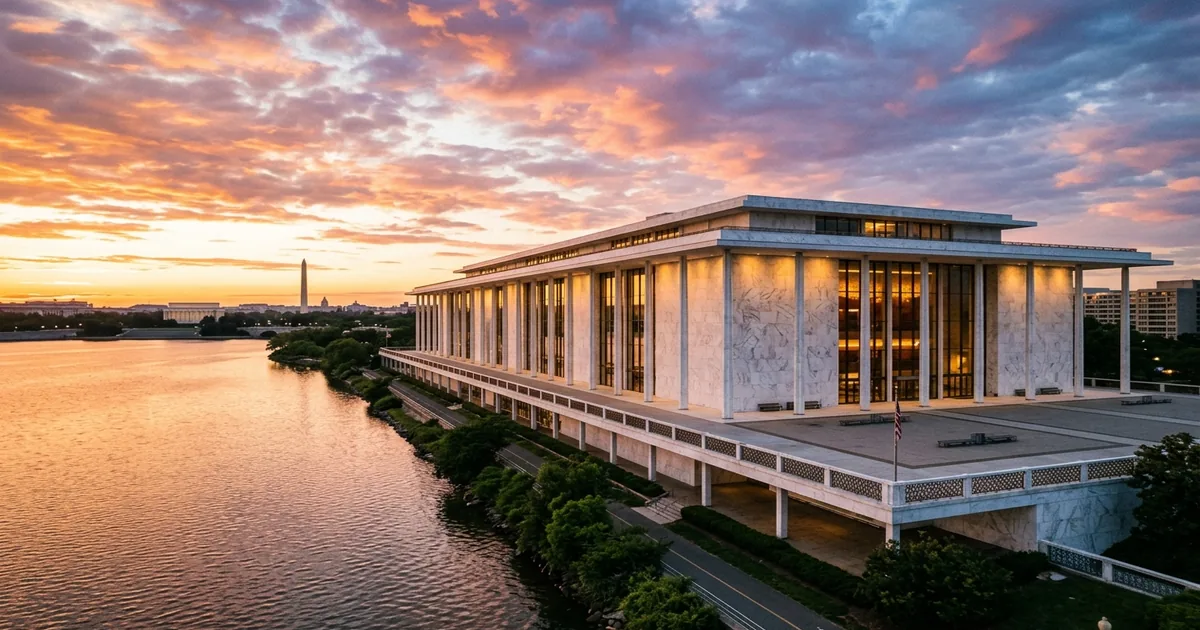
A federal judge just handed the White House one of its most stinging cultural defeats yet, and it arrived in a 94-page ruling that reads less like legalese and more like a civics lecture.
U.S. District Judge Christopher Cooper ruled Friday that the Kennedy Center for the Performing Arts must strip Donald Trump’s name from its facade, signage, and website within 14 days. The decision also blocks the board’s plan to shutter the iconic venue for two years of renovations, calling that vote “ill-informed and seemingly preordained.”
The Legal Core: Only Congress Gets to Name It
The ruling hinges on a deceptively simple principle. When Congress established the Kennedy Center in 1958, it wrote the name into law. The board of trustees, even one handpicked by the sitting president, does not have the unilateral authority to change it.
“Congress gave the Kennedy Center its name, and only Congress can change it,” Cooper wrote. The center’s organic statute “makes crystal clear that the Center is to be named for President Kennedy, and it cannot bear any other formal name or public memorial based on the Board’s unilateral say-so.”
That framing matters. This is not a dispute about taste or politics. It is a separation-of-powers question, and the judge answered it in the most constitutionally straightforward way possible: the board overstepped.
How the Lawsuit Got Here
The case was brought by Rep. Joyce Beatty, an Ohio Democrat who serves as an ex officio trustee of the Kennedy Center. Beatty’s complaint challenged three board actions: the renaming, the planned two-year closure, and the revocation of her voting rights on the board.
Cooper sided with Beatty on all three counts. Her voting rights were ordered restored. The closure was enjoined through a preliminary injunction. And the renaming was struck down entirely, not as a temporary hold but as a permanent ruling that the board lacked authority in the first place.
As CBS News reported, the board’s May 2025 vote to strip Beatty of her voting rights came just weeks before the renaming vote, a sequence the judge found deeply suspect.
Trump Responds, Pivots to Congress
Trump responded with characteristic defiance, saying the judge “should be ashamed of himself” and instructing his administration to “make all necessary arrangements” to transfer the Kennedy Center to Congress.
That threat carries its own irony. The ruling says Congress already controls the naming authority. Transferring the center to Congress would not change the legal landscape. It would reinforce it.
The broader pattern is familiar: an executive branch action that tests the boundaries of presidential authority, a legal challenge grounded in statutory text, and a court that applies the law as written. What makes this case unusual is the venue. The Kennedy Center is not a military installation or a regulatory agency. It is a performing arts center named for a slain president, and the fight over its name has become a proxy for a larger question about institutional norms.
What Happens in the Next 14 Days
The administration has two weeks to comply. Physical signage, website branding, and all official documentation referencing the “Trump Center” or any similar formulation must be removed. The center remains open during this period.
There is no indication the administration plans to appeal immediately, though Trump’s public statements suggest the fight is far from over. For now, the Kennedy Center keeps its name, its doors stay open, and one more guardrail holds.