
President Donald Trump announced on Truth Social Sunday that the war with Iran is over, the Strait of Hormuz will reopen, and the US naval blockade is coming down.
The declaration is real and the relief is genuine, but the document that ends a months-long shooting war is not the same as the one that contains Iran’s nuclear program, and the distance between those two things is the whole story.
What Trump Actually Announced
“The Deal with the Islamic Republic of Iran is now complete,” Trump wrote, authorizing what he called the “toll free opening of the Strait of Hormuz” and the “immediate removal of the United States Naval blockade.” He added that the agreement “will bring Peace and Security to the whole Region,” and closed, in characteristic fashion, with a line about letting the oil flow.
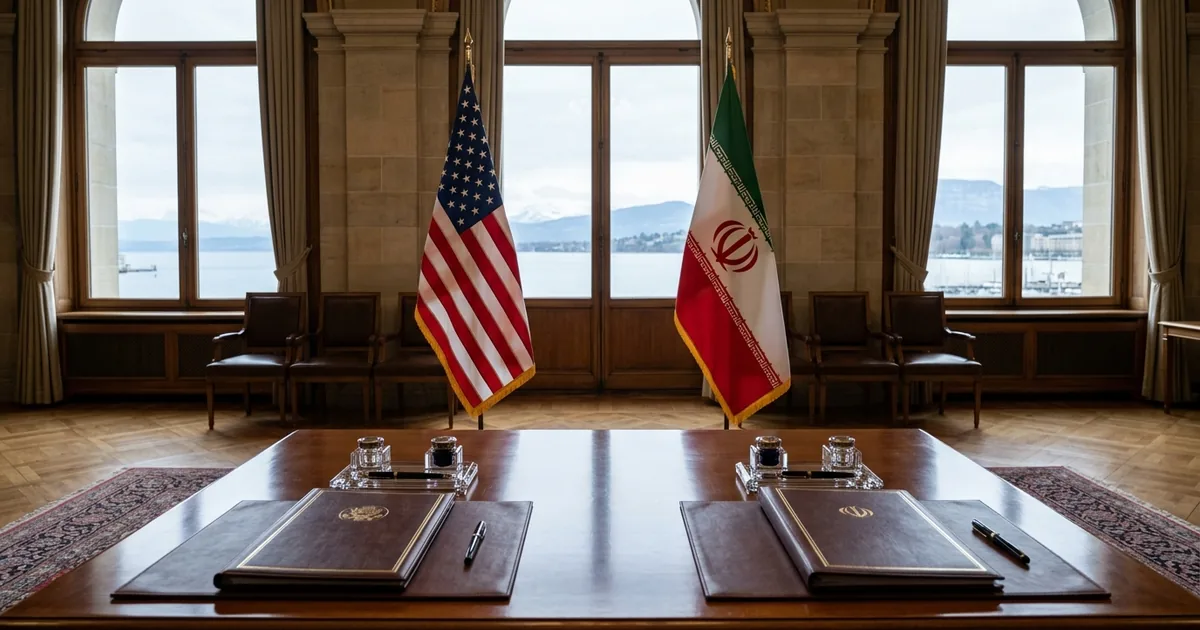
The substance underneath the capital letters: both sides have agreed to an immediate and permanent halt to military operations on all fronts, including Lebanon. Iran’s deputy foreign minister, Kazem Gharibabadi, confirmed the agreement Sunday, as Al Jazeera reported in its coverage of the announcement. Pakistani Prime Minister Shehbaz Sharif announced the deal jointly with Trump, and Qatar, Saudi Arabia, and Turkey are credited as mediators, with Britain and France lending support. A formal signing is set for Friday, June 19, in Switzerland.
That timeline matters. What exists right now is an announcement, not a signature. The conflict that began in February has already produced more than one ceasefire that expired, including the one that lapsed in May and sent gas prices climbing back into American households. A deal that is “complete” on Sunday and signed on Friday has five days to survive contact with reality.
The Strait of Hormuz Is the Part That Touches Your Wallet
Strip away the geopolitics and the most immediate consequence for most readers runs through a narrow waterway in the Persian Gulf. Roughly a fifth of the world’s seaborne oil moves through the Strait of Hormuz, and the blockade plus the threat of mines turned every barrel into a bet on whether the next tanker would get through. Prices at the pump reflected that bet.
Reopening the strait to commercial traffic, if it holds, is the fastest line from this announcement to lower energy costs. European leaders have already signaled they will move on sanctions relief in exchange for verifiable nuclear commitments from Tehran, the kind of carrot that gets oil ministers to return calls. Markets will price the ceasefire well before any document is signed, because traders do not wait for ceremonies.
The caution lives in the phrase “if it holds.” Iran has wielded the threat of closing Hormuz for decades precisely because it works as a bargaining chip. An announcement that the strait is open is a promise, and promises in this region have a short shelf life.
What the Deal Does Not Settle
Here is the line worth circling. This is an agreement to stop shooting, not the long-term arrangement that keeps Iran from building a bomb. Vice President JD Vance said he is confident “Iran will never have a nuclear weapon,” and Iranian state media framed the deal as a reaffirmation that Tehran will not produce one. Confidence and reaffirmation are not inspections.
The hard part, a verifiable nuclear framework with monitoring Tehran will actually accept, is being deferred to a future negotiation that does not yet exist on paper. That is not a small footnote. It is the difference between a pause and a settlement. Every previous attempt to lock down Iran’s program failed on exactly this point, and nothing in Sunday’s announcement explains why this round ends differently. Selling a ceasefire as a permanent solution is how you set up the next crisis to feel like a betrayal.
Lebanon Is the Wildcard
The deal claims to cover “all fronts, including Lebanon,” and that clause is doing heavy lifting. An Israeli air raid on Beirut’s southern suburbs landed before the announcement, enough to raise immediate worry that the agreement could be sabotaged before the ink was dry, as CBS News noted in its live coverage. Israel is not a signatory to a US-Iran deal, and its calculations about Hezbollah do not bend to a Truth Social post.
This is the structural weakness. A peace that runs through Washington, Tehran, Islamabad, Doha, Riyadh, and Ankara still has to survive a party that was not at the table. If strikes in Lebanon continue, the “all fronts” language becomes the first thing both sides argue about.
What Happens Friday
By Sunday’s framing, Friday in Switzerland is a formality, a ceremony to ratify something already done. The recent history of this exact conflict argues for more skepticism than that. Five weeks ago the deal was, by Trump’s own account, largely negotiated, and then it wasn’t.
The honest read: this is the most real the agreement has looked, and “complete” is still a word doing a great deal of work for something that is neither signed nor verified. The oil may flow. The shooting may stop. Whether either lasts past the next strike on Beirut or the next missed nuclear deadline is the question Friday’s ceremony will not answer.