
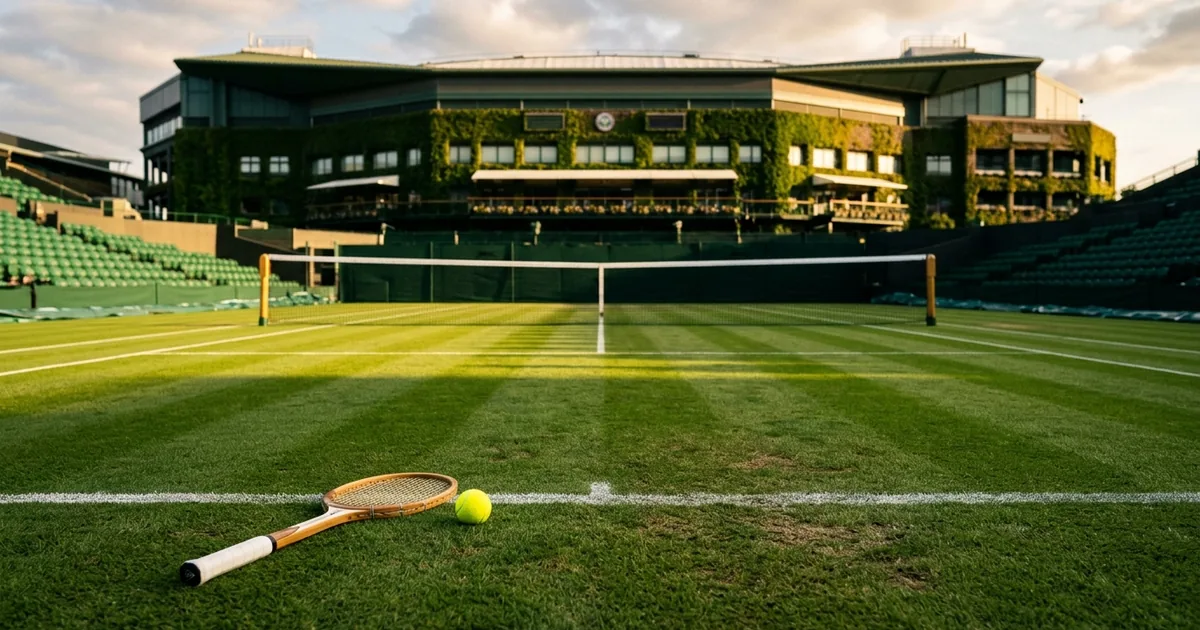
Serena Williams stepped back onto Centre Court for the first time in nearly four years on Tuesday and showed the tennis world she still has fight left in her racket.
It was not enough. Australia’s Maya Joint, ranked 52nd in the world and barely old enough to remember Williams’s first Wimbledon title, beat the 23-time Grand Slam champion 6-3, 6-7 (6), 6-3 in a first-round match that was equal parts tribute and passing of the torch.
Three Sets That Told a Story
The opening set belonged to Joint. The 20-year-old moved with the ease of someone who grew up watching Williams dominate and knew exactly what she was walking into. Joint broke Williams early and held serve with precision, wrapping up the first set 6-3 in a performance that suggested the generational gap might be too wide to bridge.
Then Williams did what Williams does. Facing a match point in the second-set tiebreak, the 44-year-old uncorked a 122-mph serve and clawed her way back, saving the match point and forcing a decider. Centre Court erupted. For a few electric minutes, it felt like 2015 again.
The third set started promisingly. Williams broke Joint to lead 2-1, and the Australian’s body language visibly shifted under the pressure of 15,000 people willing her opponent to win. But Joint steadied, broke back, and ran away with the final games. The 2026 Wimbledon tournament that opened without defending champion Carlos Alcaraz had delivered its most emotional match on day two.
What the Comeback Was Really About
Williams has not played a competitive singles match since the 2022 US Open, when she announced her “evolution away from tennis” in a Vogue cover story. The decision to return at Wimbledon, the place where she won seven of her 23 Grand Slam titles, was always about something bigger than a realistic title run.
At 44, with two children and a venture capital portfolio that would make most Silicon Valley partners jealous, Williams did not need to put herself through a first-round loss on the sport’s biggest stage. She did it because she wanted to compete again, full stop. Whether that impulse came from watching the game she dominated being played without her or from something more personal, the result was a match that reminded everyone why she is the most compelling athlete of her generation.
Joint’s Moment Arrives
For Joint, this was the kind of career-defining win that money cannot buy. The Australian had started 2026 with a dismal 3-15 record, the kind of stretch that makes young players question whether they belong at this level. Beating Serena Williams at Wimbledon in three sets, on Centre Court, with the entire stadium rooting against you, is the answer to that question.
Joint advances to face Alexandra Eala in the second round. She will carry the confidence of having outplayed the greatest player in the history of women’s tennis on a stage that does not offer second chances. As ESPN’s live coverage noted, the 20-year-old “fulfilled a lifelong dream” with the victory.
What Comes Next for Serena
Williams is not done at Wimbledon. She remains entered in doubles alongside her sister Venus, a partnership that has produced six Wimbledon doubles titles and the kind of on-court chemistry that defies the usual decline curve. The doubles draw gives Williams more match play, more time on grass, and more opportunities to remind herself why she came back.
The bigger question is whether this was a one-tournament experiment or the beginning of a selective comeback. Williams has the ranking protection to enter major tournaments, and WTA Tour officials confirmed they would welcome her at future events. If Tuesday’s second-set tiebreak is any indication, the competitor in Williams is not ready to stop competing, even if the body cannot quite deliver what the mind still demands.