
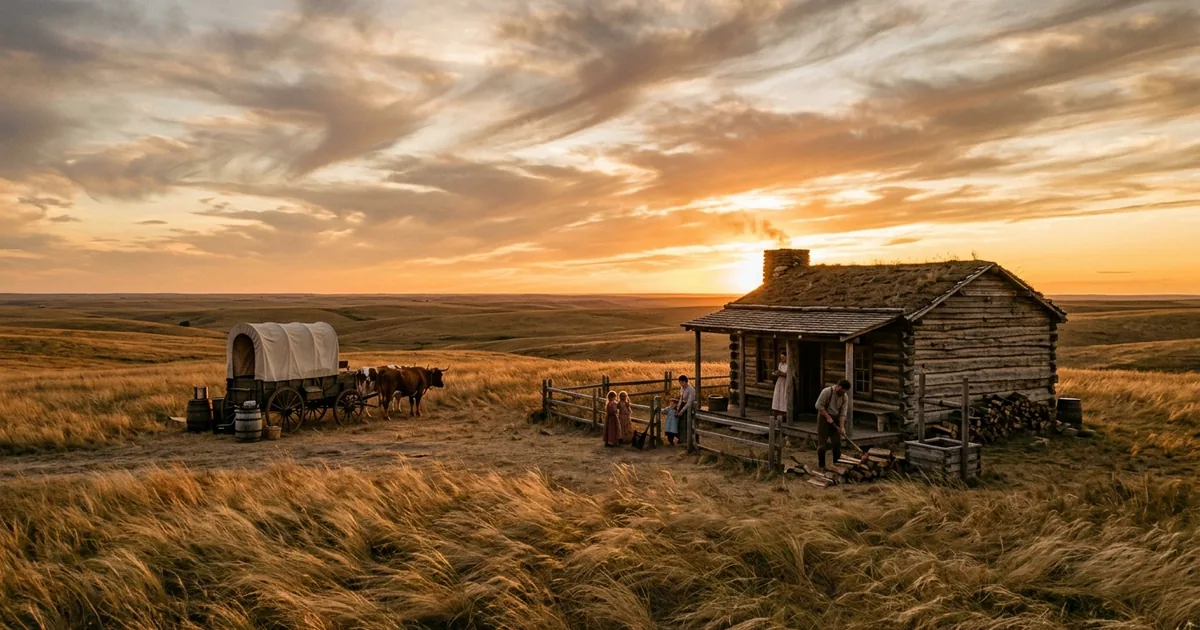
Netflix’s reimagining of “Little House on the Prairie” dropped Wednesday to near-universal critical praise, with reviewers calling it everything from “a must-watch Western masterpiece” to the definitive version of Laura Ingalls Wilder’s story.
The eight-episode first season is the most ambitious attempt yet to reckon with what the original 1970s series left out.
Not Your Parents’ Prairie
Creator Rebecca Sonnenshine, whose credits include “The Boys” and “Archive 81,” makes her intentions clear within the first 10 minutes. This is not the sunlit, uncomplicated family drama that Michael Landon turned into one of the most beloved shows in television history. Sonnenshine’s version introduces a helpful Black doctor and an Osage Nation family in the opening scenes, signaling immediately that this retelling will not treat westward expansion as a wholesome backdrop for frontier hardship.
The first season covers the events of Wilder’s 1935 novel, the one set in Kansas Indian Territory, not the later Walnut Grove setting that dominated the original series. That choice is significant. The Kansas book is where the Ingalls family’s story most directly intersects with the displacement of Native peoples, and it is the book the original show largely skipped. Collider called the result “a must-watch Western masterpiece” that earns its emotional weight by refusing to simplify.
The Osage Nation Gets Equal Footing
What separates this adaptation from every previous one is structural, not cosmetic. This is the first retelling to give nearly equal screen time to the beginning of the end of a centuries-old way of life for the Osage Nation. The Osage characters are not props or obstacles. They have interior lives, political disagreements, and a perspective on the arriving settlers that the camera treats with the same depth it gives the Ingalls family.
The Hollywood Reporter praised the show for “sparkling with appealingly wholesome sincerity” while refusing to flinch from the harder truths. Alice Halsey, whose previous work includes “Lessons in Chemistry,” anchors the series as Laura Ingalls with an energy that reviewers have singled out as the show’s emotional center.
Why This Reboot Matters Beyond Nostalgia
The original “Little House on the Prairie” ran for nine seasons on NBC and became a cultural shorthand for a particular vision of American life: self-reliant, family-centered, morally uncomplicated. It remains one of the most-syndicated shows in television history. For decades, the Ingalls family was the version of the American frontier that the country told itself.
Sonnenshine’s gamble is that audiences in 2026 are ready for the version the country actually lived. The settlement of the Kansas prairie was not a story of one family against the elements. It was a story of one government policy displacing a nation of people to make room for another, and the families on both sides who absorbed the consequences of decisions made far away in Washington. The show does not lecture about this. It dramatizes it through character, landscape, and the small daily collisions between two communities occupying the same land with incompatible claims to it.
That structural choice is what has critics reaching for superlatives. Netflix has produced plenty of reboots that trade on name recognition alone. This one uses a beloved title to tell a story the original was never equipped to tell, and early streaming premieres this summer have shown audiences are hungry for exactly that kind of ambition.
What to Know Before You Watch
Season 1 runs eight episodes at 45 to 50 minutes each. The tone is closer to a prestige Western than a family sitcom, with painterly exterior shots and a deliberate pace that trusts the audience to sit with silence. The Guardian’s review warned that viewers will be “sobbing for a simpler world by episode four,” which is both a recommendation and a fair content warning.
The show is streaming now on Netflix worldwide.