
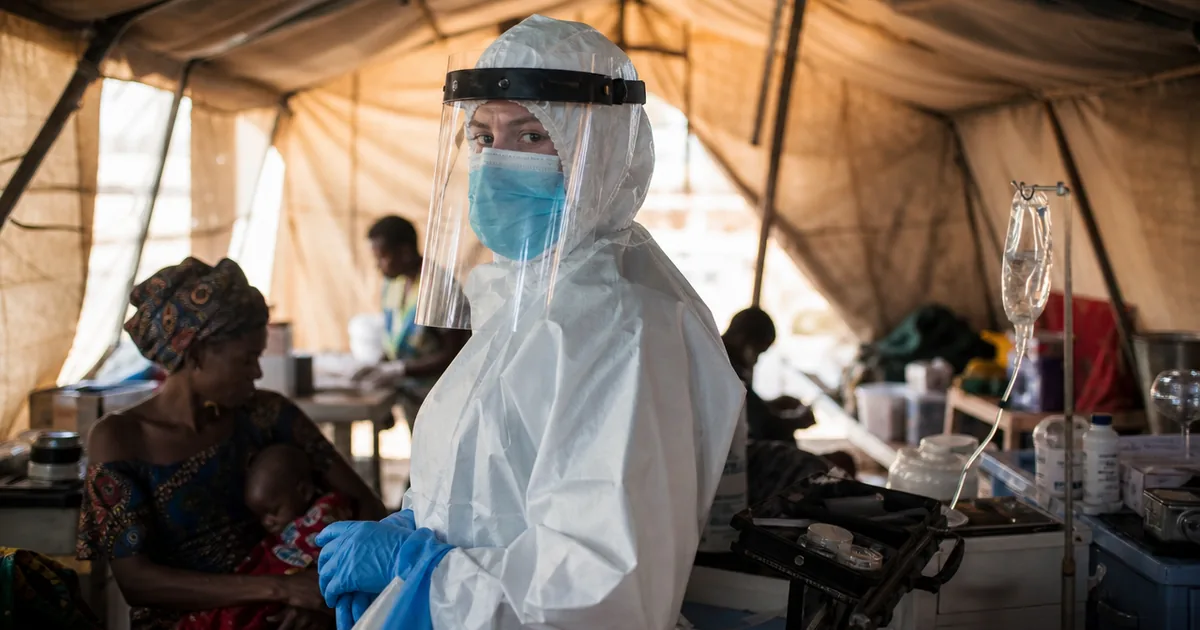
A U.S. citizen working for a humanitarian organization in the Democratic Republic of the Congo has tested positive for the Bundibugyo strain of the Ebola virus, the Centers for Disease Control and Prevention confirmed on Friday, making this the second known American infection during an outbreak that has become the fastest-growing Ebola epidemic ever recorded on the African continent.
The CDC said it is working with the patient’s employer and federal agencies to prevent further transmission and identify high-risk contacts.
The Outbreak by the Numbers
The scale of this epidemic is difficult to overstate. As of mid-July, the DRC has reported 1,830 confirmed cases and at least 648 deaths, according to the CDC’s situation summary. The outbreak, which was first reported on May 14 in the DRC’s Ituri Province, has defied early containment efforts and spread across provincial borders, with cases also appearing in neighboring Uganda.
What makes this outbreak particularly challenging is the pathogen itself. The Bundibugyo ebolavirus is a different species from the Zaire ebolavirus, which is the strain that existing approved treatments were designed to combat. That means the therapeutic toolkit that worked during the 2014-2016 West Africa epidemic and the 2018-2020 DRC outbreak is not directly applicable here. Doctors are essentially fighting with one hand tied behind their back.
The American Cases
The first American to contract the virus during this outbreak was Dr. Peter Stafford, a Christian missionary physician who tested positive in May and was evacuated to a hospital in Berlin, Germany. After weeks of treatment, he recovered and returned to the United States with his family, who had been quarantined separately, in June.
Details about the second patient remain scarce. The CDC has not released the person’s name, the specific organization they work for, or their current treatment location. What is clear is that humanitarian workers operating in the outbreak zone face enormous personal risk, even with protective protocols in place.
The U.S. Response
The federal response has been aggressive on the border-control front. In May, the CDC imposed a 30-day prohibition on non-Americans entering the United States if they had been in the DRC, Uganda, or South Sudan within the previous 21 days. That ban was quickly extended to green card holders, and all returning U.S. citizens from those countries were required to enter through Washington Dulles International Airport for screening.
Those measures reflect a level of caution that is well beyond what the WHO initially recommended, and they have drawn criticism from public health experts who argue that travel restrictions can discourage the kind of transparent case reporting that makes outbreaks controllable. The tension between domestic political pressure to “keep it out” and the epidemiological reality that outbreaks end at their source, not at the border, is a familiar one. It played out during COVID, during Ebola in 2014, and it is playing out again now.
What Comes Next
The trajectory of this outbreak depends almost entirely on whether the international response can scale faster than the virus. The Bundibugyo strain has a lower case fatality rate than Zaire Ebola, roughly 35% compared to 60-90%, but it spreads through the same mechanisms: direct contact with bodily fluids, contaminated surfaces, and the bodies of the dead. In communities where traditional burial practices involve washing and touching the deceased, those transmission routes are extraordinarily difficult to interrupt.
The CDC maintains that the overall risk to the American public remains low. That is technically accurate. But with humanitarian workers continuing to operate in the outbreak zone and commercial travel still flowing between Central Africa and the rest of the world, “low” is not the same as “zero.” The second American case is a reminder that the distance between Ituri Province and any major American city is about 20 hours of flight time and one asymptomatic incubation period.