
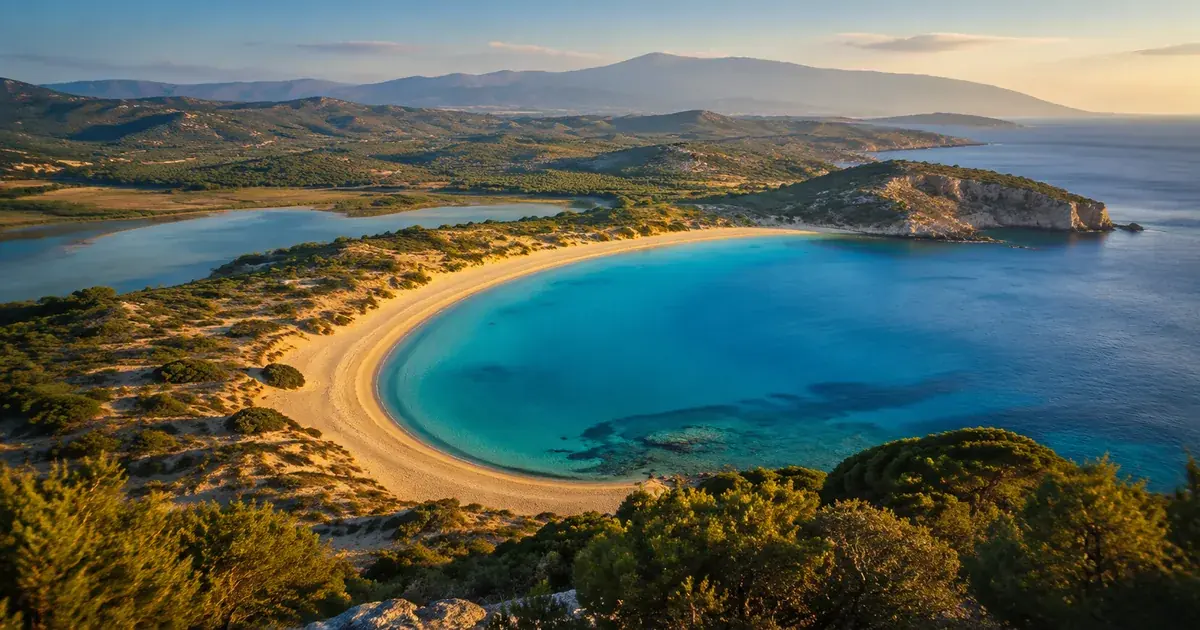
Costa Navarino works best as the soft landing, or the closing chapter, of a Peloponnese trip. It sits in Messinia, down in the southwest Peloponnese, between the Ionian Sea and the mountains. That location gives a Greece travel itinerary some balance.
You can open with Athens, wind through the ancient sites, roll past olive country and stone towns, then finally slow down by the coast.
The plan works because Costa Navarino sits near Pylos, Gialova, Voidokilia, Kalamata, Ancient Messene, and the Palace of Nestor. It’s not just a beach base. It’s a genuinely useful stop if you want history, food, golf, family time, sea views, and an easy rest after long stretches of road. And it’s one of the better ways to see Greece that isn’t only islands.
Why Costa Navarino Belongs in a Greece Plan
A strong Peloponnese route needs contrast. Athens gives you museums, Acropolis views, and city buzz. Argolis brings Mycenae, Tiryns, Nafplio, and Epidaurus. Laconia has Mystras, Sparta, Monemvasia, and Mani. Messinia then hands you open coast, olive groves, castles, wetlands, and wide beaches.
Costa Navarino slots into that pattern because it’s a base with reach in both directions, nature and culture. Pylos is close for harbor walks and Navarino Bay views. Voidokilia Beach and Gialova Lagoon are made for slow mornings. Ancient Messene and the Palace of Nestor bring serious history without a trek across the whole peninsula.
The stay also fixes your pace. A lot of Greece trips move too fast, and a single night in each town wears you down. Add two or three nights in Messinia and the plan gets room to breathe. It also keeps the Peloponnese in play instead of pulling you back to Athens too soon.
Getting to Messinia
Kalamata International Airport is the nearest way in by air. It sits about 45 km from Navarino Dunes, and about 40 km from Navarino Bay and Navarino Hills. Flight schedules shift with the season, so lock in your dates before you commit to a first or last night here.
Road travel works too. Plenty of visitors come into the Peloponnese from Athens through Corinth, then head south and west. Others fly into Kalamata and build the route in reverse. And if you need a faster transfer, a helicopter charter to Costa Navarino can link the coast to other parts of Greece while leaving more time for the trip itself.
The right call depends on the shape of your route. A one-way plan from Athens to Kalamata saves you backtracking. A loop makes sense when your international flights start and end in Athens. Either way, a rental car helps most, since the beaches, villages, and sites of Messinia are spread out.
Where It Fits Best
Costa Navarino tends to land better after the hard sightseeing than before it. Most people do Athens first, then the eastern Peloponnese for classic ancient Greece. After days of walking ruins and old towns, the Messinian coast feels like the pause you’ve earned.
From Athens to Argolis
The opening leg can take in Athens, Corinth, Nafplio, Mycenae, Tiryns, and Epidaurus. Mycenae and Tiryns are UNESCO-listed sites rooted in the Mycenaean world, while Epidaurus is tied to the ancient cult of Asklepios and its famous theatre. Nafplio then gives you a calm harbor base with easy reach to everything nearby.
From Mani to Messinia
After Argolis, the road can bend toward Mystras, Monemvasia, and the Mani peninsula. Mystras is a UNESCO site near Sparta, known for its Byzantine town climbing a hillside. Mani adds towers, coves, and stone villages. From there, the drive toward Kalamata and Messinia makes the move into Costa Navarino feel easy.
A 7- to 10-Day Route That Works
A balanced version opens with 2 nights in Athens. The next 2 sit in Nafplio, for Mycenae, Tiryns, Epidaurus, and the old town. Add 1 night near Mystras or Monemvasia for the medieval layer, then 1 in Mani for the wilder south. Close with 3 nights at Costa Navarino, for the beaches, Pylos, Voidokilia, and the food. If you are short on time, booking platforms like Hoper can take some of the transfer pressure off your itinerary by offering fast air links between regions.
Got more days? Add Olympia before or after Messinia. It sits in a Peloponnese valley and grew into a major center for the worship of Zeus back in the 10th century BC. That makes it a strong last culture stop before you head back to Athens or fly out of Kalamata.
Don’t plan it like a race. The Peloponnese runs on mountain roads, coastal bends, and small towns where parking eats a few minutes. A smart Costa Navarino itinerary leaves gaps between the big sites. It also treats beach time and long meals as part of the plan, not leftovers.
What to Do Around Costa Navarino
The area around Costa Navarino earns its keep because the main day trips sit so close together. Pylos is great for a short town wander, a bay view, and some castle history. Methoni and Koroni are worth adding for their Venetian fortresses and seaside lanes, though both need time and shouldn’t get crammed into the same day as Ancient Messene.
Food is another reason to keep Messinia on the map. Meals here lean on olive oil, olives, greens, fish, and simple grilled plates. Kalamata is olive country through and through, so a town meal or a quick market stop adds a real local layer to the route. That’s what keeps the itinerary feeling less like a checklist and more like an actual mainland Greece trip.
Families can keep the days short by pairing one main outing with pool or beach time. Couples can run the same base for quiet coast days and sunset drives. Culture-minded travellers can pour more hours into Ancient Messene, the Nestor sites, and Pylos, then hold the late afternoon for the sea. You get all of it without switching hotels every night, which is exactly why the stop suits mixed groups running on different energy levels.
Voidokilia Beach is one of the best-known natural sights in Messinia. It’s a fine sand crescent shaped like the Greek letter omega, with views over Gialova Lagoon from the old castle area. There are no real facilities out there, so come with water, shade, and some respect for a protected setting.
Gialova Lagoon is the one for birdlife and gentle walking. The Palace of Nestor, a key Mycenaean site near Pylos, is the best-preserved Mycenaean palace in Greece. And Ancient Messene, spread out below Mount Ithome, is another heavy hitter that can eat up half a day or more.
How Many Nights to Stay
Two nights cover it if all you want is rest, one beach, and a quick look at Pylos. Three is the sweet spot for most Peloponnese plans, enough for an arrival day, a nature and coast day, and a history day. Four suits families, golfers, slow-travel fans, and anyone folding in Methoni, Koroni, or Ancient Messene without the rush.
Match the length to the wider Greece plan. If your trip already has islands, Costa Navarino can swap in for one island stop as a mainland coast stay. If it’s all mainland, it becomes your main sea break. Either way, you vary the route without taking on ferry stress.
Best Season and Simple Travel Tips
Late spring and early autumn are usually the easiest windows for a Peloponnese and Costa Navarino itinerary. The weather beats peak summer for walking, the beaches still deliver, and the historic sites feel more manageable. Summer is great for a sea-focused trip, just start the sightseeing early.
Plan your visits by region. Ancient Messene pairs with Kalamata or a wider Messinia day. The Palace of Nestor goes with Pylos and Voidokilia. Mystras belongs with Sparta or the road between Laconia and Messinia. Olympia needs its own slot, since it sits farther northwest.
The core rule is simple. Don’t treat Costa Navarino as an isolated resort stop. It works best as the Messinia anchor inside a larger Greece itinerary, giving the trip a softer pace, a strong coastal base, and access to the places that explain why the Peloponnese is one of the richest mainland regions in Greece.