
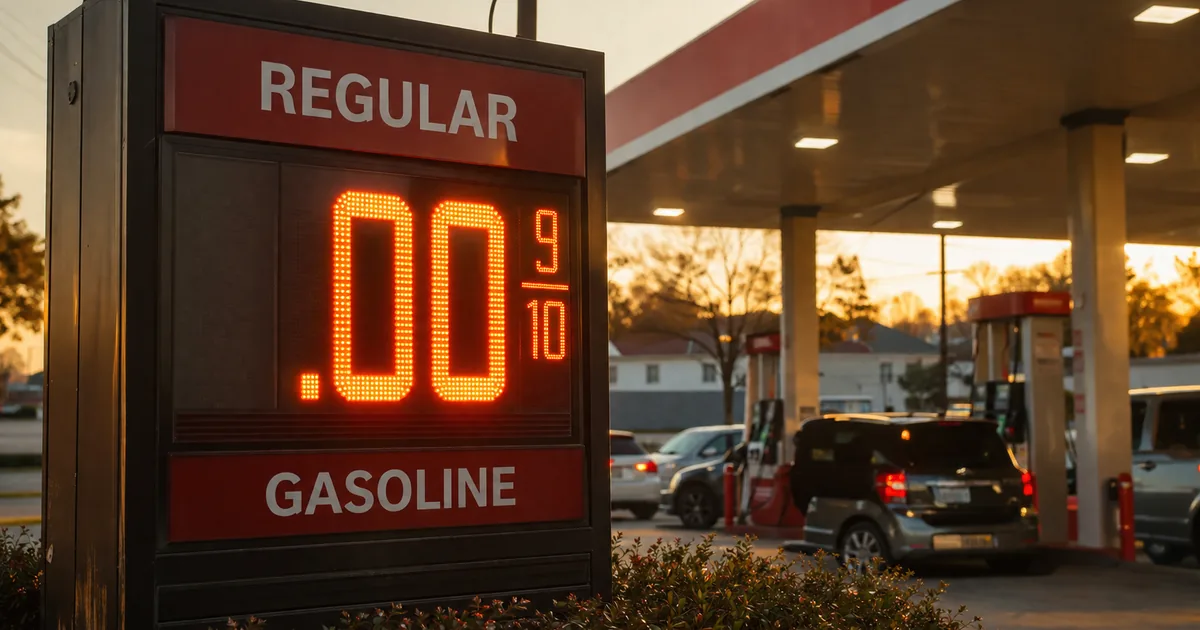
The national average price of gas crossed $4 a gallon on Monday for the first time in four years, driven by renewed fighting between the United States and Iran that has choked off oil flowing through the Strait of Hormuz.
For American consumers who briefly caught a break during the summer ceasefire, the price at the pump just became the most tangible reminder that this war has a domestic cost.
How the Price Got Here
The math is blunt. Before the Iran conflict, the national average sat around $2.98 a gallon. The Strait of Hormuz, the narrow waterway connecting the Persian Gulf to global markets, normally carries roughly 20% of the world’s energy supply. When Iran shut it down earlier this year, prices spiked. A ceasefire in June brought partial relief as some tanker traffic resumed.
That relief is over. The ceasefire collapsed in mid-July, and Iran resumed attacks on commercial shipping in the strait. Brent crude climbed to nearly $80 a barrel on Monday, and NBC News reported that oil has surged more than 15% in a single week. West Coast states are already averaging above $5, and JPMorgan warned that if the conflict drags on, $5 could become the national norm.
The Compounding Problem Nobody Talks About
The Iran disruption is not the only force pushing prices higher. Ukraine’s recent drone campaign against Russian refineries has forced Russia to import gasoline for the first time in years, removing a major seller from global fuel markets at exactly the wrong moment. The two conflicts are feeding each other: less Iranian crude flowing through Hormuz and less Russian refined fuel on the market creates a supply crunch with no easy relief valve.
OPEC has signaled it will not increase production quotas to compensate, and the U.S. Strategic Petroleum Reserve, which the Biden administration tapped in 2022 to cushion prices, remains at historically low levels after the Trump administration paused refill purchases amid budget disputes.
What $4 Gas Actually Costs Families
The headline number understates the squeeze. UBS warned Monday of what it called “economic gravity” catching consumers, noting that gasoline spending as a share of household income is now at its highest point since 2014. A family driving 12,000 miles a year in a vehicle averaging 25 miles per gallon is paying roughly $1,920 annually at $4 a gallon, up from $1,430 before the war began. That is nearly $500 in lost purchasing power, money that is not going to restaurants, retail, or savings.
The burden falls hardest on lower-income households and rural communities where driving is not optional and public transit does not exist. These are the same communities that were already stretched by food price inflation that has not fully receded from the post-pandemic spike.
The Political Pressure Is Building
For the Trump administration, $4 gas is a political problem with no clean answer. The president campaigned on energy dominance and low fuel costs, and his approval ratings on the economy have been closely tied to pump prices since 2024. Expanding the war, which administration officials discussed in a Situation Room meeting last week, could further disrupt supply. De-escalating requires diplomatic concessions the president has publicly ruled out.
Congressional Republicans who backed the war authorization are hearing from constituents in swing districts where the ceasefire collapse and rising prices are becoming a single story. Senate Republicans reversed course on war powers earlier in June after a contentious shouting match on the floor, but the price pressure may force the conversation back open.
Where Prices Go From Here
The trajectory depends on one variable: the Strait of Hormuz. If commercial shipping remains disrupted through August, analysts expect the national average to hold above $4 and potentially push toward $4.50. If Iran and the U.S. reach another ceasefire and tanker traffic resumes, prices could retreat to the mid-$3 range within weeks.
Neither outcome is in the hands of American consumers, who are paying a war premium on every tank of gas while Washington debates whether to escalate or negotiate. The last time gas averaged $4 nationally was the summer of 2022, and it cost the party in power dearly at the polls. Whether history repeats depends on how long the strait stays closed.