
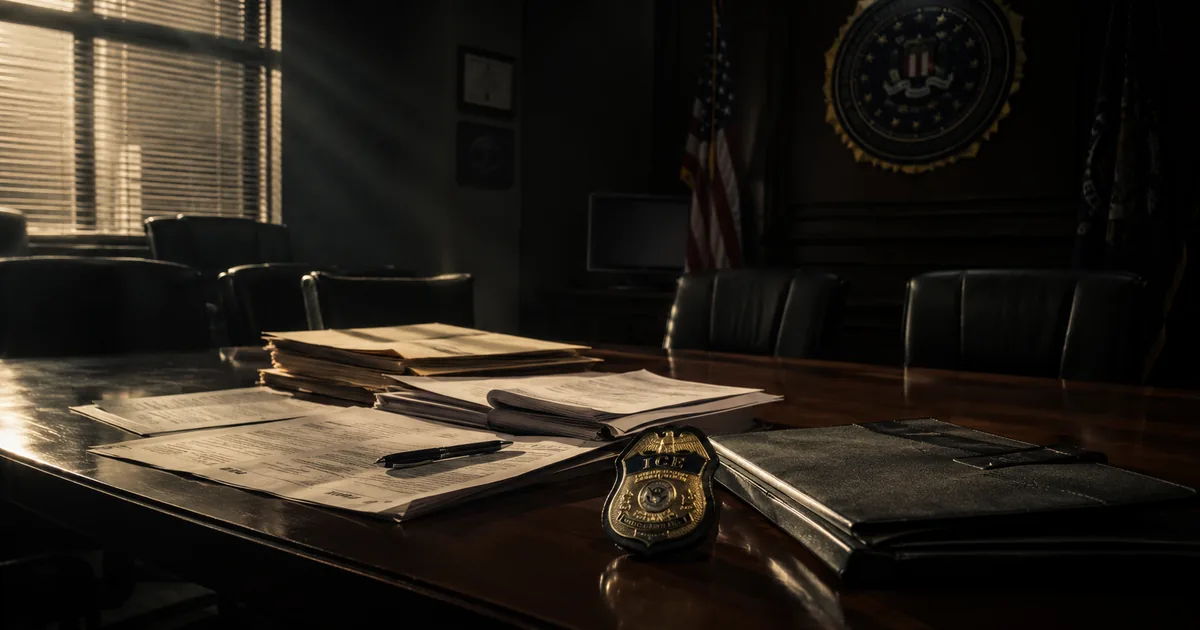
The FBI has been directed to stop investigating confrontations involving Immigration and Customs Enforcement agents, including at least three fatal encounters, NBC News reported over the weekend.
The move effectively hands oversight of ICE-involved killings to the very agency whose officers pulled the trigger, and it lands at a moment when the Trump administration’s immigration enforcement operation is under intense scrutiny for its growing body count.
What the Directive Actually Says
FBI managers across the country received written notice on Thursday informing them that the bureau would no longer handle assault-on-federal-officer investigations involving Department of Homeland Security personnel. Previously, when an ICE agent claimed they were assaulted during an enforcement action, the FBI independently investigated, a standard practice designed to ensure that one agency does not grade its own homework.
Under the new arrangement, those investigations would fall to Homeland Security Investigations, an investigative arm housed within ICE itself. The problem is obvious: HSI reports up through the same DHS chain of command as the agents it would now be tasked with scrutinizing. That is not oversight. That is a mirror.
The Department of Justice and DHS issued a joint statement insisting “the relationship between DHS and DOJ in investigating assault on federal officer cases has not changed.” But CBS News confirmed that some FBI agents were indeed told to stand down, and multiple sources described the written directive to reporters at the New York Times, CNBC, and the Philadelphia Inquirer.
Three Fatal Shootings in Six Months
The timing of this policy shift matters because of what the FBI was actively investigating when the directive landed.
In Houston on July 7, ICE agents killed Lorenzo Salgado Araujo, a Mexican immigrant who had lived in the United States for more than 30 years, during a traffic stop while he was driving to work. He was not the target of the ICE operation. Witnesses have disputed the agents’ account of the encounter, and the case had triggered an FBI inquiry.
In Biddeford, Maine on July 13, an ICE agent shot and killed a Colombian man who was also in his vehicle during an enforcement action. That shooting was also under FBI review.
A third fatal encounter, the Minneapolis ICE shooting in January, had already provoked nationwide protests. In each case, the FBI’s involvement provided the only external check on whether ICE agents’ use of force was justified.
Why This Is Really About Shielding the Operation
The structural reason for pulling the FBI out is straightforward: evidence gathered during assault investigations can later be used in civil rights prosecutions against the officers involved. If the FBI investigates and finds that an ICE agent fabricated or exaggerated an assault claim to justify a shooting, that finding becomes a legal liability for the administration’s entire enforcement apparatus.
By shifting these investigations in-house, the administration eliminates the independent evidence trail. HSI investigators who answer to the same DHS leadership overseeing the deportation operation have no institutional incentive to find that their colleagues acted improperly.
Acting Attorney General Todd Blanche said in a CNN interview in May that it is “abhorrent to ever, ever touch a law enforcement officer” and pledged federal prosecution for anyone who does. But his DOJ’s actions suggest the priority runs in one direction: protecting the agents, not scrutinizing them.
The Accountability Gap Gets Wider
This is not happening in isolation. The administration has steadily dismantled external checks on immigration enforcement since taking office. Inspector general investigations have been slow-walked. Congressional oversight requests have gone unanswered. Local police departments that once cooperated with ICE have pulled back after several of these fatal encounters drew community outrage.
The result is an enforcement operation with expanding authority, lethal force incidents that are increasing in frequency, and now, no independent investigator examining whether any of it is lawful.
Civil liberties organizations responded sharply. The ACLU called the reported policy “a green light for impunity.” Immigration advocates pointed out that two of the three people killed were not even the intended targets of the ICE operations that took their lives.
What Happens Next
The DOJ’s public denial creates an unusual test. If the FBI’s field offices resume investigating the next ICE confrontation as if nothing changed, the administration’s statement holds. If new assault allegations go uninvestigated, or if records requests related to the Houston and Maine shootings are blocked, the written directive will have spoken louder than the press release.
The families of the men killed in Houston and Maine are watching. So are the federal agents who received those written instructions. The gap between what the government says and what it does has never been wider on immigration enforcement, and the people who could close that gap just got told to stand down.