
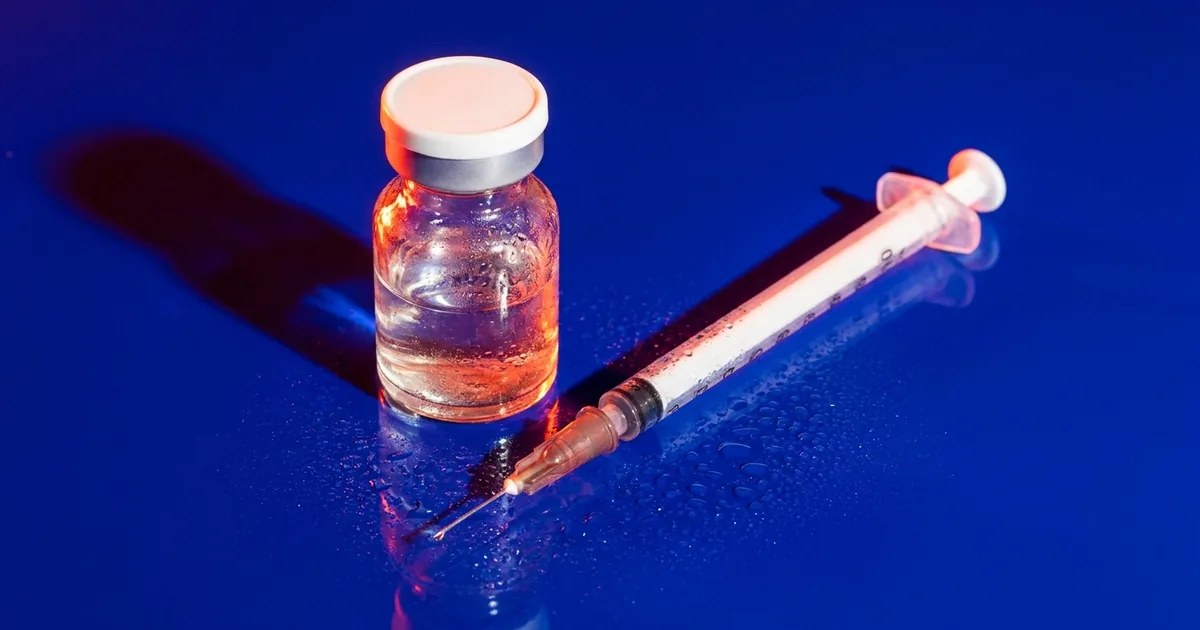
Health Secretary Robert F. Kennedy Jr. signed a policy this week that tells the Food and Drug Administration to stand down when licensed pharmacies compound six peptides the agency has never approved, and here is what is established before anyone argues about it:
- The six are BPC-157, TB-500, KPV, MOTS-c, Semax and Epitalon. None is an approved drug anywhere in the United States.
- The FDA put all six in its “Category 2” bucket of compounding substances that “may present significant safety risks” in September 2023.
- In July, the FDA’s advisory committee voted to recommend them anyway. The BPC-157 vote was 8 to 6 with one abstention. FDA staff had recommended against every one.
- The policy is signed by the HHS secretary, not the FDA commissioner, and takes effect while the formal rulemaking that would normally decide this is still pending. Comments close two weeks after it publishes in the Federal Register on October 30.
- Most FDA scientific staff opposed the plan and had little input in drafting it, six people told the Associated Press.
What the coverage has not done is read the two documents against each other. We did. The FDA’s own Category 2 page, which the agency says is current as of April 22, 2026, still carries its safety language for each of the six. The HHS policy’s Appendix B answers that language peptide by peptide, and the answers are the story.
Take BPC-157, the one Kennedy has said he injected for a muscle injury. The FDA’s entry reads: “FDA has identified no, or only limited, safety-related information for the proposed routes of administration. Therefore, the agency lacks sufficient information to know whether the drug would cause harm when administered to humans.” HHS’s reply, in its own Appendix B, is that “historical use is now documented and quantified,” that a lot-specific certificate of analysis from a registered factory now exists, and that the policy’s testing conditions “address the risks.” Note what is and is not in that answer. A certificate of analysis tells you what is in the vial. It does not tell you what the thing in the vial does to a person. The FDA’s objection was the second question. HHS answered the first.
TB-500 is starker. The FDA says it “has not identified any human exposure data” for the compound at all. HHS concedes the point and then reframes it: “the safety concerns CDER identified are inferential rather than observed.” That is the agency’s drug-evaluation center being told that a concern does not count until somebody has been hurt. KPV gets the same treatment. The FDA says it has “not identified any human exposure data on drug products containing KPV administered via any route.” HHS: “CDER’s safety conclusion reflects an absence of information rather than an observed signal.” Which is to say, yes, there is no data, and no data is not a reason to wait.
We would put it the other way. No data is the reason you wait. That is what the approval process is for, and it is why the FDA keeps a list of substances it will not let pharmacies mix in bulk until someone has done the work. The HHS policy does not do the work. It redefines the absence of it as a procedural inconvenience and tells the agency not to enforce.
What does “enforcement discretion” actually mean here?
The peptides are not approved and are not being approved. Compounding them remains outside the conditions of Section 503A of the Food, Drug and Cosmetic Act. The policy says HHS “does not intend to take enforcement action” against a state-licensed pharmacy or physician that compounds them, provided ten conditions are met: the raw peptide comes from an FDA-registered factory with a certificate of analysis, the product contains a single active ingredient, serious adverse events are reported to MedWatch, the label says “This is a compounded drug product. Not for resale,” only a cleared syringe is co-packaged, and a patient-specific prescription exists. It applies to small 503A pharmacies, not the larger 503B outsourcing facilities. HHS says it “may revisit” the policy if a safety signal appears, which is the mechanism in reverse: harm first, then review.
Who decided, and who was left out?
The policy was signed by Kennedy and issued by the Office of the Secretary, docket HHS-OASH-2026-0496. The FDA commissioner’s name does not appear on it. Its stated basis is the July 23 and 24 Pharmacy Compounding Advisory Committee meeting, where members voted to recommend the six despite the FDA briefing document concluding there was a “lack of evidence to support the effectiveness” of BPC-157 and three adverse event reports on file. One member who voted yes, David Pope, said it was “time to put this decision back in the hands of the physician and pharmacist.” One who voted no, Elizabeth Rebello, said “there are too many unknowns about this product.” TIME reported that some committee members had consulted for or been employed by companies with an interest in peptides. A seventh peptide, emideltide, was not included.
What is each peptide being sold for?
Per the nominations the committee reviewed: BPC-157 for ulcerative colitis, KPV and TB-500 for wound healing, MOTS-c for metabolic conditions, Semax for migraine, Epitalon for insomnia. The policy’s own route restrictions tell you how thin that is: HHS allows BPC-157 as an injection, a capsule or a cream, while admitting in the same document that “achieving adequate oral bioavailability of peptides is inherently difficult and complex” and leaving it to the pharmacist to keep documentation showing the pill does anything. Compounded versions are already being priced at $199 to $249 a month per peptide, and Hims stock rose 5 percent on the announcement.
The argument for the policy deserves to be stated as its backers state it. Kennedy’s own words, in the document: the policy “will discourage the continued, widespread use of certain research-use-only peptides supplied by foreign manufacturers that pose a safety risk to US patients,” and gives people “a more controlled alternative.” The gray market is real. Vials labeled “for research use only” ship from overseas to American gym bags every day, nobody tests them, and a pharmacy that has to buy from a registered factory and report bad outcomes is, on paper, safer than that. Scott Brunner of the Alliance for Pharmacy Compounding called it a “more accountable alternative.” Lee Rosebush of the American Academy of Peptide Medicine called it “a vital step toward eliminating unsafe gray and black markets.”
Here is the problem with that argument, and it is in the FDA’s own list. The agency’s Category 2 entries are not about purity. The entry for BPC-157 does mention “peptide-related impurities,” but the operative sentence in every one of the six is about whether the compound harms people, and the policy’s conditions do nothing to answer it. Certificates of analysis, single-ingredient vials and MedWatch forms are quality controls for a drug whose effects are known. For a drug whose effects are not known, they are a way of making sure the unknown thing is at least consistent from batch to batch. Georgetown’s Adriane Fugh-Berman said it plainly to TIME: these are “untested and poorly characterized experimental drugs that should not be allowed in compounded products.” Public Citizen’s Robert Steinbrook said Kennedy “has undermined the FDA and threatened public health.”
The procedural shortcut is the part that should worry people who have never heard of BPC-157. Congress wrote Section 503A so that substances get onto the bulks list through rulemaking, with the advisory committee consulted and the United States Pharmacopeia consulted and the FDA’s scientists writing the memo. That process was underway. The committee had voted. The agency was due to decide. Kennedy did not wait for the agency; he issued a policy in the secretary’s name telling the agency what not to do while its own process runs, which means the process now exists to ratify a decision already made. Two weeks of comment on a notice of availability is not rulemaking. It is a courtesy.
LNC covered the July committee vote and said then that a non-binding panel recommendation over staff objections was not the same as a safety finding. We were right, and this week shows why it mattered: the vote has now been used as the sole scientific basis for a policy the scientists opposed. The secretary of health is a man who has told a podcast audience he injects one of these compounds himself. That is a testimonial. The FDA exists so that testimonials are not how the country decides what goes in a syringe.
What should happen is not complicated. The FDA should finish the rulemaking it started and publish its scientists’ memo in full, so that the public can see the evidence the committee overrode. Congress should ask the commissioner, on the record, whether he agreed with this policy or was told about it. And a pharmacy thinking about stocking BPC-157 in the next sixty days should read Appendix B first, because the document that frees it from enforcement also puts its name on the MedWatch form when the first patient comes back with a problem the FDA warned about in 2023.