
“We’re just keeping it the status quo.” Donald Trump, at the White House, Nov. 9
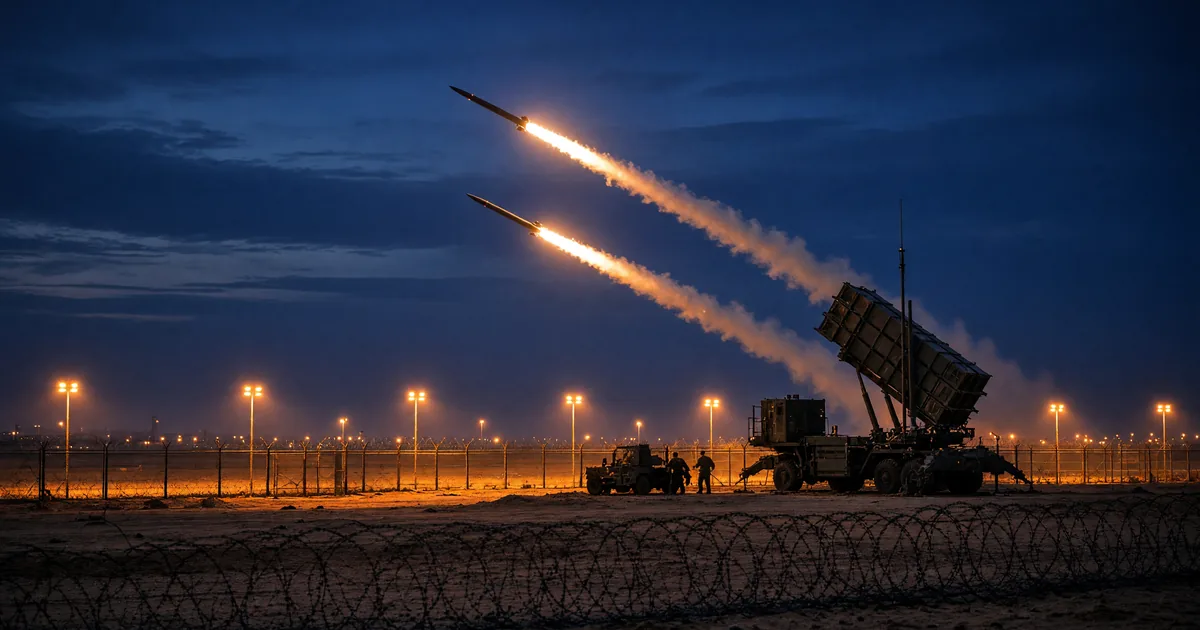
Kuwait’s military told the public on Wednesday that its air defenses were “responding to hostile drone threats.” Iran’s army said the drones were aimed at Patriot batteries and launch platforms at Ali Al-Salem Air Base.
It was the first reported Iranian attack on Kuwait since September. It came nine days after Trump said the Iran war was “effectively over” and described what was left as “the status quo.”
Wire copy gives you each side’s account of the last 24 hours. What it leaves out is how long that status quo has been running, and what it has contained. We counted.
What Each Side Says Happened
Nobody has published an independent damage assessment, so these are claims, labeled by who made them.
- The strike. A US official told AFP that fighter jets “used precision munitions to strike” a Revolutionary Guard missile launch site on Qeshm Island, a response to Iranian “aggression targeting US personnel and assets.” Iranian media quoted a provincial official saying the strike damaged no homes, businesses or infrastructure.
- Bahrain. Its armed forces said they “confronted, intercepted and destroyed a number of treacherous Iranian aerial attacks today.” The Guard said its drones went after a US-operated radar at Sheikh Isa Air Base, and that it had captured a US drone south of Qeshm.
- Kuwait. Its foreign ministry called the attack “a dangerous escalation” and said it reserved the right to take necessary measures to protect its territory. Kuwait’s military had not reported damage at the base.
- The day before. US Central Command said Tuesday’s Iranian drones, fired at a US radar in Bahrain, were intercepted with no American equipment damaged and no one hurt, and rejected Tehran’s claim of success.
- A tanker. The Abu Dhabi National Oil Company said one of its ships was attacked Tuesday evening in the Strait of Hormuz. One crew member is unaccounted for, 11 are injured, and ADNOC did not say who did it.
Saudi Arabia condemned the attacks on Kuwait and Bahrain. Iran’s army commander-in-chief, Amir Hatami, warned that Iran would answer further US attacks more forcefully and without geographical restrictions.
What Nine Days of “Status Quo” Added Up To
Here is the arithmetic. The war began Feb. 28, which makes today day 263. The US restored its naval blockade of Iran on July 14, so the blockade is 127 days old. Trump’s sentence is nine days old.
In those nine days the US has hit Iranian territory at least once, Iran has said it attacked US sites in Bahrain and Kuwait, and a tanker crew has been left injured or missing. By CBS’s tally, Tuesday’s radar attack was the third attempted Iranian strike on a US installation in five days.
Qeshm is not new to this. We covered US strikes on the same island the night before the midterms, when Trump was saying oil was falling because the war was off.
The deal-room view is simple. The blockade is Washington’s leverage and the Gulf bases are Tehran’s. Kuwait and Bahrain are the counterparties who never signed anything and take the incoming fire.
Qatar’s foreign ministry said Qatari and Iranian officials met Tuesday on proposals to narrow the gap between Tehran and Washington. No agreement has been announced.
We think “effectively over” has failed its own test. A war in which US jets hit an Iranian island, drones come at two allied air bases and a tanker crew goes missing is not over by any measure except the one the White House picked. Calling a blockade the status quo does not make it a peace.
The costs of that wording are not spread evenly. They fall on host countries that did not choose this fight, and on seafarers in a strait where monitoring agencies report near-daily ship attacks.
What to watch:
- Whether Kuwait acts on its reserved right to take “necessary measures,” or leaves the response to Washington.
- Whether the Qatar channel produces a proposal that touches the blockade, which Tehran lists among its conditions.
- Whether the missing ADNOC crew member is found, and who claims the attack.
- Whether Hatami’s warning of a response without geographical restrictions shows up anywhere beyond the Gulf.