
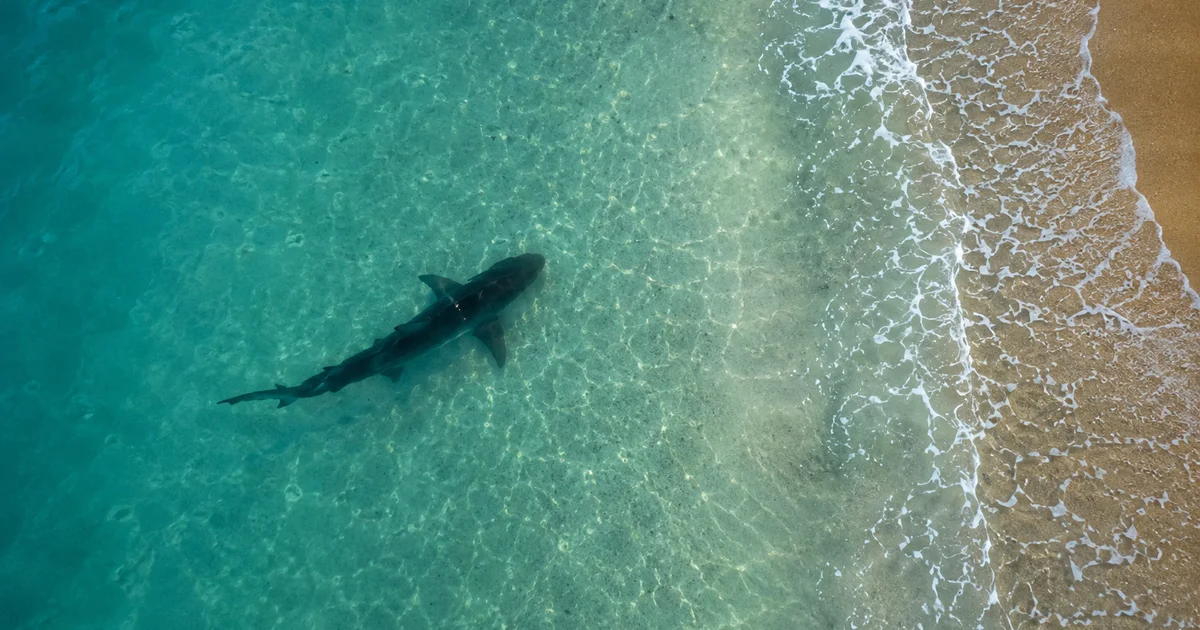
A drone operator filmed a 10-foot great white shark gliding within feet of a group of children playing in the shallow surf off Southern California, and the kids had no idea it was there.
The footage, posted Monday by photographer Carlos Gauna, is the kind of video that makes you want to never go in the ocean again, and marine scientists say this summer is shaping up to be the sharkiest the West Coast has seen in years.
What the Video Shows
Gauna, known online as The Malibu Artist, captured the footage using a drone while positioned roughly a mile from the swimmers. In the clip, which has since gone viral across social media, a juvenile great white moves slowly and deliberately toward a group of young swimmers splashing in waist-deep water. The children appear completely unaware of the shark’s presence.
“This shark was a lot bigger than those kids,” Gauna told Good Morning America. He is one of the most prolific drone operators documenting shark behavior in Southern California, with work featured on the National Geographic Channel and Discovery’s Shark Week. His Instagram account @themalibuartist regularly posts aerial shark encounters, and KTLA reported that this encounter was among the closest calls he has ever documented.
The shark did not make contact with any of the swimmers and eventually moved on. No injuries were reported.
Why Scientists Are Calling It a ‘Sharky Summer’
The encounter is not an isolated incident. Dr. Chris Lowe, director of the Shark Lab at California State University, Long Beach, has been warning since spring that 2026 would bring an unusually high concentration of juvenile great whites to shallow coastal waters. The culprit is a combination of Super El Nino conditions and persistent marine heatwaves that have pushed ocean temperatures along the Southern California coast to levels more typically seen in Baja Mexico.
Warmer water draws the prey species that juvenile great whites feed on, including stingrays, bat rays, and small fish, into the same shallow zones where beachgoers swim. The sharks follow the food. TMZ reported that lifeguards at several Southern California beaches have increased aerial drone patrols this summer specifically because of the elevated shark activity, a practice that was uncommon just five years ago.
The pattern is consistent with what marine biologists have been tracking for years. As ocean temperatures rise, the “nursery” zones where juvenile great whites spend their first few years of life are shifting northward. Beaches that rarely saw sharks a decade ago are now part of the regular habitat range for young white sharks during summer months.
Drones Changed Everything About Shark Encounters
What makes this video possible, and what has fundamentally changed public awareness of marine life behavior near populated coastlines, is the consumer drone revolution. Before affordable drones, most shark encounters near shore went entirely unnoticed. Swimmers rarely see sharks from water level, and beach patrols on foot or in towers have limited visibility.
Gauna and a growing community of drone operators have revealed just how frequently sharks swim near people, and the footage consistently shows the same thing: the sharks are not hunting humans. They are navigating their habitat, eating their normal prey, and mostly ignoring the people around them. The encounters look terrifying from above. From the shark’s perspective, they are uneventful.
That does not make them safe. A juvenile great white is still a large predator, and the risk of an accidental bite during a close encounter is real, even if unprovoked attacks remain statistically rare. The California Department of Fish and Wildlife recorded 10 shark incidents along the state’s coast in 2025, none of them fatal, but any contact with a 10-foot shark in shallow water can produce serious injuries.
What Beachgoers Should Actually Do
Marine scientists consistently recommend the same precautions: avoid swimming at dawn and dusk when sharks are most active, stay out of the water near seal colonies or schools of baitfish, and exit immediately if a lifeguard clears the beach. The drone footage from this summer suggests an additional layer of awareness. If a beach has an active drone patrol, the operators are watching for exactly the kind of encounter Gauna filmed. They are the early warning system.
For parents watching this video and wondering whether it is safe to take their kids to the beach this summer, the answer from the scientists is yes, with awareness. The ocean has always had sharks in it. What has changed is that now we can see them.