
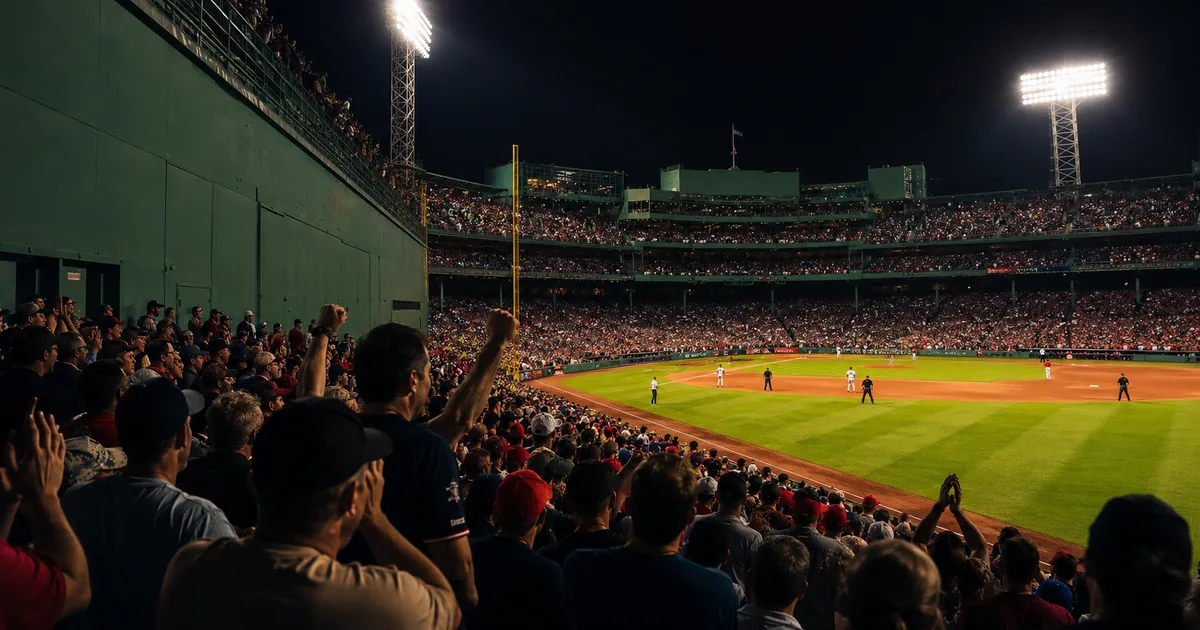
The Baltimore Orioles beat Boston 5-1 on Wednesday night and ended the longest winning streak Major League Baseball has seen in five years.
Hours earlier, the Red Sox had won the opener of the doubleheader 6-3 to run the streak to 15 and match a franchise record that had stood for 80 years.
One Win Short of History Nobody Saw Coming
The near-miss is the part that stings in Boston this morning. Fifteen straight wins tied the club record set by the 1946 Red Sox, a team led by Ted Williams that ran away with the American League pennant. Sixteen would have stood alone in the franchise’s 125-year history, and the nightcap of a home doubleheader was the chance to do it. Instead, the Boston Globe chronicled how a team left for dead in June ran off three weeks of baseball its own fans could barely believe.
That is the real headline here, not the loss. On July 1 the Red Sox dropped a 10-2 clunker to Washington at Fenway and looked like a team playing out the string. They did not lose again for three weeks. MLB.com noted the run was the majors’ longest since the Cardinals also won 15 straight in September 2021, and it transformed Boston’s season from an afterthought into a genuine playoff push almost overnight.
Why Streaks Like This Matter More Than One Loss
Baseball’s regular season is a 162-game grind engineered to punish extremes, which is exactly why a 15-game streak is so rare. You need the rotation to stay healthy, the bullpen to hold every late lead, the lineup to keep producing through the inevitable cold nights, and a nontrivial amount of luck, all at once, for three straight weeks. Teams with championship rosters routinely fail to string together eight.
The streak also rewrote Boston’s math. Three weeks ago the conversation was about which veterans to sell at the trade deadline. Now the front office heads into next week’s deadline as a plausible buyer, and the difference between those two postures can shape a franchise for years. Streaks do not just bank wins. They change what a front office believes about its own team, right at the moment of maximum consequence.
And the fans got something rarer than a title run: a stretch where every single night mattered. Fenway in mid-July had October energy. For a fan base that has watched two decades swing between dynasty and teardown, a random Tuesday feeling like a playoff game is the actual product.
There is also a nice symmetry with the record they chased. The 1946 team that won 15 straight did it in the first full season after World War II, with Williams back from military service and Fenway packed with fans who had spent years without baseball that mattered. Eighty years later, the echo held up: a streak that arrived when nobody expected it, in front of a crowd that needed a reason to care in July, and got one every night for three weeks.
The Orioles Played Spoiler, and the Race Tightens
Give Baltimore its due. Walking into Fenway with the crowd smelling history and splitting a doubleheader takes nerve, and the 5-1 nightcap was never really in doubt. The Orioles have their own season to salvage, and wins over a surging division rival count double in the standings psychology of late July.
The American League East now turns into the sport’s best theater for the stretch run. Boston’s streak yanked them back into a race that looked settled a month ago, and the division’s teams beat each other up in a way that keeps every series consequential. Anyone following along without a cable package can catch the nationally televised games through the guide we keep updated for streaming TBS’s live sports coverage.
What the Last Three Weeks Actually Proved
The sober read is that streaks end and regression is undefeated. Boston will not play .900 baseball the rest of the way, and one loss to Baltimore does not tell us any more about this team than the fifteen wins did.
But the fun read is also the true one: for three weeks, the Red Sox were the best story in the sport, a left-for-dead roster that tied a record set by Ted Williams’s pennant winners. The deadline is next week, the division is alive, and Fenway will be loud into September. Whether this was a hot streak or the start of something real is exactly the question the next two months exist to answer.