
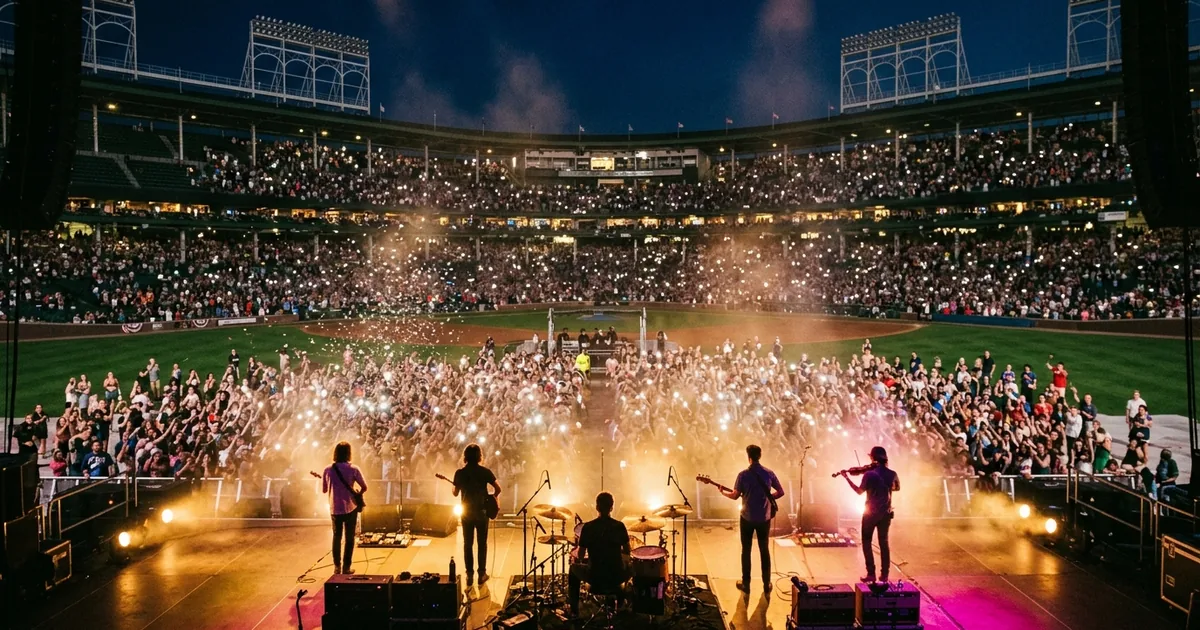
Zac Brown stopped his show at Fenway Park on Sunday night to tell a sold-out baseball stadium that he was buying every person in it a cruise.
Not a raffle, not a sweepstakes, not four lucky winners. All 35,000 of them, plus a guest each.
Then the band played “Same Boat,” which is either the least subtle segue in the history of live music or the best one, depending on how you feel about a punchline you can see coming from the bleachers.
What Actually Happened
The Zac Brown Band was closing out its fifteenth consecutive sold-out show at Fenway, a run no act has matched at the ballpark. The Boston Globe reported that Brown told the crowd he was buying every single person there a cruise for two, calling it the biggest giveaway Fenway has seen. The trips are aboard Margaritaville at Sea, redeemable on select sailings over the coming year.
The number attached to it is roughly $40 million. Hold that figure loosely. It is a retail valuation, which is the cruise industry’s most flexible unit of measurement, and the real cost to whoever is writing the check will be a fraction of the sticker. That does not make the gesture fake. It makes it a gesture with a spreadsheet behind it, which is a different and frankly more interesting thing.
The Part Almost Nobody Reported
Here is the detail that reframes the whole night. The giveaway was not invented on stage.
Margaritaville at Sea and the Zac Brown Band had already announced a cruise giveaway running across the entire Love & Fear Tour. The partnership was made public in June, and the mechanics were modest: fans text a code shown on the venue’s side screens, four winners get drawn at random after each show, each wins a cruise for two aboard the new Beachcomber, valid for departures through September 30, 2027. The official terms and conditions spell it out.
Four people a night. At Fenway, Brown took the same promotion and multiplied it by roughly nine thousand.
That is not a small tweak to an existing deal. It is a different product. And it turns a text-to-win contest that generates a few thousand phone numbers per stop into a single event that hands a cruise line 35,000 warm leads in one evening, all of them holding a redemption code with an expiration date on it.
Why the Ship Wanted This
Brown is not a neutral party to Margaritaville at Sea. The Beachcomber, which debuts in January 2027, will carry a live-music venue called Same Boat by Zac Brown, described as the only artist-designed music venue at sea. He co-created it. His name is on the room.
So the picture assembles itself. A new ship needs to fill sailings in its first year, which is the hardest year any vessel ever has. Cruise lines historically solve that with discounting, and discounting a brand-new ship in month two is the single worst thing you can do to its pricing power for the rest of its life. The alternative is to fill those cabins with people who did not pay for them, generate the onboard spend and the photos and the word of mouth, and never once publish a discounted fare.
A country act with a fifteen-show sellout streak at Fenway just delivered that in about ninety seconds of stage patter, and got a genuine standing ovation for it.
None of this is a gotcha. Everybody in the transaction wins, which is what a good deal looks like. But it is worth saying plainly, because the coverage has mostly landed on “generous musician surprises fans,” and the more accurate version is “generous musician executes the most efficient customer acquisition campaign the cruise business has run in years, and means it.”
The Jimmy Buffett of It All
“Same Boat” is Brown’s 2022 collaboration with Jimmy Buffett, and playing it as the reveal was not a coincidence.
Buffett spent forty years proving that a musician could turn an audience into a business without the audience feeling worked, because he actually liked them and it showed. Margaritaville is the monument to that. Brown, who has been building the Southern Ground brand along parallel lines for over a decade, is now operating inside Buffett’s actual company on a ship carrying a venue with his own name on it. Sunday was the clearest statement yet of which lineage he is claiming.
The difference is scale and speed. Buffett built his empire one bar and one t-shirt at a time across four decades. Brown moved 35,000 people into the funnel in a single announcement, from a stage, to applause.
What Happens in the Redemption Window
The interesting part starts now, and it is the part nobody at Fenway was thinking about while they were losing their minds.
Thirty-five thousand certificates, each good for two people, on select sailings, over roughly a year. Redemption rates on gifted travel are notoriously low. People lose the code, cannot get the dates, discover the port fees and taxes are not included, or simply never get around to it. Anyone who has held an unused airline voucher knows exactly how this goes. The gap between 35,000 certificates issued and 35,000 certificates sailed is where the $40 million headline meets reality.
Watch two things. First, how tight the blackout dates turn out to be, because that single variable determines whether this reads as a gift or a coupon by Christmas. Second, whether any other artist copies it. Somebody in a tour manager’s office is already running these numbers, and the answer they get will decide whether Sunday night was a one-off or the opening move in a new kind of tour sponsorship. That question lands in a live-music business already being rearranged by the antitrust verdict that ordered Live Nation and Ticketmaster broken up, where the value an artist can deliver directly to a fan, without a fee-laden intermediary standing in the middle of it, is suddenly the most contested asset in the industry.
Either way, 35,000 people in Boston went home Sunday having accidentally booked a vacation. That is a decent night out.