
For fifty years, one narrow stretch of water has held the global economy by the throat. Now, in the space of a single summer, the Middle East is trying to loosen that grip, and an Iraq-Syria handshake may be the loudest signal yet.
In late July 2026, Iraq’s cabinet authorized the director general of Basra Oil Co. to sign a memorandum of understanding with Syria’s oil ministry to develop a crude oil pipeline reaching the Mediterranean. The region has long been central to the global oil trade and the petrodollar system, meaning major shifts in its energy infrastructure are closely monitored by investors across commodity and currency markets, including those trading the U.S. Dollar Index (DXY).
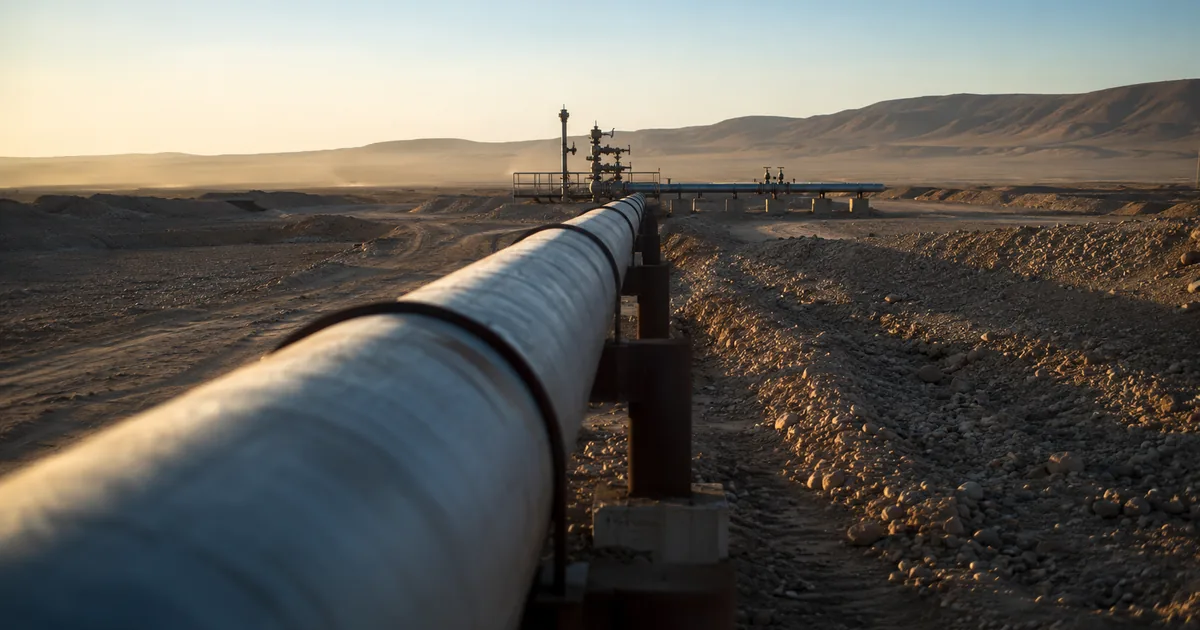
The figures are ambitious: an approximately 800-kilometer onshore pipeline from Haditha in western Iraq to the Syrian port of Baniyas, designed to transport around 2.5 million barrels per day. The timeline is equally ambitious, with completion projected within two to two-and-a-half years.
This is not merely a commercial arrangement. It is a US-backed strategic play. The State Department confirmed that a “US-led international consortium” would handle the technical and financial work, with Chevron as the operator. Washington’s envoy, Tom Barrack, put the ambition bluntly, saying the project would make the Strait of Hormuz “an afterthought”.
The U.S. government is likely hoping that the project will help stabilize oil prices, which have been highly volatile since the beginning of the U.S.-Israel-Iran conflict, reacting sharply to military strikes and ceasefire announcements.
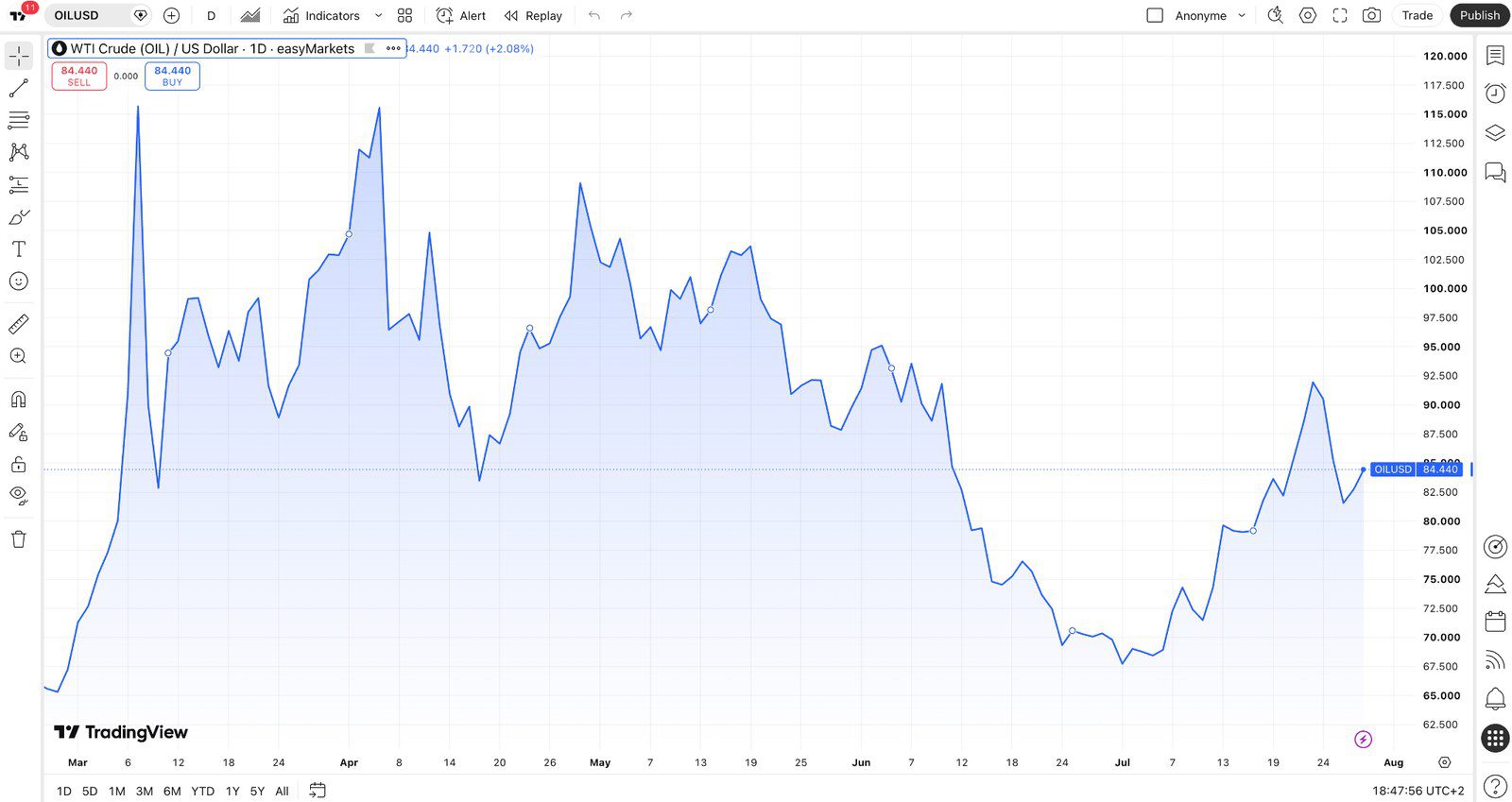
The urgency is not theoretical. The pipeline push follows disruptions tied to the US-Israel ongoing conflict with Iran, which battered Iraqi exports and turned a hypothetical risk into a live crisis. Hormuz normally carries close to 20 million barrels per day — about a fifth of the world’s oil supply. When tankers can’t move, entire national budgets wobble; oil funds roughly 90% of Iraq’s state spending.
The Iraq-Syria line is one piece of a broader regional scramble:
- Saudi Arabia’s Petroline has reached its full emergency capacity of 7 million barrels per day as the kingdom rerouted crude to Yanbu on the Red Sea.
- The UAE is fast-tracking a new West-East line to double its bypass capacity from about 1.8 to 3.6 million barrels per day by mid-2027.
- Iraq’s Basra-Haditha pipeline, already under construction with Chinese financing, aims to transport 2.25 million barrels per day by 2028, feeding branches toward Jordan’s Aqaba, Syria, and Turkey.
- Iran itself has also developed the 1,000-kilometer Goreh-Jask line to bypass Hormuz. However, it still operates at an estimated 300,000 barrels per day — well below its designed capacity of 1 million.
Yet the limitations remain significant. Existing overland pipelines can transport, at best, 4 to 5 million barrels per day — only a fraction of Hormuz’s 20 million. Analysts warn that the Syrian route represents a “gargantuan technical challenge,” with most pumping stations along the original route destroyed during the war. Even the “2.5 million” headline is unstable: State Department figures cite 2 million, while some estimates for the Baniyas branch fall to 700,000.
The takeaway is stark. Plans that gathered dust for decades are suddenly moving at unprecedented speed, suggesting that the era of treating Hormuz as untouchable may gradually be coming to an end. Whether these projects ultimately prove capable of insulating global oil markets from future regional conflicts, however, remains an open question.