
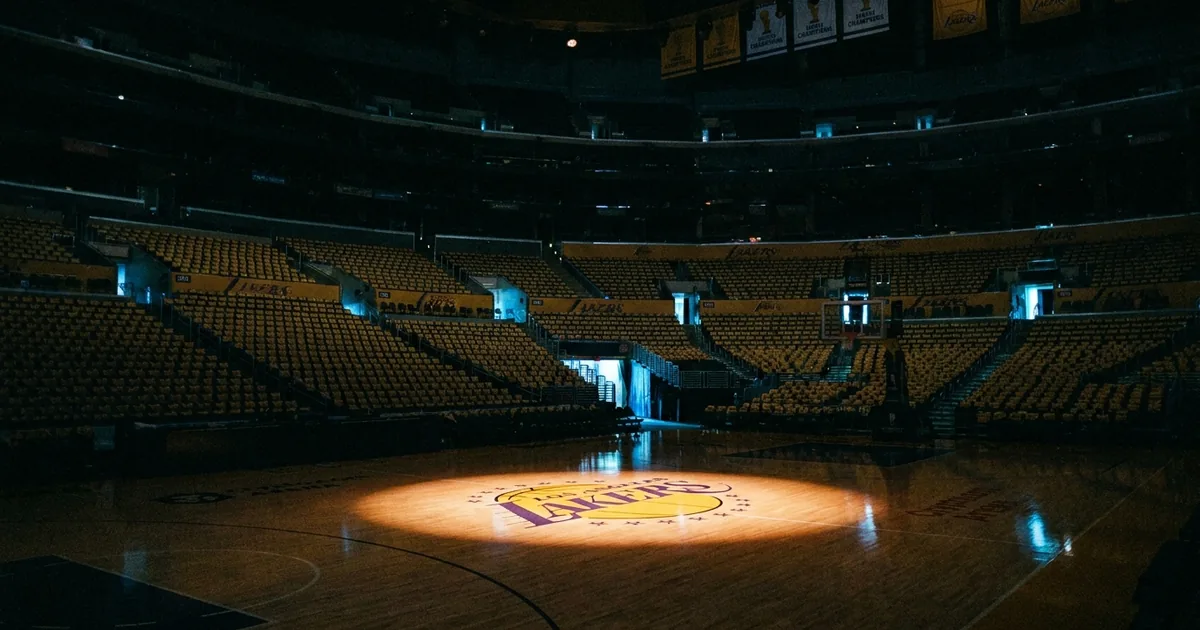
The Los Angeles Lakers changed hands twice in fourteen months, and the second sale was assembled in three days.
The number everyone is quoting, $12.5 billion, is the largest ever paid for a sports franchise, but the more revealing number belongs to the seller: roughly $21 billion in loans that federal prosecutors are currently examining.
Josh Kushner and Bob Iger agreed on August 12 to buy the franchise from Mark Walter, who had taken control of it from the Buss family only last year at a $10 billion valuation. The two men had been chasing the NBA’s Las Vegas expansion slot and pivoted to the Lakers instead, closing the framework in three days. Walter keeps the Dodgers, Chelsea and the Sparks. He sold the one asset in his portfolio that the market would pay a premium for on no notice at all.
Three Days Is Not How Trophy Assets Trade
Franchise sales normally take months. Bidders get vetted, books are opened, the league’s advisory committee grinds through the financing, and the seller negotiates from a position of patience because there is no reason not to. The Buss family’s exit took from June to October 2025 to clear the board of governors.
This one did not look like that. NBC News confirmed the agreement the day it leaked, before most of the league’s owners had been briefed, and ESPN’s canvass of executives and agents around the NBA turned up a league that had been blindsided. A deal that comes together over a long weekend is either opportunistic on the buy side or urgent on the sell side. This one looks like both.
What Two Rating Agencies Did in July
Walter’s business is not really a sports business. It is a credit business that owns sports teams. His conglomerate, TWG Global, sits alongside Guggenheim Partners and two life insurers, Delaware Life and Clear Spring Life, and the money those insurers hold against future policyholder claims is the raw material for much of the rest.
That structure is what prosecutors in the U.S. Attorney’s Office in Manhattan and lawyers at the Securities and Exchange Commission have been picking apart. As Defector summarized the Wall Street Journal’s reporting, investigators are looking at roughly $21 billion in loans extended to companies tied to Walter or TWG Global that ended up on the books of insurers he owns, after routing through a third entity in between. An internal whistleblower complaint started it. Federal agents seized phones and laptops in September 2025, three months after Walter agreed to buy the Lakers. The two insurers received subpoenas in February 2026.
Then, in July, Fitch and S&P put Delaware Life on negative watch. That is the moment a legal problem becomes a balance-sheet problem. A negative outlook on a life insurer raises the price of its money, tightens what regulators will tolerate, and turns every asset on the books into a candidate for sale. Six weeks later the most liquid trophy in American sport was gone at a 25 percent markup.
No charges have been filed, and Walter has not been accused in court of anything. He called the Lakers “an extraordinary investment” on his way out the door, which is true and is also the tell. People who own the Lakers do not usually describe the Lakers as an investment.
The Kushner Question, and Why the White House Answered It
Because the buyer is Josh Kushner, founder of Thrive Capital and younger brother of Jared Kushner, the internet reached the obvious theory within hours: a Trump-era Justice Department investigates a billionaire, and a Kushner ends up owning his basketball team. The administration then did something worth noticing. It issued a denial about a private transaction nobody in government had been formally asked about.
“This has nothing to do with President Trump or his administration.”
There is no public evidence that the probe was aimed at prying the Lakers loose, and the timeline argues against the simple version: the whistleblower complaint and the first device seizures predate the sale by nearly a year. Josh Kushner is a registered Democrat who has spent a decade keeping visible daylight between himself and his brother’s politics.
The conspiracy framing is the wrong worry anyway, and chasing it lets the real one walk past. Thrive is one of the largest private backers of OpenAI, a company the administration itself moved to take a stake in this summer. Jared Kushner is running American diplomacy in Gaza without holding a government job. The family name now sits on the cap table of the most valuable private company in technology, on the negotiating track in the Middle East, and on the deed to the Lakers. None of that needs a phone call from the Justice Department to be a concentration of access worth saying out loud.
The League Spent Two Years Building the Market That Made This Possible
The part of this that outlasts the news cycle is structural. The NBA has been steadily rewriting who may own a piece of a team, and in December 2025 the board of governors voted to let a single institutional fund hold passive stakes in as many as eight franchises, up from five. Sovereign wealth funds, pension funds and university endowments are explicitly welcome. Funds are capped at 20 percent of any one team and 30 percent in aggregate, with no governance rights attached.
Read that as an accounting decision rather than a basketball one. The league needed franchise equity to be something a balance sheet could hold, price and exit, because at $10 billion a team the pool of individuals who can write the check alone has emptied out. It worked. CNBC calculated that the Lakers price, roughly 20 times the team’s 2025-26 revenue, lifts the average NBA franchise value 21 percent to $6.68 billion if the board approves the deal next month.
Every owner in the league just got richer on paper because of a transaction that had nothing to do with basketball. That is what a financialized asset class looks like from the inside, and it is why ticket prices, cable bills and rights fees keep climbing. Valuations at this multiple assume revenue growth, and the fans are the ones who have to supply it. The last time a Lakers story turned on money rather than the roster, it was LeBron James walking to Golden State in free agency, a decision at least made by someone who plays the game.
Jeanie Buss Is the Only Person Saying No
The Buss family still holds about 17.8 percent, and the siblings voted to sell it into the new deal. Jeanie Buss is contesting that vote. She wants to keep the stake and the governor’s chair, and to end 47 years of family control on her own timing rather than the market’s. Al Jazeera reported that she has told the league she does not believe her siblings can sell the family stake out from under her.
She will probably lose. But the argument she is making is the one nobody else in the room is paid to make. Inside a single year the Lakers have been treated as a family legacy, a credit portfolio’s most saleable holding, and a venture fund’s marquee acquisition. Only the first of those has anything to do with a team.
What to Watch in September
The board of governors meets in New York on September 15 and 16, and that vote is the last checkpoint where anyone with authority can ask the seller’s questions out loud: what investigators found inside Walter’s insurers, whether the urgency belonged to him or to the buyers, and what a $12.5 billion valuation is worth if the credit machine underneath the previous owner turns out to have been misfiring. The league has never had much appetite for that conversation. It has less now that the number is on the board and every owner in the room has been repriced by it.