
On August 31, Nielsen switches on seven changes to the methodology that decides how many Americans watched anything on television, and the National Football League has spent the past week saying the timing is reckless.
It is a fight about a measuring instrument, which sounds like a fight about accuracy and is actually a fight about the price of every advertising slot the league’s broadcast partners will sell this season.
What Is Actually Changing
Nielsen laid the package out in a release describing enhancements to its data measurement heading into the fall season, and the trade press has been unpicking it since. The seven adjustments to the Big Data plus Panel currency, catalogued in detail by PPC Land, land all at once on the last day of August, the same week college football starts and days before the NFL’s regular season.
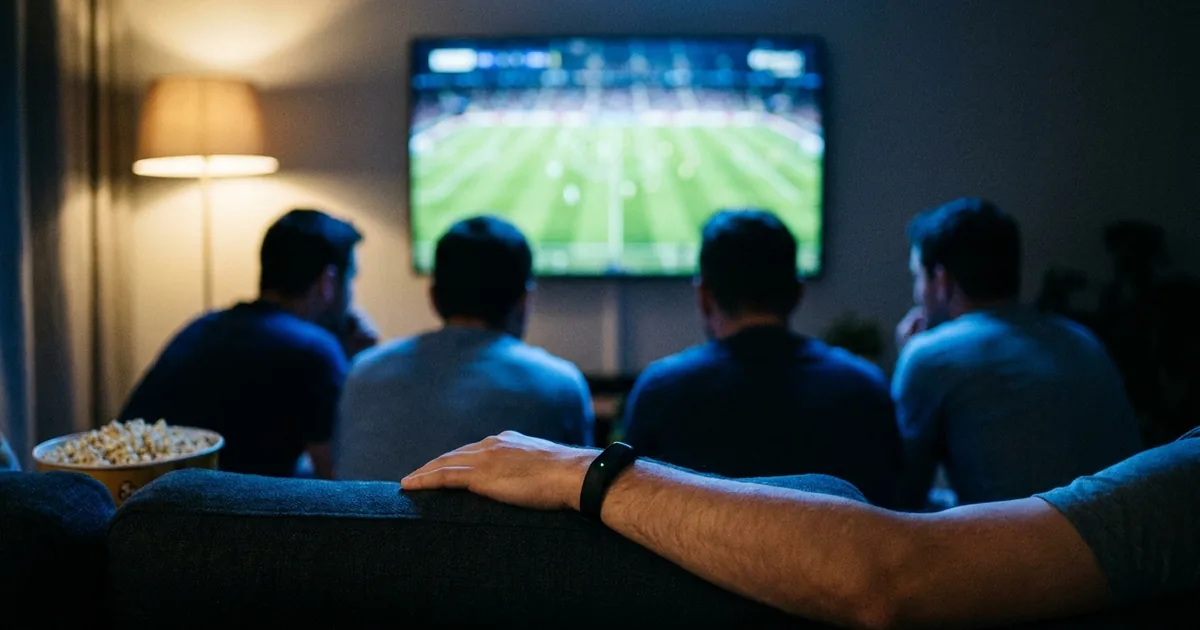
The headline item is co-viewing. Television’s oldest measurement problem is that a set counts as one device no matter how many people are on the couch, and sports is the genre where that undercount bites hardest, because sports is what people still watch together. Nielsen’s answer is a wearable. The company has been putting devices on the wrists of panelists that look like smartwatches and passively pick up audio from whatever is playing, which means a person in the room gets counted without having to remember to log in as a viewer. The Desk has a good explanation of how the wearable moves from experiment to official currency.
That is a genuine improvement to a genuine flaw. It is also, in currency terms, a repricing event, and it arrives with no season of parallel data behind it.
The League’s Objection
Paul Ballew, who runs data and analytics for the NFL, has not been subtle. He has said the league does not have enough impact data to assess what the changes do, that it is still working through the logic behind some of the methodological decisions, and that the early read looks like a negative for sports. Elsewhere he put it more plainly: the concern is that this makes measurement for the coming season muddled. The Associated Press wrote up the league’s complaint that the changes were rushed and would hurt sports specifically.
Notably, the NFL is not against co-viewing itself. Ballew has said the co-viewing and partial co-viewing implementation is a positive. The objection is to the other six things riding along with it and to the calendar.
A Year Ago the NFL Had No Complaints At All
Here is the context that reframes the whole dispute.
In September 2025, Nielsen rolled Big Data plus Panel out across all events. The NFL then posted one of the best television seasons in its history: an average of 18.7 million viewers per game across the regular season, up about 10 percent year over year and the highest since 1989. The league did not convene a call to question the logic behind that methodology change. Nobody asked for a parallel-data season before booking the win.
A measurement change that raises your number is an improvement. The identical change, running the other direction, is rushed.
This is not hypocrisy so much as it is how every measured industry behaves, and it is exactly why the measurement should not be controlled by the parties being measured. Nielsen, for its part, has been careful to say that none of the seven changes carries a promise of higher ratings for anyone. Sportico’s read is that the tweaks will not produce another sports ratings boom, which is a polite way of saying the free lunch already happened.
CBS Is Delighted, Which Is Its Own Data Point
David Berson, president and chief executive of CBS Sports, has publicly welcomed the changes, saying the viewership metrics are finally capturing what the network believes is the accurate audience. CBS is the most-watched NFL rights holder. Front Office Sports covered the timing of the co-viewing rollout against the arrival of fall sports, and Sports Video Group ran through the full set of enhancements for the production side.
When the network selling the ads and the league supplying the games disagree about whether a measurement is good news, the disagreement is rarely about statistics. Networks sell guaranteed impressions and make good on shortfalls; a number that runs high costs them make-goods and a number that runs accurate helps them. Leagues sell rights on the strength of the trend line. Same data, different incentive, different verdict.
Ratings Are a Currency, Not a Description
The thing to understand about Nielsen is that it does not report the weather. It mints money.
An advertiser does not pay for the people who watched. It pays against a number a private company produces, and every party in the chain has agreed in advance to treat that number as the truth. Change the methodology and you have not corrected the record, you have revalued every contract written against it. That is why a methodology memo generates the kind of response usually reserved for a rules change, and why a fortnight of notice reads to the NFL as an ambush rather than an upgrade.
It also explains why the league is fighting this particular battle now, when it has been comfortable with far larger structural gambles elsewhere. The NFL is in an expansionist phase, up to and including commissioner Roger Goodell’s open talk of franchises based overseas. Every one of those bets is underwritten by the audience number. Weaken confidence in the number and the whole growth story gets harder to sell, no matter how many people are actually watching.
Nobody in this argument is claiming the old count was right. That is what makes it worth watching. The NFL is not defending accuracy, it is defending a valuation, and on August 31 it loses control of the instrument that sets it.