
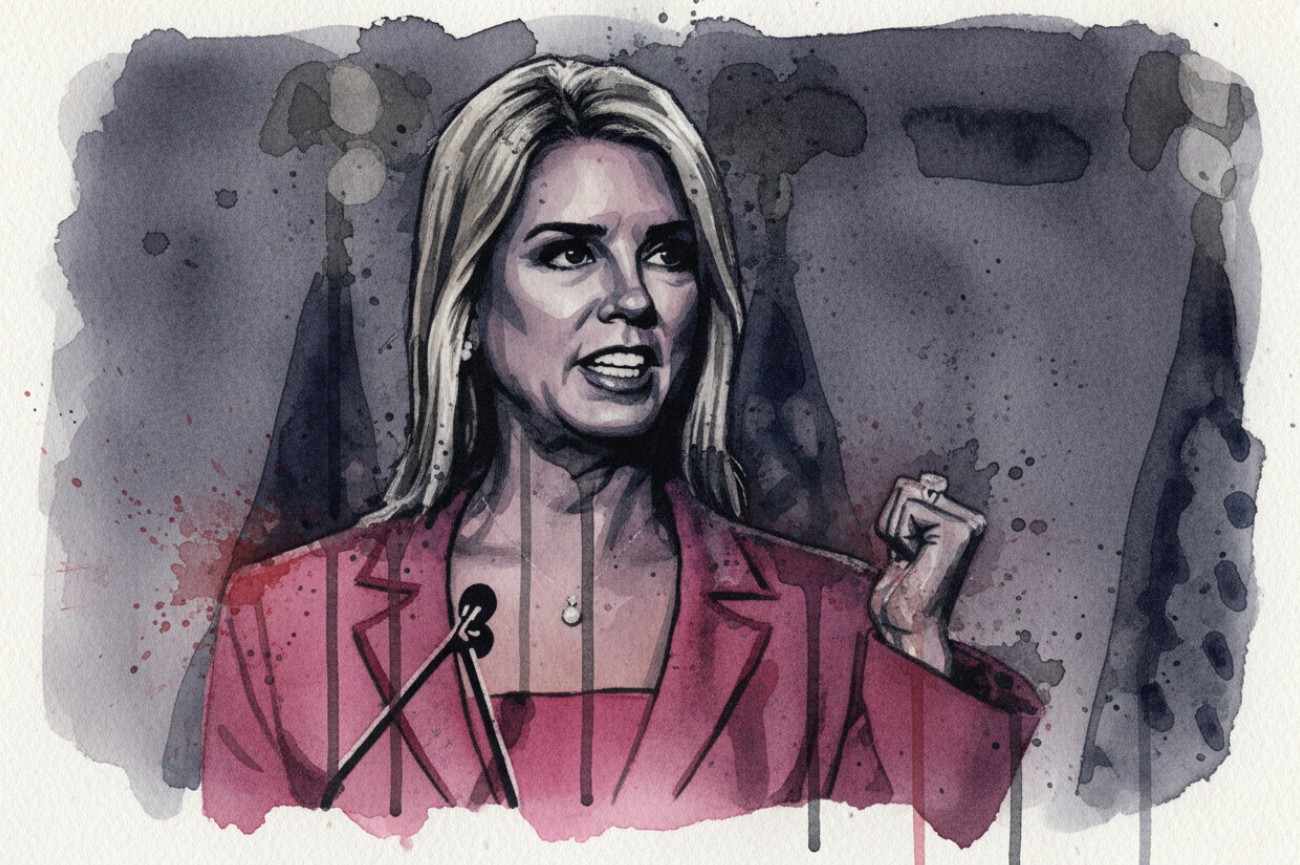
Attorney General Pam Bondi is testifying live here before the House Judiciary Committee Wednesday morning, and the list of things lawmakers want answers about reads like a crisis checklist for what was once the most independent institution in the federal government.
Epstein files botched with sloppy redactions. Two Americans killed by federal immigration agents in Minneapolis. An FBI raid on a Georgia elections office rooted in 2020 conspiracy theories. And the prosecutions of Trump’s political enemies, carried out on what looks a whole lot like presidential orders.
The hearing, titled “Oversight of the U.S. Department of Justice,” began at 10 a.m. ET. But the real question isn’t whether Bondi can survive another round of congressional questioning. It’s whether anyone in the room will force her to answer anything at all.
The Epstein Files: 3 Million Pages, Millions of Problems
The loudest bipartisan anger heading into Wednesday’s hearing centers on the Department of Justice’s handling of the Jeffrey Epstein files. The Epstein Files Transparency Act required DOJ to publish its records by December 19, 2025. The department blew past that deadline, released documents in piecemeal tranches, and managed to expose sensitive victim information through what survivors have called sloppy, incomplete redactions.
More than 3 million pages, 2,000 videos, and 180,000 images have now been published. But the heavy redactions have drawn criticism from both sides of the aisle. Reps. Thomas Massie (R-KY) and Ro Khanna (D-CA), who co-sponsored the transparency law, say the department improperly redacted names and emails of people connected to Epstein, including six men who could be incriminated by their inclusion in the files. Survivors sent Bondi a letter with 15 pointed questions before the hearing, writing bluntly: “This release does not provide closure.”
Ghislaine Maxwell, convicted of child sex trafficking in connection with Epstein, invoked the Fifth Amendment repeatedly during a House deposition just this week. Meanwhile, members of Congress are now being allowed to review unredacted files, a move that could surface new names and new political fallout.
Minnesota: Two Americans Dead, Zero Accountability
Democrats on the Judiciary Committee are expected to press Bondi hard on the fatal shootings of Renee Nicole Good and Alex Pretti by federal immigration agents in Minneapolis during the Trump administration’s “Operation Metro Surge.”
Good, 37, was killed on January 7 by an ICE agent. The DOJ initially agreed to a joint FBI and state investigation, then reversed course and blocked Minnesota’s Bureau of Criminal Apprehension from participating entirely. The department declined to open a civil rights investigation into the agent who killed Good, and instead pursued the victim’s widow for possible criminal charges. Nearly a dozen career federal prosecutors resigned in protest, including Joseph Thompson, the No. 2 prosecutor in the Minnesota U.S. Attorney’s office who had been leading a high-profile welfare fraud case.
Pretti, a nurse and U.S. citizen, was fatally shot by federal agents on January 24. The Minneapolis Police Department says it was blocked from accessing even basic information at the scene. Minneapolis police leadership has noted that of the three homicides in the city so far in 2026, federal immigration agents committed two of them.
On top of the shootings, Bondi sent a letter to Minnesota Governor Tim Walz demanding the state hand over voter registration rolls, Medicaid data, and SNAP benefit records. Minnesota’s Secretary of State Steve Simon called it “an outrageous attempt to coerce Minnesota” and declined every request. Federal courts in California and Oregon have already rejected similar DOJ demands as “unprecedented and illegal.”
Fulton County: The FBI Goes Looking for 2020
Bondi will also face questions about the FBI’s seizure of 2020 election materials from a Fulton County, Georgia elections office. The warrant sought physical ballots and election records, and the criminal investigation originated from a referral by Kurt Olsen, a White House lawyer who worked to overturn the 2020 presidential election results and spoke with Trump multiple times on January 6, 2021.
Director of National Intelligence Tulsi Gabbard was present during the search, reportedly at the request of both Trump and Bondi. The FBI’s special agent in charge of the Atlanta office was dismissed without public notice just a week before the raid. Legal experts have warned the warrant may have been improperly obtained, noting that the DOJ was simultaneously suing Fulton County for the same records in an active civil lawsuit that hadn’t even been scheduled for a hearing yet.
The Comey And James Prosecutions: Retribution by the Numbers
Perhaps the most damning through-line of Bondi’s first year is the pattern of prosecutions that track almost perfectly to Trump’s public demands. In September 2025, Trump posted on social media calling on Bondi to go after former FBI Director James Comey and New York Attorney General Letitia James, writing: “We can’t delay any longer. JUSTICE MUST BE SERVED, NOW!!!”
Days later, Trump forced out the U.S. Attorney for the Eastern District of Virginia, Erik Siebert, who had resisted pressure to bring the cases. Trump installed Lindsey Halligan, a former personal attorney with zero prosecutorial experience, as interim U.S. Attorney. Halligan, acting alone, secured indictments against both Comey and James within weeks.
Those indictments collapsed spectacularly. A federal judge found Halligan was unconstitutionally appointed and dismissed both cases. The DOJ tried twice to reindict James with different prosecutors. Both grand juries declined. The statute of limitations on Comey’s charges had already expired. The DOJ is now appealing the dismissals to the Fourth Circuit, but the wreckage tells the story: career prosecutors were overruled, the evidence was insufficient, and the entire apparatus of a U.S. Attorney’s office was weaponized to fulfill a social media directive from the President.
What To Watch For
This is Bondi’s first appearance before Congress since a combative October hearing where she repeatedly deflected questions and launched her own attacks on Democratic members. Republicans have largely backed her, but the Epstein issue has created an unusual opening for bipartisan pressure.
The real test is whether any of it produces movement. Bondi still has Trump’s public support. Republican leadership still treats DOJ oversight as theater rather than substance. And the Justice Department, which once operated on the foundational principle that no president should direct individual prosecutions, now operates on exactly that principle, just in reverse.
As Pulitzer Prize-winning journalist Carol Leonnig put it on NPR, the connective tissue between Trump’s public instructions and DOJ’s actions under Bondi has become impossible to ignore. One year into her tenure, the question is no longer whether the Justice Department has been politicized. It’s whether anyone with the power to stop it actually will.