
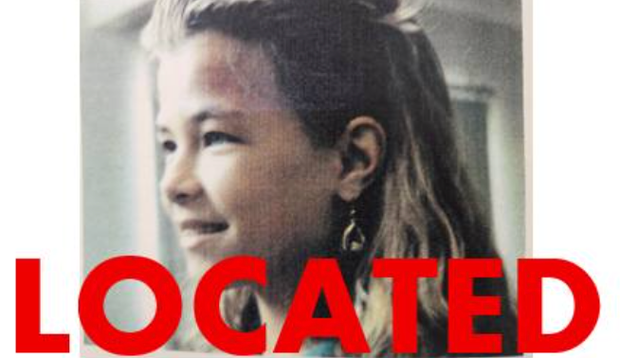
On May 15, 1994, a 13-year-old girl left her home in Star Valley, Arizona, to walk to a nearby horse stable. She never arrived. On Tuesday, the Gila County Sheriff’s Office announced that Christina Marie Plante has been found alive at the age of 44. Her missing person status is officially resolved. And that single sentence contains one of the most extraordinary outcomes in American cold case history.
In a news cycle dominated by war, constitutional showdowns, and economic anxiety, this story cuts through all of it. Not because it is louder than the headlines competing for attention, but because it speaks to something more elemental: the possibility that the worst outcomes we imagine are not always the ones that come true.
A Small Town, A Short Walk, And 32 Years Of Silence
Star Valley sits in the mountains of central Arizona, northeast of Phoenix, a community small enough that everybody knows everybody and quiet enough that a missing child was seismic. Christina Plante was last seen leaving her home on foot, heading to a stable where she kept her horse. The distance was short. The terrain was familiar. She had made the walk before.
When she didn’t come home, her family alerted authorities. The search was immediate and extensive. Volunteers joined law enforcement to comb the rugged Arizona landscape. Interviews were conducted. Leads were pursued. Christina’s information was entered into national missing children databases. But none of it produced answers. The case was classified as “endangered and under suspicious circumstances,” the kind of designation that tells you investigators feared the worst even if they couldn’t prove it.
Over the months and years that followed, the investigation stalled. Tips dried up. The community’s raw panic calcified into something quieter and more permanent: the ambient grief of not knowing. Christina Plante became a name on a database, a face on a flyer that aged only in digital renderings.
The Cold Case Unit That Refused To Close The File
What makes this resolution possible is institutional stubbornness of the best kind. Although the Plante case went cold, the Gila County Sheriff’s Office never closed it. When the department established a dedicated Cold Case Unit, Christina’s file was among those pulled for review. Detectives applied advances in technology and modern investigative techniques to a case that had defeated their predecessors three decades earlier.
The sheriff’s office has not disclosed what specific breakthrough cracked the case. They’ve said only that new leads were developed through detailed case review and that those leads “ultimately led to a breakthrough.” The restraint is deliberate and, frankly, refreshing. In an era when every development gets litigated on social media before investigators have finished their work, the Gila County Sheriff’s Office chose to protect the person at the center of the story rather than feed the news cycle.
What We Know, And What We Don’t
Here is what the sheriff’s office has confirmed: Christina Marie Plante is alive. Her identity has been verified. She is 44 years old. Her status as a missing person has been officially resolved.
Here is what they have not disclosed: where she was found, what circumstances surrounded her disappearance, whether criminal charges are anticipated, or any details about the three decades between her vanishing and her discovery. The department cited respect for Plante’s privacy and well-being, a phrase that carries significant weight. Whatever happened to Christina Plante over the past 32 years, the people who found her have decided that her story belongs to her before it belongs to anyone else.
The Statistics That Make This Case Extraordinary
More than 600,000 people are reported missing in the United States every year. The vast majority are found quickly. According to the National Missing and Unidentified Persons System (NamUs), of the roughly 12,600 missing person cases that have been resolved in their database, 76% were found alive. But those numbers are dominated by cases resolved within months, not decades. Cases that remain open after one year represent a fraction of a percent of all reports. Cases that remain open after 32 years, and end with the person found alive, are vanishingly rare.
The Plante case joins a small and remarkable group. In 2025, Audrey Backeberg, who disappeared from Wisconsin at age 20 in 1962, was located alive in her 80s. These outcomes are the exception, not the rule. They are also the reason that families of the missing never fully stop hoping, even when every rational calculation says they should.
A Story That Belongs To Her
The instinct with a case like this is to want every detail. Where was she? Who took her? What happened? The questions are natural and the curiosity is human. But the Gila County Sheriff’s Office has drawn a line, and it is the right one. Christina Plante was 13 when the world last saw her. She is 44 now. Whatever narrative fills those 32 years, she gets to decide when and whether to share it.
While the nation’s attention was fixed on Trump’s Iran war speech and the Supreme Court, a quieter story broke through. Not because it carried geopolitical consequences, but because it carried something rarer in the current news environment: an ending that wasn’t terrible. A 13-year-old girl walked toward a horse stable in 1994 and vanished. Thirty-two years later, she has been found alive.
Sometimes the story is that simple. And sometimes simple is enough.