
Dan Bongino, the conservative podcaster-turned-FBI deputy director, announced Wednesday that he will leave the bureau in January, ending a turbulent 10-month tenure that saw him clash with the attorney general, walk back years of conspiracy theories, and preside over a purge of career agents that has left the FBI’s institutional knowledge in tatters.
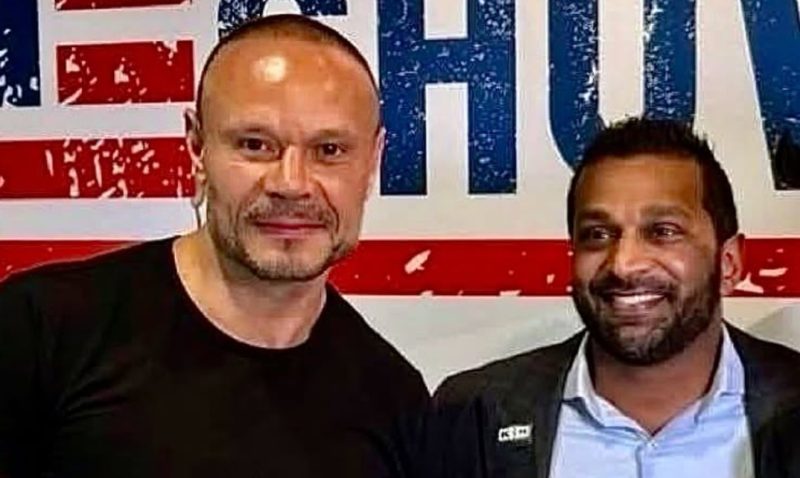
The departure, while widely expected, ranks among the highest-profile resignations of the Trump administration. It comes as Bongino’s boss, FBI Director Kash Patel, faces his own storm of criticism over taxpayer-funded flights to visit his country singer girlfriend and retaliatory firings that have prompted multiple federal lawsuits.
Trump Tips the Hand: “He Wants to Go Back to His Show”
President Trump effectively broke the news hours before Bongino’s formal announcement. When asked about the deputy director’s future at Joint Base Andrews, Trump offered what amounted to a farewell: “Dan did a great job. I think he wants to go back to his show.”
That show ‘The Dan Bongino Show’, was ranked No. 56 on Spotify when Bongino took the FBI job in February. His podcasting empire reportedly made him worth $160 million. The pull of that platform, combined with what sources describe as deep frustration with the “tedious nature” of government work, made his departure inevitable.
By Wednesday afternoon, Bongino confirmed the news on X: “I will be leaving my position with the FBI in January. I want to thank President Trump, AG Bondi, and Director Patel for the opportunity to serve with purpose.”
The Epstein Files Fiasco That Nearly Ended His Tenure Early
Bongino’s time at the FBI was defined by a singular irony: the conspiracy theorist confronting the limits of conspiracy theories. For years on his podcast, Bongino had demanded answers about Jeffrey Epstein’s death, asking, “What the hell are they hiding?” He suggested powerful forces were suppressing a “client list” and covering up the financier’s true fate.
Then he got the job and had to actually review the files.
In May, Bongino posted what his base considered an unforgivable admission: “I have reviewed the case. Jeffrey Epstein killed himself. There’s no evidence in the case file indicating otherwise.” When the FBI released a memo in July confirming Epstein died by suicide and that no secret client list existed, the MAGA movement erupted in fury.
The fallout led to an angry White House confrontation between Bongino and Attorney General Pam Bondi. According to the New York Times, Bongino issued an ultimatum “She goes, or I go” after clashing over the department’s handling of the Epstein disclosure. He disappeared from social media for days, and far-right activist Laura Loomer reported he was “seriously thinking about resigning.”
He stayed. But in August, the administration took the unprecedented step of installing Missouri Attorney General Andrew Bailey as “co-deputy director” a role that had never existed in FBI history. The writing was on the wall.
The Pipe Bomb Case: A Victory Lap That Exposed Old Claims
Bongino got one genuine win earlier this month when the FBI arrested Brian Cole Jr., a 30-year-old Virginia man charged with planting pipe bombs near the Republican and Democratic National Committee headquarters on January 5, 2021 the night before the Capitol riot.
Bondi credited Bongino specifically: “This cold case languished for four years, until Director Patel and Deputy Director Bongino came to the FBI.” Bongino had made solving the case a personal mission, dedicating countless podcast episodes to the mystery before joining the government.
But the arrest created its own awkwardness. As a podcaster, Bongino had repeatedly called the pipe bombs an “inside job” and claimed the FBI was running a “massive cover-up.” The suspect—a reclusive man who lived with his parents and worked for a bail bondsman—had no connection to the federal government whatsoever. He reportedly told investigators he supported Trump and held anarchist views.
During his victory lap interview with Sean Hannity, Bongino was confronted with his own words. His response captured the tension of his entire tenure: “I was paid in the past, Sean, for my opinions. That’s clear. And one day I will be back in that space, but that’s not what I’m paid for now. I’m paid to be your deputy director, and we base investigations on facts.”
The Career Agent Purge Leaves a Wounded Bureau
Perhaps the most consequential, and controversial aspect of Bongino’s tenure was his role in overseeing the dismissal of experienced FBI leadership. According to lawsuits filed by fired agents, Bongino and Patel were particularly focused on social media optics, responding to pressure from MAGA influencers who tagged White House officials demanding action.
In September, three high-ranking FBI officials former acting director Brian Driscoll, Washington field office chief Steven Jensen, and Las Vegas field office head Spencer Evans sued the administration, alleging their terminations were part of a “campaign of retribution.” The lawsuit claims Patel told Driscoll the firings were “likely illegal” but that “his ability to keep his own job depended on the removal of the agents who worked on cases involving the President.”
The complaint paints a picture of an agency where decades of institutional knowledge were sacrificed to social media pressure. Jensen was fired despite Patel having publicly praised him and presented him with a director’s “challenge coin.” His crime? Having overseen domestic terrorism investigations that included January 6 cases.
Bongino drew particular criticism in the lawsuit for his “intense focus on increasing online engagement through his social media profiles” a priority that, according to fired agents, “could risk outweighing more deliberate analyses of investigations.”
What Comes Next for Bongino and the Bureau
Bongino is almost certainly returning to his lucrative media career. His contract with Westwood One remains in place, and the podcasting ecosystem he left behind has only grown more valuable. Given the heat he took from MAGA for his Epstein conclusions, rebuilding credibility with that audience may require some creative positioning though his base has shown remarkable flexibility in the past.
For the FBI, Bongino’s departure leaves co-deputy director Andrew Bailey—a former state attorney general with no FBI experience running day-to-day operations. Multiple reports suggest the White House is weighing whether to replace Patel entirely in 2026, potentially with Bailey.
Director Patel, meanwhile, faces his own scrutiny. House Democrats have demanded flight records for the FBI’s Gulfstream G550, alleging Patel used the $62 million jet for personal trips to visit his girlfriend, attend sporting events, and vacation at a Texas hunting retreat called, rather perfectly, “Boondoggle Ranch.”
A recent 115-page report from current and former agents described the bureau under Patel and Bongino as “rudderless,” with Patel characterized as “insecure” and prone to tantrums. The report noted the FBI would need 14 years to recover its lost personnel.
The Broader Significance: Political Appointees and Institutional Damage
Bongino’s tenure will be studied as a case study in what happens when partisan media figures take operational control of law enforcement agencies. He was the first deputy director in modern FBI history with no bureau experience a podcaster whose primary qualification was loyalty to Trump and willingness to challenge the establishment.
The results were predictable. Conspiracy theories that sounded good on air proved baseless when subjected to actual evidence. The agency’s workforce, professionals who had spent decades developing expertise was treated as disposable when social media accounts demanded blood. And the critical work of counterterrorism, counterintelligence, and criminal investigation was subordinated to the daily news cycle.
As Bongino heads back to his microphone, the FBI he leaves behind is smaller, less experienced, and more demoralized than when he arrived. That’s his legacy—and the country will be dealing with the consequences long after he’s back to giving opinions for pay.