
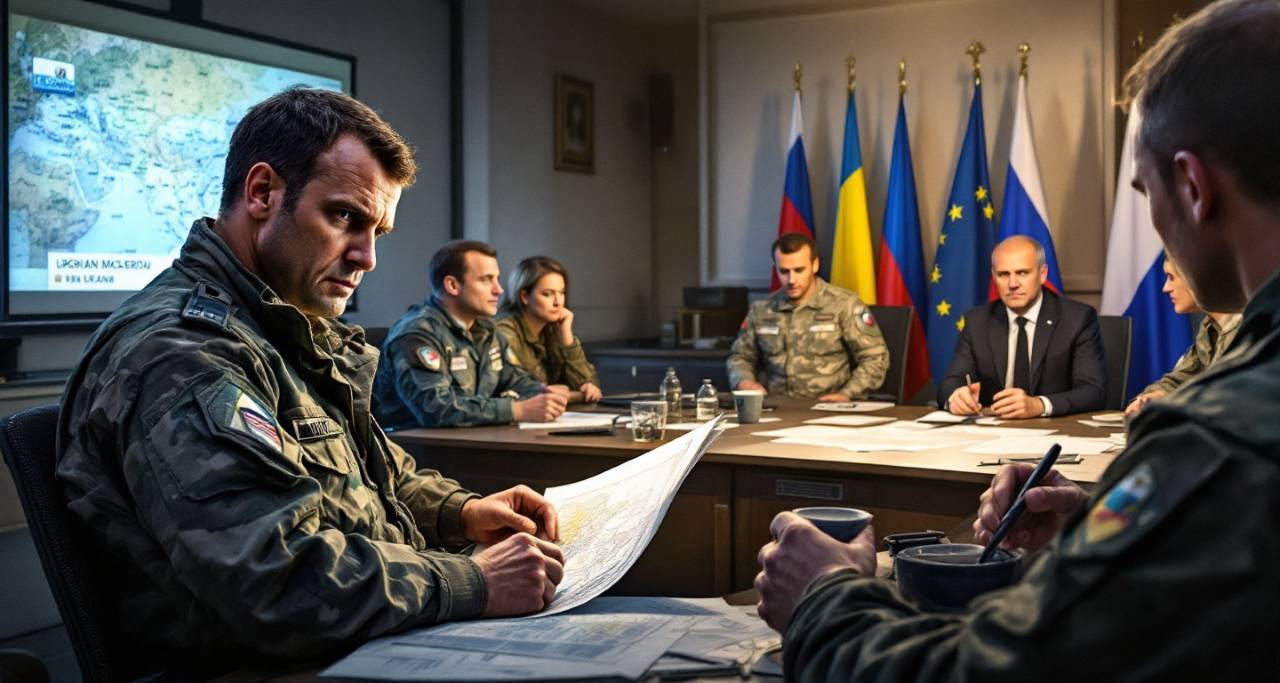
Danish Prime Minister Mette Frederiksen delivered a blunt message to President Donald Trump on Monday: touch Greenland, and the Western security order built since World War II collapses.
“If the United States chooses to attack another NATO country militarily, then everything stops,” Frederiksen told Danish broadcaster TV2. “That includes NATO and thus the security that has been provided since the end of the Second World War.”
It is a stunning statement from the leader of a longtime American ally, and it comes just days after U.S. forces captured Venezuelan President Nicolás Maduro in a pre-dawn raid on his Caracas residence. The operation, codenamed “Absolute Resolve,” has left European capitals rattled and asking an uncomfortable question: if Trump would do this to Venezuela, what exactly is off the table?
Seven European Leaders Draw a Red Line
On Tuesday, the leaders of France, Germany, the United Kingdom, Italy, Poland, Spain, and Denmark issued a joint statement that reads like a diplomatic shot across the bow. The Arctic island “belongs to its people,” they declared, adding that “it is for Denmark and Greenland, and them only, to decide on matters concerning Denmark and Greenland.”
The statement continued with a pointed reminder about international norms: “Security in the Arctic must be achieved collectively, in conjunction with NATO allies including the United States, by upholding the principles of the UN Charter, including sovereignty, territorial integrity and the inviolability of borders.”
Translation: You cannot simply take what you want because you have the military power to do so.
Greenland’s PM Tells Trump to Back Off
Greenland’s Prime Minister Jens-Frederik Nielsen was even more direct. In a social media post aimed squarely at Trump, he wrote: “That’s enough now. Our country is not an object of superpower rhetoric. We are a people. A land. And democracy. This has to be respected. Especially by close and loyal friends.”
Nielsen called Trump’s renewed push for U.S. control of the Arctic territory “very rude and disrespectful,” particularly in light of the volatile global security environment.
Trump has not been subtle about his intentions. Speaking aboard Air Force One on Sunday, the president said, “We need Greenland from the standpoint of national security, and Denmark is not going to be able to do it.” He mocked Danish defense efforts, claiming Copenhagen had only added “one more dog sled” to Greenland’s security apparatus.
The Venezuela Effect
What changed the calculus for European leaders is simple: Venezuela. Before Saturday’s military strike that captured Maduro and his wife, Trump’s Greenland rhetoric could be dismissed as bluster. Now, it cannot.
“It made them realize that this is not completely impossible,” said one Danish security analyst. While the expert still considers a Greenland takeover “very unlikely” and “absurd,” he acknowledged there is a “huge difference between launching a special forces operation against a country like Venezuela and doing the same thing in a NATO country.”
Danish military intelligence has, for the first time, classified the United States as a security risk. That sentence alone captures how dramatically the transatlantic relationship has shifted.
The Stephen Miller Factor
White House Deputy Chief of Staff Stephen Miller doubled down on the administration’s position Monday, telling CNN that “Greenland should be part of the United States.” When pressed on whether military intervention was off the table, Miller deflected, instead questioning Denmark’s claim over the territory.
His wife, Katie Miller, had already escalated tensions over the weekend by posting an image on X showing Greenland overlaid with the American flag, captioned simply: “SOON.”
Denmark’s ambassador to Washington, Jesper Møller Sørensen, responded by reminding the administration that his country already grants the U.S. extensive military access to Greenland through existing agreements. The Pituffik Space Base supports missile warning and space surveillance operations for both the U.S. and NATO.
What This Means for NATO
Mujtaba Rahman, an expert with political risk consultancy Eurasia Group, called the Greenland situation “the biggest source of risk to the transatlantic alliance and intra-NATO cohesion, arguably far greater than those presented by Russia’s invasion of Ukraine.”
That assessment cuts to the heart of the matter. NATO’s Article 5, the collective defense provision that treats an attack on one member as an attack on all, has been the bedrock of Western security for 75 years. If the United States, the alliance’s most powerful member, begins treating fellow NATO countries as potential acquisition targets, the entire framework becomes meaningless.
Polish Prime Minister Donald Tusk put it plainly on Tuesday: “No member should attack or threaten another member of the North Atlantic Treaty. Otherwise, NATO would lose its meaning.”
The Bottom Line
Trump has repeatedly refused to rule out military or economic force to acquire Greenland. He named Louisiana Governor Jeff Landry as special envoy to the territory last month. The administration clearly views this as more than idle talk.
For European leaders, the message from Copenhagen is unmistakable: there are consequences that extend far beyond the Arctic Circle. The post-war security architecture that has kept the West aligned for eight decades is now facing its most serious internal threat, and it is coming from Washington.