
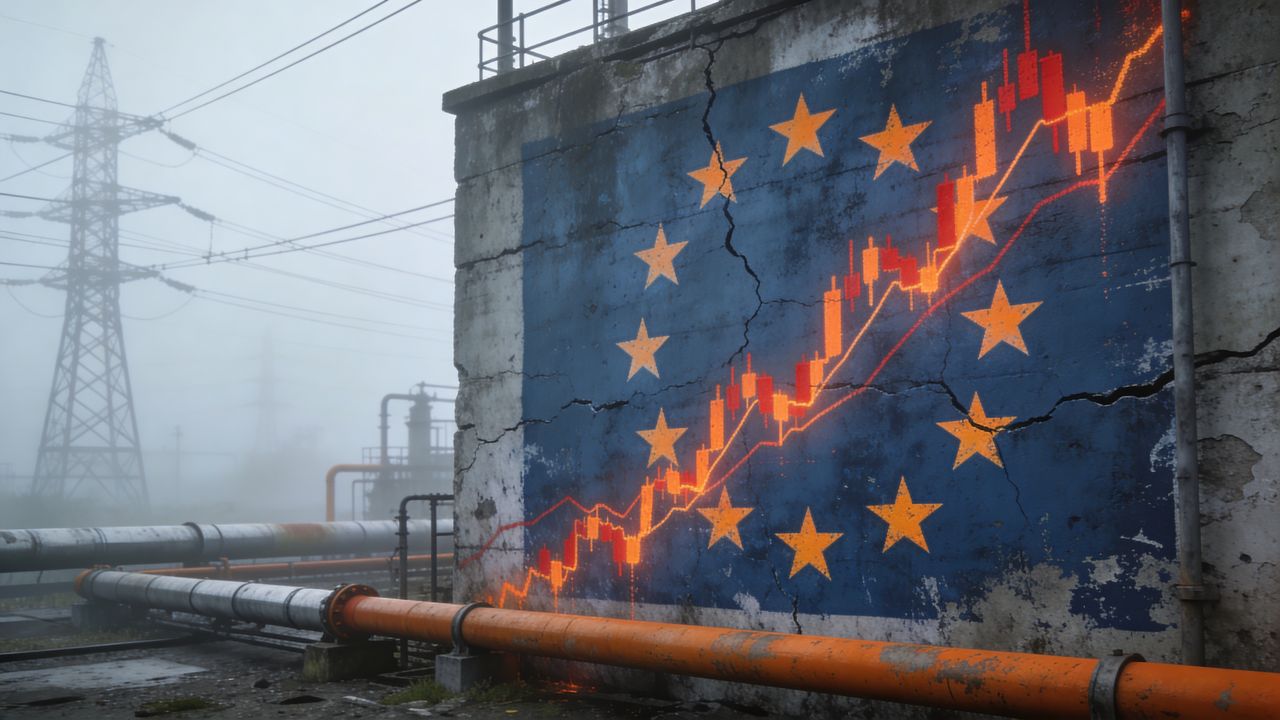
The European Commission is preparing to unleash the most sweeping package of emergency energy measures since the 2022 Russian gas crisis, and the timing could not be more pointed. Dubbed “AccelerateEU,” the plan lands on Wednesday, April 22, just hours before EU leaders descend on Cyprus for an informal summit that will be dominated by a single, familiar theme: how to keep the lights on and the bills down while the world burns through another geopolitical energy shock.
Commission President Ursula von der Leyen framed the stakes in brutally simple terms last week. Since the Iran conflict erupted on February 28, Europe’s fossil fuel import bill has ballooned by more than €22 billion in just 44 days, she told reporters. Not a single additional molecule of energy to show for it. That number alone should concentrate minds in Nicosia.
WHAT ACCELERATEEU ACTUALLY CONTAINS
A draft of the Commission’s plan, reported by The Irish Times and the Financial Times, sketches out a two-track approach: immediate relief for the households and industries getting hammered right now, and structural reforms designed to outlast the crisis itself.
On the emergency side, the headline measures include energy voucher programs for vulnerable households, a temporary ban on energy companies disconnecting customers who cannot pay their bills, and relaxed state aid rules so national governments can directly subsidize energy-intensive industries without tripping over Brussels’ competition framework. For agriculture, fishing, road transport, maritime shipping, and heavy industry, the Commission envisions temporary support covering up to 50% of extra energy costs, with a hard expiration date of December 31, 2026.
Then there are the demand-reduction measures that will sound eerily familiar to anyone who lived through the pandemic. The Commission is recommending that companies allow employees to work from home at least one day per week, that governments cut public transport fares to push commuters off the roads, and that commercial buildings dial down heating and cooling systems. Aviation fuel, meanwhile, is an altogether darker story: current EU stock levels suggest supplies will last only through April, and Energy Commissioner Dan Jørgensen has warned that fewer and more expensive flights are coming this summer.
THE HORMUZ PROBLEM ISN’T GOING AWAY
Everything in AccelerateEU traces back to a single chokepoint: the Strait of Hormuz, through which roughly 20% of global oil and natural gas shipments normally transit. Its effective closure since the US-Israeli military campaign against Iran began has sent shockwaves through energy markets that Europe, despite years of diversification talk, still cannot absorb.
Iran’s foreign minister Abbas Araghchi briefly signaled that Tehran would allow shipping to resume during a 10-day ceasefire in Lebanon. But the Islamic Revolutionary Guard Corps quickly shut that door, warning that tankers would remain targets as long as the US naval blockade of Iranian vessels stayed in place. Oil prices have climbed above $100 per barrel for the first time since August 2022, and the European Central Bank has already postponed planned interest rate cuts, raised its 2026 inflation forecast, and slashed growth projections. Economists are now openly warning that energy-intensive EU economies face technical recession if the maritime blockade persists through the summer refill season.
LESSONS FROM 2022 (AND THE ONES BRUSSELS IGNORED)
The Commission is at pains to frame AccelerateEU as smarter than the blunt-force response to the Russian gas crisis. The 2022 playbook cost EU governments 1.2% of GDP in emergency support that year alone, and nearly three-quarters of the spending went to untargeted measures that benefited wealthy households as much as struggling ones. Spain’s decision to cap gas prices actually increased gas consumption and distorted cross-border electricity trade with France.
This time around, the Commission’s draft is laced with warnings about fiscal discipline. Support must be “targeted, timely and temporary,” it states. Rather than endorsing the fuel tax cuts that several member states have already enacted (Spain dropped its diesel tax from 21% to 10%), Brussels is pushing for electricity tax reductions aimed at vulnerable households specifically. Economic Affairs Commissioner Vladis Dombrovskis has cautioned that broad fuel tax cuts create “tension between immediate relief and medium-term objectives,” which is diplomatic language for saying governments will never want to raise those taxes again.
THE WINDFALL TAX FIGHT
Perhaps the most politically combustible element is what AccelerateEU does not include. Five EU finance ministers, from Germany, Italy, Spain, Portugal, and Austria, have publicly demanded a pan-European windfall tax on energy company profits. Environmental groups are pushing the same line. The Commission has so far refused, with officials indicating they do not plan to repeat the 2022 solidarity contribution mechanism.
That refusal will face serious pressure at the Cyprus summit. With fossil fuel companies posting record margins while consumers ration heating, the politics of protecting oil company profits are toxic. Climate Action Network Europe’s Isabelle Brachet has argued that taxing fossil fuel windfalls would simultaneously raise revenue and redirect investment toward renewables, a two-for-one that the Commission’s incremental approach does not offer.
STRUCTURAL BETS: ELECTRIFICATION AND GRIDS
The part of AccelerateEU that will outlast the crisis is also the most ambitious. The Commission wants to overhaul grid charges and electricity-related taxes across the bloc, improve cross-border data sharing so national grids operate more like a single integrated system, and push grid operators to adopt smart technologies that cut infrastructure costs passed on to consumers.
Tax subsidies for solar panels and heat pumps are in the mix, along with “social leasing” programs for electric vehicles. The draft also states plainly that the “premature” closure of nuclear power plants should be avoided, a nod to France’s fleet but also a rebuke to Germany’s controversial 2023 shutdown decision.
The market is already moving faster than the policy. German used-EV dealers reportedly saw a 40% spike in traffic within a week of the Hormuz closure, compared to a month-long lag after the 2022 Russian crisis. Every energy shock shortens the adoption cycle. AccelerateEU is, in many ways, the Commission trying to build policy rails around a consumer shift that is already underway.
THE CYPRUS TEST
EU leaders arriving in Nicosia on April 23 will carry the AccelerateEU proposals into a summit already overloaded with existential questions: the next long-term EU budget (2028-2034), the war in Ukraine, and the broader question of whether Europe can project strategic autonomy when it still imports 57% of its energy.
The early signals suggest this will not be a summit of easy consensus. Southern European states want aggressive spending. Northern fiscal hawks want discipline. Everyone wants lower energy bills, but nobody agrees on who should pay. Von der Leyen’s €22 billion number will echo through every session, a reminder that the cost of inaction is already measured in billions per month, and climbing.
If the 2022 crisis taught Europe anything, it is that emergency measures have a way of becoming permanent, and that the line between “targeted and temporary” and “sweeping and indefinite” is drawn by politicians under pressure. AccelerateEU’s real test will not be what it says on paper. It will be what it looks like after 27 member states have finished rewriting it to fit their own political calendars.